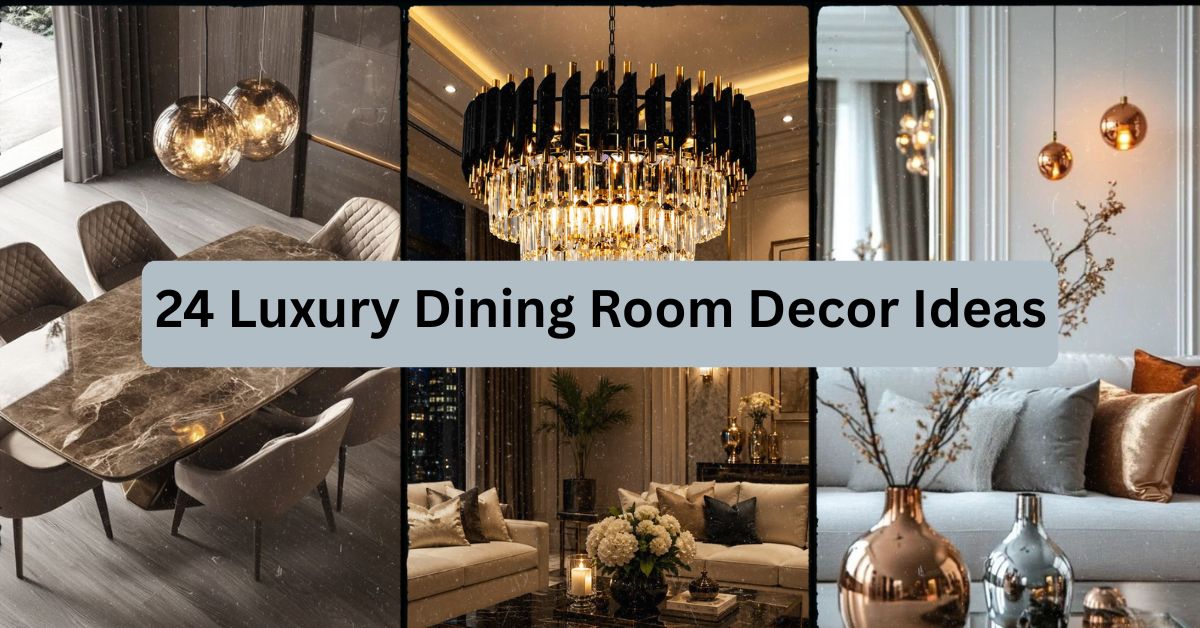
24 Luxury Dining Room Decor Ideas
I have been sifting through design magazines, visiting model homes, and experimenting with decor in my living space for years, and thus, I understand what truly gives an expensive look to your dining room and what is only clutter. All of these decor ideas stem from actual design principles that are applied by professional interior decorators every single day.
So, what are the most popular luxury dining room decor ideas? Among the most popular are statement chandeliers, luxurious velvet upholstered chairs, marble dining tables, dark wall paint, multi-layer lighting, and mixed metals. The secret behind all of them is a combination of luxurious materials, carefully designed lighting, and harmonious color scheme.
But that’s not all – in this article I am going to give you 24 different ideas for your luxury dining room, along with table comparisons of materials, color schemes and prices, as well as common mistakes people keep making again and again.
Why Your Dining Room Deserves This Kind of Attention
Here’s the thing. Your dining room isn’t just a place to eat cereal before work. It’s where holidays happen. It’s where you host your best friend’s birthday dinner. It’s where first dates turn into serious relationships over candlelight. This room deserves more thought than a table and four chairs shoved in a corner.
Luxury doesn’t mean expensive for the sake of it. It means intentional. It means every piece in the room earns its spot. Let’s get into the ideas that’ll make your dining room feel like it belongs in a design magazine.
1. Statement Chandelier as the Centerpiece

Nothing announces luxury faster than a chandelier that makes people stop mid-conversation. This idea works because lighting sits at eye level when you’re seated, so it becomes part of the visual experience of the meal itself, not just background illumination.
Choose a chandelier that’s roughly two-thirds the width of your table. Crystal, brass, and blackened iron fixtures all read as high-end, depending on your style direction. Hang it 30 to 34 inches above the tabletop for the right visual balance.
This works beautifully in traditional homes with crown molding, but modern sculptural chandeliers fit contemporary spaces just as well. Pair it with dimmable bulbs so you control the mood.
Next, let’s talk about what your chairs are wearing.
2. Velvet Upholstered Dining Chairs

Velvet chairs instantly soften a room and add a tactile richness that hard wood chairs can’t match. The fabric catches light in a way that feels plush and inviting, almost like an invitation to linger longer over dinner.
Go with jewel tones like emerald, sapphire, or deep plum for a bold statement, or stick with neutral taupe and grey for versatility. Pair velvet chairs with a wood or marble table so the textures play off each other instead of competing.
Practical tip: choose a velvet with stain-resistant treatment if you’ve got kids or entertain often. This idea suits traditional and glam interiors especially well, though even minimalist spaces can handle one or two velvet accent chairs at the table’s head.
Now let’s move to the table itself.
3. Marble Top Dining Table

Marble tables scream luxury because the material itself is rare, cool to the touch, and naturally veined in a way no two slabs look alike. It’s a conversation starter before anyone even sits down.
Carrara marble with grey veining works in almost any color scheme, while Calacatta marble leans warmer and pairs well with gold accents. Balance the coolness of marble with warm wood chair frames or brass table legs to avoid a sterile look.
Seal the marble regularly to prevent staining from wine or acidic foods. This idea fits modern, transitional, and even farmhouse-luxury hybrid spaces depending on the base style you choose.
Let’s shift focus to the walls now.
4. Moody Dark Wall Colors

Dark walls in a dining room create an intimate, cocoon-like feeling that makes evening meals feel like an event. Deep colors also make gold, brass, and crystal accents pop harder than they would against white walls.
Try charcoal, deep forest green, navy, or even black. Pair dark walls with brass light fixtures and cream or ivory linens to keep the room from feeling like a cave. Add a large mirror to bounce light around and prevent heaviness.
This works incredibly well in formal dining rooms and smaller spaces where you want drama instead of trying to make the room look bigger than it is.
Speaking of walls, let’s talk art.
5. Curated Gallery Wall Art Display

A gallery wall filled with art in matching or complementary frames adds personality and depth without needing to renovate anything. It gives guests something to look at and talk about during dinner.
Mix frame sizes but keep frame colors consistent, like all gold or all black, for cohesion. Choose art with similar color palettes so the wall reads as intentional rather than random. Botanical prints, abstract pieces, or black-and-white photography all work well in dining spaces.
Hang the center of the gallery at eye level when seated, roughly 60 inches from the floor. This idea shines in eclectic and traditional homes but can be simplified for modern spaces with fewer, larger pieces.
Now, let’s talk metals.
6. Mixed Metal Accents

Combining metals like brass, matte black, and brushed nickel creates visual interest that a single metal finish can’t achieve alone. It signals that the room was designed thoughtfully, not just furnished from one catalog.
Use one metal as your dominant tone, maybe brass for the chandelier and door hardware, then introduce a secondary metal through chair legs or a sideboard’s hardware. Keep a 70-30 ratio so the mix doesn’t feel chaotic.
This idea works across nearly every design style because metal mixing has become a modern design standard rather than a rule-breaker.
Let’s get into cabinetry next.
7. Built-In Bar or Buffet Cabinet

A built-in bar area turns your dining room into an entertaining hub, not just a spot for meals. It also gives you display space for glassware, decanters, and decorative objects that add layers to the room.
Choose a buffet with a marble or wood top that echoes your dining table material. Add glass-front cabinets to display curated glassware or china collections. Lighting inside the cabinet elevates the whole feature after dark.
This idea fits larger dining rooms best, though a slim bar cart can achieve a similar effect in smaller spaces. It suits traditional, transitional, and modern homes alike.
Lighting deserves its own deeper dive next.
8. Layered Lighting Design

Relying on one overhead fixture is a rookie mistake. Layered lighting, meaning a chandelier plus wall sconces plus maybe a buffet lamp, creates depth and lets you adjust the mood depending on the occasion.
Add dimmer switches to every layer. Wall sconces flanking a mirror or art piece add warmth without taking up table space. A small lamp on a buffet or sideboard adds a soft glow for casual dinners when the chandelier feels like too much.
This approach works in every home style because lighting layers are a functional necessity, not just a decorative choice.
Let’s ground the room with something underfoot.
9. Statement Rug as the Foundation

A rug under the dining table adds warmth, defines the space, and muffles noise, which matters more than people realize in rooms with hard flooring. It also gives you a chance to introduce pattern or color without repainting anything.
The rug should extend at least 24 inches beyond the table edge on all sides so chairs stay on the rug even when pulled out. Wool and silk blends feel luxurious underfoot, while flat-weave options work better for high-traffic homes.
This idea works in every style, though the pattern and color should shift depending on whether your room leans traditional, modern, or transitional.
Now let’s bring some life into the room.
10. Botanical and Floral Centerpieces

Fresh flowers or a beautifully arranged botanical centerpiece signal that someone cares about the details. It’s a small thing that makes a massive difference in how “finished” a table feels.
Keep arrangements low, under 14 inches tall, so guests can see each other across the table. Rotate seasonal flowers or use a mix of fresh greenery and candles for texture. Ceramic or glass vessels in neutral tones let the flowers be the star.
This works in every single design style because fresh florals are universally elegant, no exceptions.
Let’s talk about dressing up a blank wall.
11. Wallpaper Feature Wall

A bold wallpaper on one wall adds pattern, texture, and personality without overwhelming the entire room. It’s one of the fastest ways to transform a plain dining room into something memorable.
Choose botanical prints, textured grasscloth, or metallic geometric patterns depending on your style direction. Apply it to the wall behind the buffet or the head of the table for maximum impact. Keep the rest of the walls a complementary solid color.
This idea suits traditional, maximalist, and transitional homes especially well, though subtle textured wallpapers can work in modern spaces too.
Ceilings are next on our list, and they’re often forgotten.
12. Coffered or Detailed Ceiling

Most people decorate walls and forget the ceiling entirely, which is a missed opportunity in a dining room where guests often glance upward during long conversations. Coffered ceilings, beams, or even a painted ceiling add architectural interest.
Paint the ceiling a shade darker than your walls for a cozy, enveloping feel, or add wood beams for texture. Coffered detailing works particularly well in formal dining rooms with higher ceilings.
This idea fits traditional and transitional homes most naturally, though modern homes can achieve a similar effect with exposed beams or a bold paint color overhead.
Mirrors come next, and they do more than you think.
13. Mirrored Accent Wall

A mirrored wall or oversized mirror bounces light around the room and makes a small dining space feel considerably larger. It also adds a reflective, glamorous quality that reads as luxury instantly.
Position the mirror to reflect your chandelier or a window for maximum light-bouncing effect. Antique-finish mirrors add warmth, while clean-edged modern mirrors suit contemporary spaces.
This idea works incredibly well in smaller dining rooms or those without much natural light. It suits glam, modern, and transitional styles particularly well.
Now, let’s talk about dressing your windows.
14. Custom Drapery Treatments

Floor-to-ceiling drapery adds softness, height, and a tailored look that basic blinds simply can’t replicate. It’s one of those details that guests notice without knowing exactly why the room feels so polished.
Hang curtain rods as close to the ceiling as possible to elongate the walls visually. Choose heavier fabrics like velvet or linen blends for a luxurious drape. Floor-length panels, just barely skimming the floor, look more intentional than puddling fabric.
This idea fits traditional and transitional homes especially well, though simple linen panels work beautifully in modern spaces too.
Let’s mix in some history with vintage pieces.
15. Antique and Vintage Furniture Mix

Blending one or two antique pieces with modern furniture creates a room with depth and story, something that feels collected over time rather than bought all at once from a single store. This is how professional designers create that “old money” aesthetic everyone’s chasing right now.
Try an antique sideboard paired with modern chairs, or vintage brass candlesticks on a contemporary marble table. The contrast between old and new keeps the room from feeling like a period piece or a showroom.
This approach works beautifully in eclectic, transitional, and traditional homes, adding warmth that pure modern spaces sometimes lack.
Color schemes deserve their own detailed breakdown next.
16. Monochromatic Color Scheme

Sticking to varying shades of a single color, think cream, beige, and taupe together, creates a sophisticated, cohesive look that never feels busy. This approach relies on texture and material contrast rather than color to create visual interest.
Layer different textures like linen, velvet, and wood within the same color family. Add metallic accents in gold or brass to break up the monochrome without introducing a new color. This works exceptionally well in modern and minimalist homes.
This idea also suits transitional spaces where you want elegance without heavy pattern or color commitment.
Let’s add some dimension to flat walls next.
17. Textured Wall Paneling

Wall paneling, whether it’s classic wainscoting, shiplap, or modern slatted wood, adds architectural texture that paint alone can’t achieve. It gives the room a custom, high-end feel even in a builder-grade home.
Install paneling to chair-rail height for a traditional look, or run slatted wood panels floor to ceiling for a modern statement. Paint paneling the same color as your walls for subtlety, or contrast it for drama.
This idea works across nearly every design style, from traditional wainscoting to sleek modern slat walls.
Sideboards deserve a closer look now.
18. Statement Sideboard or Console

A striking sideboard does double duty as storage and as a design anchor for the room. It gives you surface space for styling decor while hiding table linens, extra dishware, and serving pieces out of sight.
Choose a sideboard with an interesting silhouette, curved fronts, fluted detailing, or an unexpected material like lacquered wood. Style the top with a lamp, a stack of books, and a small piece of art leaning against the wall.
This idea suits every style since sideboards are functional furniture that can be dressed up or down depending on your chosen finish.
Now let’s revisit lighting, but from a sculptural angle.
19. Sculptural Lighting Fixtures

Beyond the chandelier, sculptural pendant lights or wall-mounted art lighting add a gallery-like quality to the dining room. These pieces function as art you can turn on, blurring the line between decor and utility.
Look for organic shapes, hand-blown glass, or asymmetrical metal designs. Position them where they won’t obstruct sightlines across the table. This idea works especially well in modern and contemporary homes seeking a bold focal point.
Traditional homes can incorporate sculptural lighting too, just choose designs with classic materials like brass or crystal.
Let’s talk about small glass and crystal details next.
20. Glass and Crystal Decorative Accents

Small crystal or glass objects, decanters, vases, or even drawer pulls, catch light and add sparkle without requiring a major purchase. These tiny details often get overlooked, but they’re what makes a room feel finished.
Cluster crystal candle holders down the center of the table, or display a set of cut-glass tumblers on the sideboard. Rotate pieces seasonally to keep the room feeling fresh.
This idea fits glam, traditional, and transitional homes especially well, adding sparkle without overwhelming the space.
Wood tones are next on our list.
21. Rich Wood Tones Throughout

Deep wood tones, walnut, mahogany, or dark oak, bring warmth and a sense of permanence to a dining room. Wood furniture ages beautifully and often becomes more valuable over time, unlike trend-driven pieces.
Pair a rich wood table with lighter upholstered chairs to balance the visual weight. Match wood tones across the table, sideboard, and any wood trim for cohesion, though slight variation adds character rather than looking mismatched.
This idea works exceptionally well in traditional and transitional homes, though mid-century modern spaces often use walnut for a similar warming effect.
Let’s look at wall upholstery next, an often-overlooked detail.
22. Upholstered Wall Panels

Padded, fabric-covered wall panels add softness, sound absorption, and serious luxury appeal. This detail is common in high-end restaurants and hotels for good reason, it makes a room feel plush and acoustically comfortable.
Choose a durable fabric like velvet or a performance textile in a neutral or jewel tone. Install panels behind the buffet or as a headboard-style feature behind the head chair of the table.
This idea suits glam and traditional homes particularly well, adding a hotel-lobby level of sophistication.
Let’s explore a specific design era next.
23. Art Deco Inspired Details

Art Deco brings geometric patterns, bold metallics, and lacquered finishes that scream old Hollywood glamour. This style works because it combines symmetry and shine in a way that feels timeless rather than trendy.
Incorporate fan-shaped mirrors, sunburst light fixtures, and geometric rugs. Black lacquer furniture paired with brass accents nails this look instantly. Keep the color palette limited to black, gold, and one bold accent color like emerald or burgundy.
This idea fits glam and eclectic homes best, though elements can be sprinkled into transitional spaces for subtle sophistication.
Finally, let’s bring in some greenery to finish things off.
24. Indoor Plants and Greenery

Living plants add color, texture, and a sense of life that no artificial decor item can replicate. They also soften hard architectural lines and bring a fresh, organic quality to formal spaces.
Choose low-maintenance options like a fiddle leaf fig in the corner or trailing greenery on the sideboard. Avoid placing plants directly on the dining table where they might obstruct conversation or drop leaves near food.
This idea works in literally every design style, since greenery is a universal design element that softens any room.
Color Palette Comparison Table
| Color Scheme | Best Paired Materials | Mood Created | Ideal Room Style |
|---|---|---|---|
| Charcoal & Gold | Brass, velvet, marble | Dramatic, intimate | Glam, traditional |
| Cream & Taupe | Linen, wood, brushed nickel | Calm, sophisticated | Modern, minimalist |
| Navy & Brass | Wood, crystal, leather | Rich, formal | Transitional |
| Forest Green & Ivory | Velvet, wood, gold | Cozy, elegant | Traditional |
| Black & White | Marble, chrome, glass | Bold, contemporary | Modern, art deco |
Furniture Material Comparison Table
| Material | Durability | Cost Range | Maintenance | Best For |
|---|---|---|---|---|
| Marble | Moderate | $$$$ | Regular sealing needed | Statement tables |
| Solid Walnut | High | $$$ | Occasional polishing | Long-term investment pieces |
| Velvet Upholstery | Moderate | $$ | Stain protection recommended | Chairs, accent panels |
| Brass Hardware | High | $$ | Occasional polishing | Fixtures, hardware |
| Glass | Low-moderate | $$ | Frequent cleaning | Tabletops, decor accents |
Tips for Success
Getting a luxury dining room right comes down to a handful of habits, not luck.
- Always layer at least three light sources for depth and flexibility
- Choose one dominant metal finish, then add a secondary one sparingly
- Invest in one or two statement pieces rather than spreading budget thin across everything
- Keep centerpieces low enough for guests to see each other clearly
- Test paint colors at night since dining rooms are often used after dark
Common Mistakes and How to Avoid Them
I’ve seen these mistakes ruin otherwise beautiful rooms more times than I can count.
Mistake: Hanging the chandelier too high or too low.
Fix: Keep it 30 to 34 inches above the tabletop.
Mistake: Choosing a rug too small for the table.
Fix: Make sure it extends 24 inches beyond the table edges on all sides.
Mistake: Overcrowding the table with a tall centerpiece.
Fix: Keep arrangements under 14 inches so sightlines stay open.
Mistake: Mixing too many metals without a dominant tone.
Fix: Stick to a 70-30 ratio between primary and secondary metals.
Mistake: Ignoring the ceiling entirely.
Fix: Add color, beams, or trim detail to complete the room from top to bottom.
Similar Variations You Can Try
If these ideas inspire you but you want to make them your own, consider these variations:
- Swap a chandelier for a cluster of pendant lights at varying heights
- Use a long runner instead of a full tablecloth for a more relaxed formal look
- Try a two-tone dining table with a wood base and marble top for a hybrid material approach
- Replace upholstered chairs with a mix of upholstered and wood chairs for visual rhythm
- Use a large abstract painting instead of a gallery wall for a bolder, simpler statement
Wrapping It All Up
Creating a luxury dining room isn’t about spending the most money possible. It’s about choosing pieces that work together, layering textures and lighting thoughtfully, and paying attention to the small details most people skip entirely. From that first statement chandelier to the last trailing plant on your sideboard, every choice adds up to a room that feels genuinely special.
I hope these 24 luxury dining room decor ideas gave you a clear roadmap for transforming your space into something you’re proud to show off, whether it’s a quiet Tuesday dinner or a big holiday gathering with the whole family.