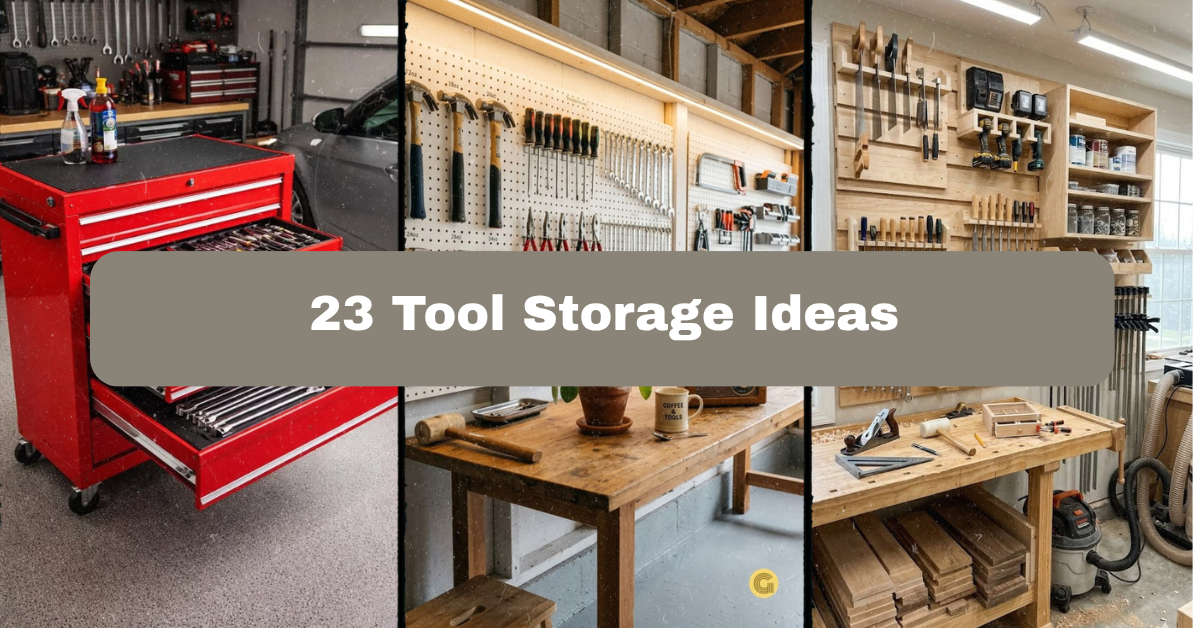
23 Tool Storage Ideas That’ll Save Your Sanity (And Your Garage)
Ever tripped over a wrench in the dark, or spent twenty minutes hunting for a screwdriver you know you own three of? I’ve been there too, and that’s exactly why I’ve spent years testing and researching tool storage ideas that actually work in real homes, not just in glossy magazine photos. This guide pulls from hands-on experience with garages, sheds, and workshops of every size, so you’re getting advice that’s been tested, not just theorized.
So what are the best tool storage ideas? The best tool storage ideas combine wall-mounted systems like pegboards and French cleats with mobile options like rolling carts, plus smart use of vertical space through ceiling racks and slat walls. Combining two or three methods usually works better than relying on just one.
Stick around, though, because I’m not stopping there. Below, you’ll find 23 distinct storage solutions, complete with material comparisons, budget tips, and mistakes that trip up even experienced DIYers.
Getting Started With Tool Storage Ideas
Before I dive into the list, let’s talk about why tool storage matters beyond just looking tidy. A disorganized garage isn’t just an eyesore. It’s dangerous, inefficient, and honestly kind of stressful every time you open that door. Good tool storage saves you time, protects your tools from rust and damage, and frees up floor space you probably forgot you had. I’ve organized these ideas from wall systems to mobile units to small-parts solutions, so whether you’ve got a two-car garage or a tiny shed, there’s something here that’ll fit your space and your budget.
1. Pegboard Wall System

Pegboards remain the gold standard for a reason. This classic setup uses a perforated hardboard panel paired with metal hooks, letting you hang hammers, pliers, and tape measures in plain sight. Choose a white or light gray board to make tools pop visually, and trace outlines around each tool with a marker so everything has a “home” to return to. This works beautifully in modern garages with clean lines, but it also suits farmhouse-style workshops when paired with a wood frame border.
Practical tip: Space your hooks slightly wider than needed since tools often need room to be lifted straight up and off.
Next up is a system that takes pegboards to a whole new level of flexibility.
2. Wall-Mounted French Cleat System

French cleats involve angled wood strips mounted to your wall, onto which you attach matching cleats on the backs of shelves, bins, or tool holders. The beauty here is total customization. You can rearrange your entire storage layout in minutes without drilling new holes. Stain the cleats a warm walnut tone if you want a workshop that feels more like a craftsman’s studio than a cluttered garage. This system suits traditional and industrial-style spaces particularly well.
Practical tip: Paint a stripe of color behind each cleat section so you instantly know where things belong, even from across the room.
If you need mobility instead of a fixed wall setup, rolling storage might be your answer.
3. Rolling Tool Chest or Cart
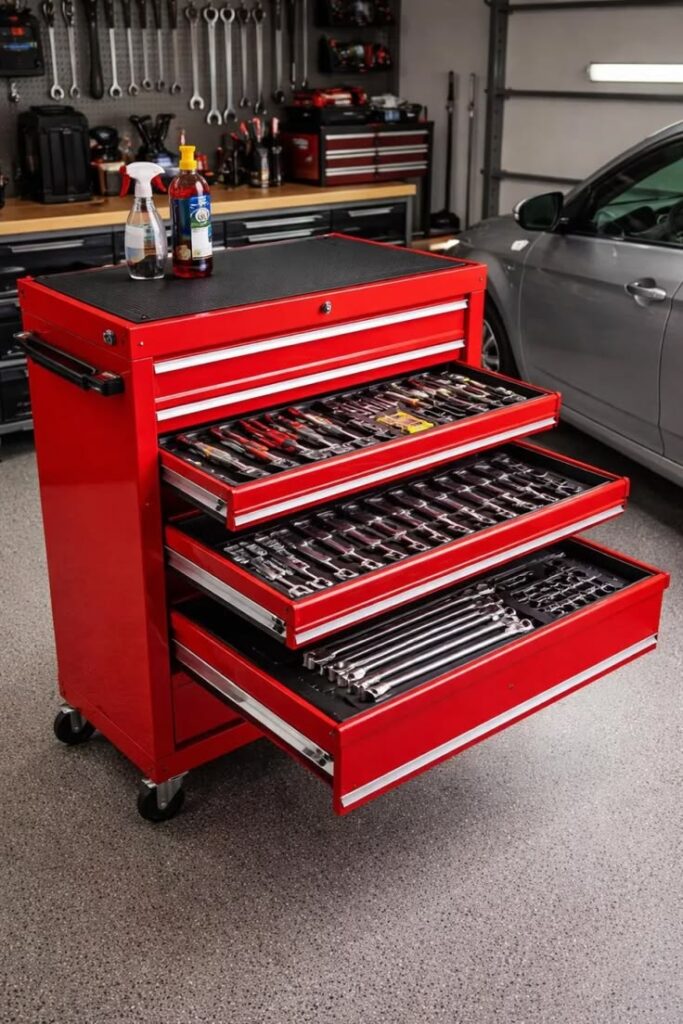
A rolling tool chest puts your entire collection on wheels, which means you can bring your tools to the project instead of making a dozen trips back and forth. Look for chests with a mix of deep drawers and shallow ones, since deep drawers handle power tools while shallow drawers keep small hardware from sliding around. Red and black remain popular colors because they hide grease stains well, though stainless steel carts give a sleeker, modern look.
Practical tip: Add locking caster wheels so the cart doesn’t roll away mid-project.
Now let’s shrink things down and talk about keeping small items visible and accessible.
4. Clear Stackable Storage Bins

Small parts like screws, nails, and drill bits get lost easily in opaque containers. Clear stackable bins solve this instantly because you can see contents at a glance. Choose bins with locking lids to prevent spills if they’re stacked on shelves. Label each one with painter’s tape and a permanent marker, or invest in a label maker for a cleaner look. This system fits any home style since the bins themselves stay tucked inside cabinets or shelving units, out of sight.
Practical tip: Group bins by project type (plumbing, electrical, woodworking) rather than by size for faster access.
Speaking of quick access, magnetic storage takes convenience even further.
5. Magnetic Tool Strips

Magnetic strips mount directly to walls or the inside of cabinet doors, holding metal tools through magnetic force alone. They’re perfect for screwdrivers, wrenches, and utility knives you reach for constantly. Brushed aluminum strips blend into modern spaces, while a black strip against white cabinetry creates a nice contrast in more minimalist garages.
Practical tip: Mount strips at eye level near your main workbench so frequently used tools stay within arm’s reach.
For tools that are too bulky for a strip, overhead storage becomes essential.
6. Overhead Ceiling Racks

Ceiling racks reclaim space nobody thinks to use. These sturdy wire or wood-slat platforms hang from your garage ceiling, perfect for storing seasonal items, ladders, or lumber that would otherwise clutter your floor. Choose a rack rated for at least 250 pounds if you’re storing anything substantial. This solution works in every home style since it’s barely visible once loaded, tucked safely above eye level.
Practical tip: Leave at least 12 inches of clearance between the rack and any garage door tracks to avoid interference.
If ceiling space feels off-limits, consider building storage from reclaimed materials instead.
7. Pallet Wood Tool Rack
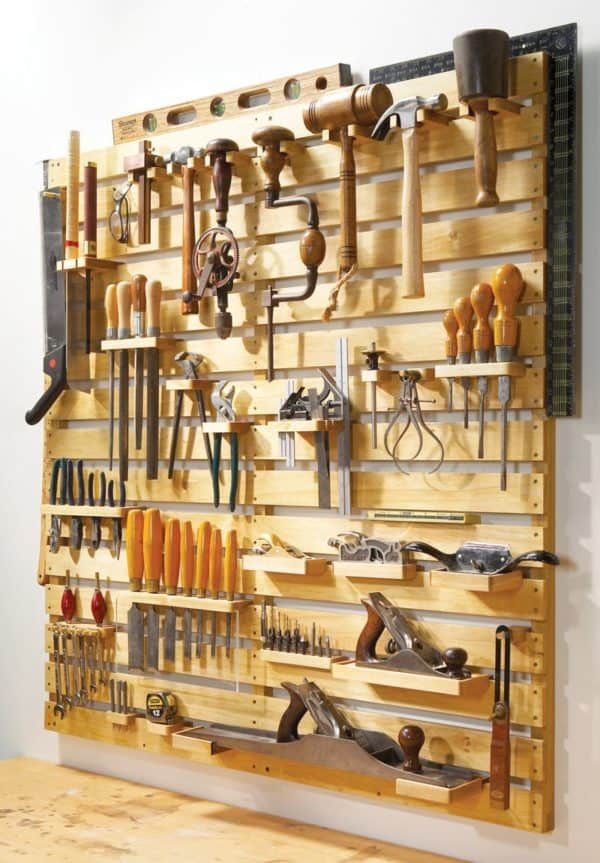
Repurposed wooden pallets make a rustic, budget-friendly tool rack with real character. Sand the wood smooth, then either leave it natural or stain it a rich espresso color for a farmhouse aesthetic. Attach hooks and small shelves directly to the slats for hanging hand tools and holding paint cans. This idea shines in rustic, cottage, or industrial-farmhouse garages.
Practical tip: Seal the wood with a clear polyurethane coat to prevent splinters and extend its lifespan.
Now, let’s talk about giving old furniture new purpose.
8. Repurposed Kitchen Cabinets
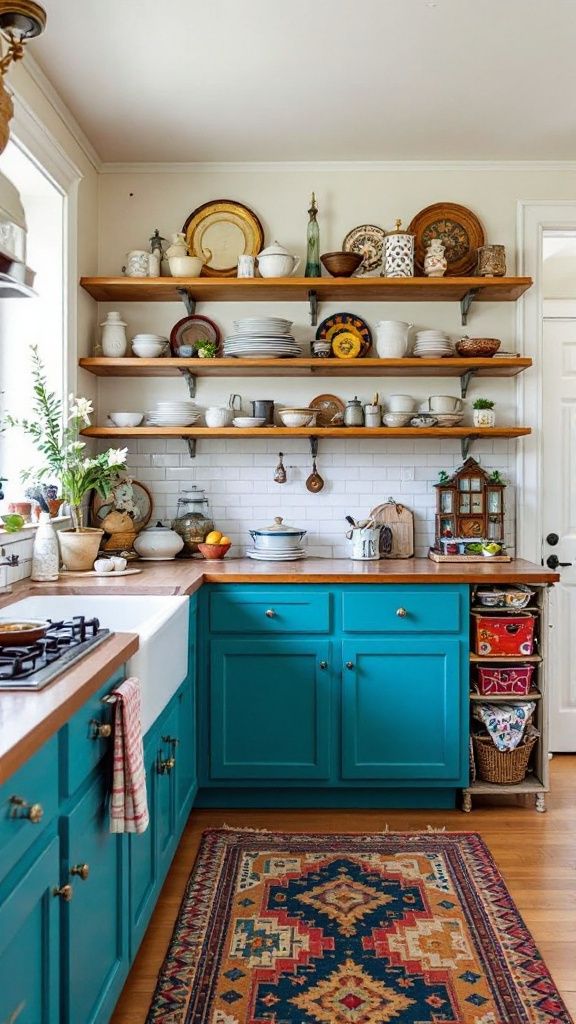
Old kitchen cabinets, whether from your own remodel or a secondhand store, make excellent enclosed tool storage. They hide clutter behind doors, protect tools from dust, and often come with built-in shelving already. Paint them a bold color like forest green or navy to disguise their kitchen origins and give your garage some personality. This works particularly well in traditional or transitional-style homes where matching wood tones already exist.
Practical tip: Add a fresh coat of oil-based paint since it resists grease and moisture better than latex.
Speaking of protecting your tools, let’s look at a rack built specifically for oddly shaped items.
9. Custom Pipe Clamp Rack

Pipe clamps and long-handled tools like shovels and rakes rarely fit neatly into drawers. A custom rack built from wall-mounted PVC pipe segments cut at an angle creates individual slots for each tool, keeping them upright and organized. Paint the pipes to match your garage trim for a cohesive look. This idea suits modern garages that favor clean, geometric storage solutions.
Practical tip: Cut pipe segments at a slight downward angle so tools slide in and stay put without falling forward.
For a more decorative wall option, slat panels offer something a little different from pegboard.
10. Slat Wall Panels
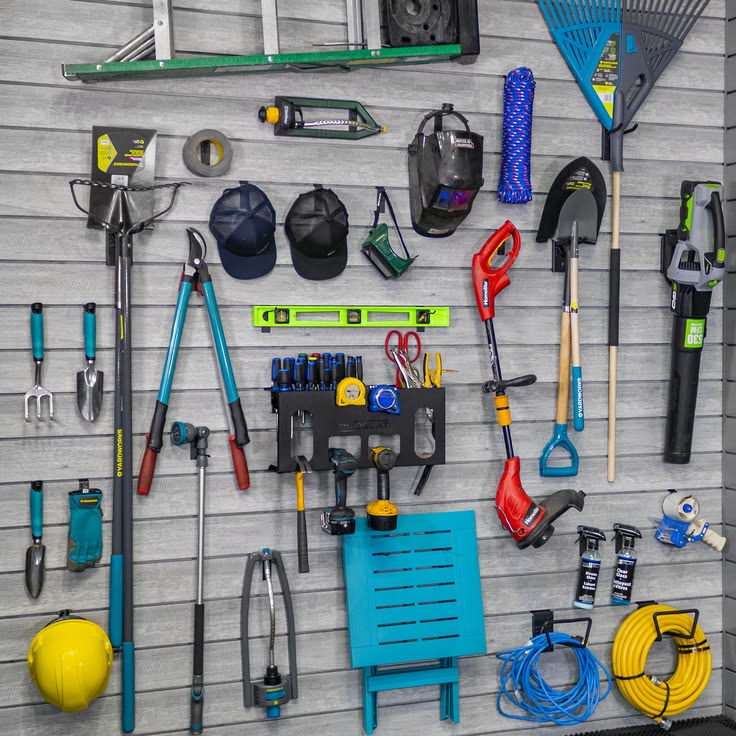
Slat walls use horizontal grooved panels instead of pegboard’s perforated holes, giving a sleeker, more finished appearance. Hooks and brackets slide into the grooves and lock into place, supporting heavier loads than typical pegboard hooks. Available in wood-tone or painted finishes, slat walls suit modern and contemporary garages especially well, since they look almost like feature walls rather than utilitarian storage.
Practical tip: Combine slat wall sections with small shelves for a mixed storage system that handles both hanging tools and bins.
Now for something that takes organization to an almost obsessive (but satisfying) level.
11. Tool Silhouette Shadow Boards
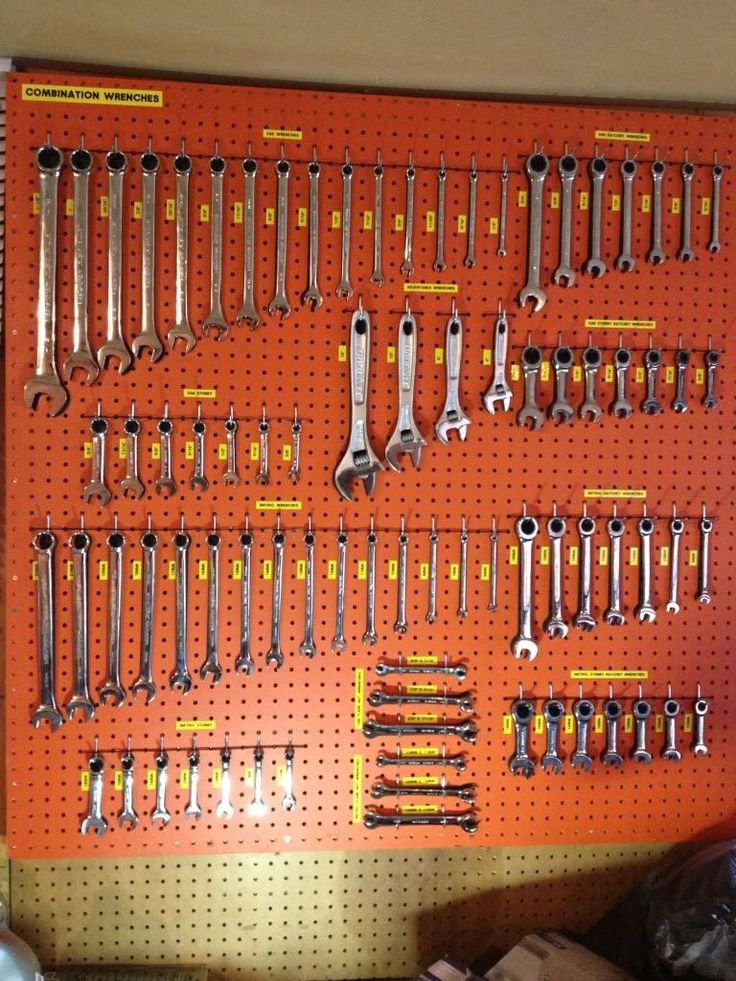
Shadow boards use painted or cut-foam outlines behind each tool, so you instantly notice when something’s missing. This method, borrowed from professional workshops, works wonders for accountability, especially in shared garages or workspaces. Choose a foam insert in black or gray for contrast against metal tools. It fits industrial and minimalist aesthetics perfectly.
Practical tip: Photograph your finished shadow board layout so you can quickly replace or rebuild it if tools ever get rearranged.
If wall space is limited, wearable storage might be your next best move.
12. Tool Apron and Bucket Organizer

A canvas bucket organizer or wearable tool apron keeps essentials within reach while you move around a job site or yard. Choose heavy-duty canvas in a neutral tan or black, and look for reinforced stitching around pockets. This portable option suits any home style since it lives in a closet or on a hook when not in use.
Practical tip: Wash canvas aprons occasionally to remove built-up dust and grime that weakens stitching over time.
For tools that live inside a chest, dividers make all the difference.
13. Drawer Dividers With Foam Inserts

Foam drawer inserts, cut to match your tools’ exact shapes, prevent shifting and reduce wear from tools banging together. This method, often used by mechanics, keeps drawers looking sharp and professional. Black foam offers the best contrast for visibility, though gray works if you prefer a subtler look.
Practical tip: Use a serrated knife or hot wire cutter for cleaner foam cuts than scissors provide.
Now let’s move beyond the workbench and look at an often-overlooked storage spot.
14. Under-Stairs Tool Closet

If you’ve got stairs leading to a basement or attic, the space underneath is often wasted. Building a small tool closet here keeps items hidden yet accessible. Add shelving and hooks inside, and paint the closet door to match your walls for a seamless look. This works especially well in traditional homes where storage closets already exist elsewhere.
Practical tip: Install a battery-powered motion light inside so you’re not fumbling in the dark.
Garage doors themselves hold more storage potential than most people realize.
15. Garage Door Storage Racks

Overhead racks mounted above the garage door track use dead space that’s otherwise wasted. These racks work well for bulky, lightweight items like empty totes, foam padding, or seasonal decorations that don’t need frequent access. This solution fits any style since it’s mounted high and mostly out of view.
Practical tip: Confirm rack clearance doesn’t interfere with the garage door’s opening mechanism before installing.
Small parts deserve their own dedicated storage method too.
16. Mason Jar Wall Storage

Mason jars mounted lid-side up to a board or shelf make charming, functional storage for screws, nails, and washers. Twist the jar into the lid to access contents, then twist off when needed. This idea suits farmhouse and cottage-style garages beautifully, especially with jars arranged by size and labeled by content.
Practical tip: Use a hot glue gun to secure lids firmly to the board before mounting jars.
For longer tools, a different kind of tube-based system works better.
17. PVC Pipe Organizer for Long-Handled Tools

Mount PVC pipe sections vertically along a wall to create individual slots for rakes, brooms, and shovels. This keeps long-handled tools from toppling over or cluttering corners. Paint the pipes a neutral white or match them to your garage trim. This system suits modern and minimalist spaces especially well.
Practical tip: Vary pipe diameters slightly so both thin and thick-handled tools fit snugly.
Let’s pair long-handled storage with a rack built for raw materials too.
18. Vertical Lumber and Material Rack

A vertical rack for storing plywood sheets, boards, and metal stock keeps bulky materials from taking over your floor space. Build it from sturdy 2×4 lumber, angled slightly for stability, and mount it against a wall stud for support. This works particularly well in workshop-style garages tied to woodworking or DIY hobbies.
Practical tip: Add a horizontal support bar at the base to prevent materials from sliding forward over time.
If you’re often working away from a fixed bench, mobile storage combined with a work surface makes sense.
19. Mobile Workbench With Built-In Storage

A workbench on locking wheels gives you a work surface and storage in one unit. Look for options with drawers, open shelving, and pegboard backing built right in. Choose a butcher-block top for durability, and a painted steel frame in black or gray for a clean industrial look. This suits garages of any style since the bench itself becomes a functional centerpiece.
Practical tip: Distribute weight evenly across drawers to keep the bench from tipping when fully loaded.
Once your storage systems are built, labeling ties everything together.
20. Label and Color-Coded System

A color-coded labeling system, using colored tape or labels, helps you sort tools by project type or frequency of use. Red for electrical, blue for plumbing, green for woodworking, for example. This works alongside nearly every other system on this list and suits any home style since it’s a functional layer rather than a visual centerpiece.
Practical tip: Keep a printed key taped inside a cabinet door so anyone using the space understands your color system.
Now let’s talk about a tried-and-true classic that never really goes out of style.
21. Toolbox With Modular Trays
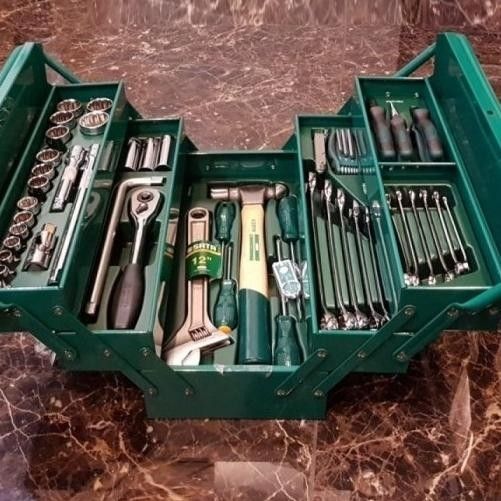
A stackable toolbox with modular, removable trays lets you customize compartment sizes as your tool collection grows. Choose one with a sturdy latch and reinforced corners for durability. Red and black remain classic choices, though many brands now offer sleek gray or camo finishes. This portable system suits any garage style.
Practical tip: Keep your most-used tools in the top tray so you’re not digging through layers every time.
For gardening tools specifically, a hanging basket system offers a nice alternative.
22. Hanging Tool Basket System

Wire baskets hung from wall hooks or ceiling brackets work wonderfully for gardening tools, gloves, and smaller hand tools that don’t hang well on hooks alone. Choose galvanized steel baskets for durability against moisture, especially if stored in a shed. This idea fits cottage and farmhouse aesthetics particularly well.
Practical tip: Line basket bottoms with a thin foam pad to prevent tools from scratching each other.
Finally, let’s finish with a solution that makes use of awkward, often-wasted space.
23. Corner Shelving Unit
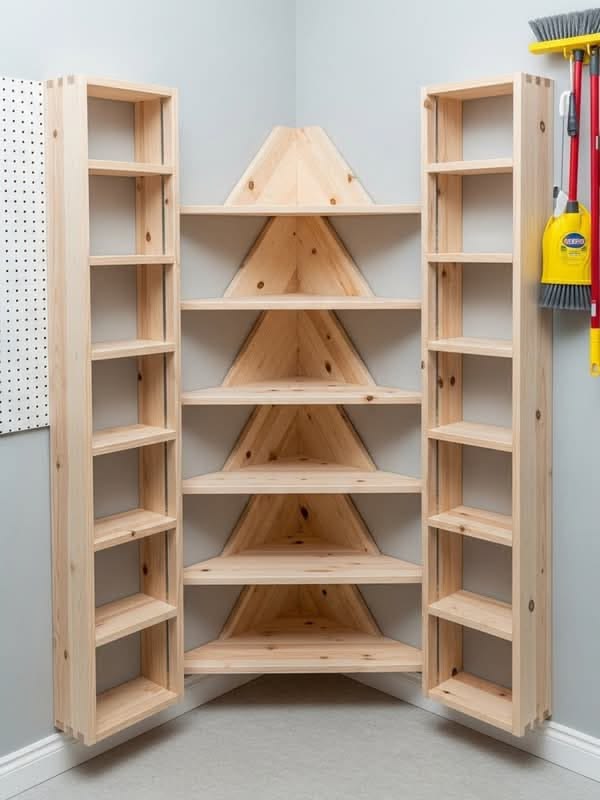
Corners often go unused in garages, yet they’re perfect for a tiered shelving unit that holds bins, small tools, or paint cans. Choose adjustable steel shelving so you can customize height as your storage needs change. This works in nearly any style, especially when paired with matching bins for a cohesive look.
Practical tip: Anchor corner shelving to wall studs, not just drywall, since loaded shelves get heavy fast.
Comparing Storage Systems at a Glance
Tool Storage Method Comparison Table
| Storage Idea | Best For | Average Cost | Mobility | Best Home Style |
|---|---|---|---|---|
| Pegboard Wall System | Hand tools | $20–$60 | Fixed | Modern, Farmhouse |
| French Cleat System | Flexible layouts | $50–$150 | Semi-fixed | Industrial, Traditional |
| Rolling Tool Chest | Power tools | $100–$500 | Mobile | Any |
| Clear Stackable Bins | Small hardware | $15–$50 | Mobile | Any |
| Magnetic Strips | Metal hand tools | $10–$30 | Fixed | Modern, Minimalist |
| Ceiling Racks | Seasonal/bulky items | $40–$120 | Fixed | Any |
| Pallet Wood Rack | Budget DIY storage | $0–$30 | Fixed | Rustic, Farmhouse |
| Shadow Boards | Accountability systems | $30–$80 | Fixed | Industrial |
| Mobile Workbench | Combined work/storage | $150–$600 | Mobile | Any |
Material Durability Comparison
| Material | Durability | Moisture Resistance | Cost Range |
|---|---|---|---|
| Steel | High | Excellent | $$$ |
| Wood | Medium | Poor unless sealed | $ |
| PVC | Medium | Excellent | $ |
| Foam | Low | Fair | $ |
| Canvas | Medium | Fair | $ |
Tips for Success
Getting your tool storage right isn’t just about buying the fanciest rack. Keep these pointers in mind as you plan:
- Measure your space twice before buying any wall-mounted system.
- Group tools by project or frequency of use, not just by type.
- Leave a little extra room for growth since tool collections rarely shrink.
- Mount anything heavy into wall studs, never just drywall alone.
- Keep a small “loose ends” bin for miscellaneous items that don’t fit a category yet.
Common Mistakes and How to Avoid Them
Mistake: Overcrowding pegboards until nothing has breathing room.
Fix: Leave gaps between tools so you can actually lift them off the hooks.
Mistake: Skipping wall stud anchoring for heavy shelving.
Fix: Use a stud finder before drilling, every single time.
Mistake: Ignoring humidity in sheds, which rusts metal tools.
Fix: Add a small dehumidifier or moisture-absorbing packets to enclosed storage.
Mistake: Buying storage before organizing what you actually own.
Fix: Sort and declutter first, then buy storage sized to your real inventory.
Similar Variations Worth Exploring
If these 23 ideas sparked your interest, a few variations are worth a mention too. Some folks combine pegboards with slide-out drawers for a hybrid wall system. Others build entire “tool rooms” using shipping containers or converted closets. Magnetic knife strips, originally meant for kitchens, work surprisingly well for small screwdriver sets too. And for renters, freestanding shelving units with zip-tied pegboard backing offer nearly all the benefits without a single hole drilled into the wall.
Wrapping Up
Organizing a garage or workshop doesn’t happen overnight, and honestly, it shouldn’t. I’ve found that the best results come from mixing a few of these tool storage ideas rather than committing to just one system. Start small, maybe with a pegboard or a few clear bins, then build outward as you figure out what actually fits your workflow. Whatever combination you choose, the goal stays the same: fewer lost tools, safer spaces, and a garage that finally works for you instead of against you.