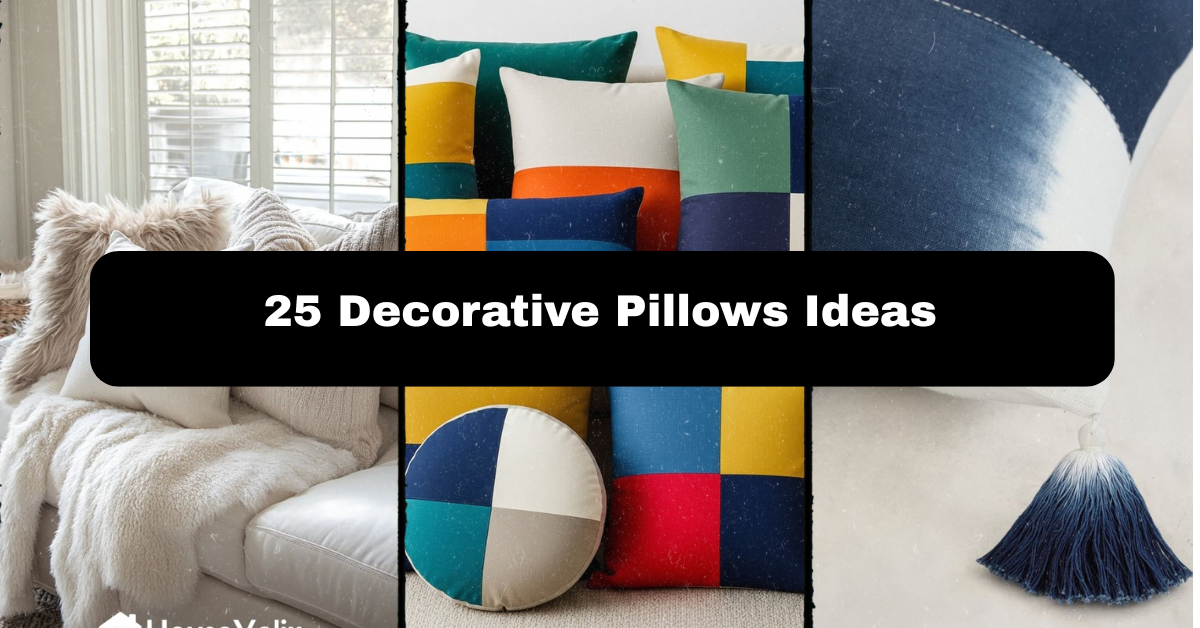
25 Decorative Pillow Ideas That Will Transform Every Room in Your Home
Having been reading tons of design blogs, experimenting with fabric samples, and rearranging throw pillows on my couch for years now, I think I can distinguish between what really works in terms of decorative pillows and what is just a pretty picture. All of these ideas come from practical experience rather than just following the trends.
What are the best decorative pillow ideas then? Here are the most popular choices such as color-blocks, textured neutrals, boho prints, velvet jewel tones, and seasonal pillows. All of these styles utilize certain colors, fabrics, and pillow sizes in order to complement your home’s interior.
But wait. This article doesn’t end here because I will show you how to choose the right size, fabric, avoid common mistakes, and create variations of each style.
Why Decorative Pillows Deserve More Credit Than They Get
Everyone views throw pillows as an afterthought to be considered last after choosing a couch, rug, and coffee table. It is wrong, though. Pillow sets are the easiest and cheapest way to completely alter the mood of the space. Change pillow sets and a white couch will feel cozy or modern or coastal without purchasing any new furniture. In addition, they are flexible. Made a mistake? Send it back or stash it in a closet. Try doing that with a new sofa set. Below, you can find my 25 options that fit all styles, budgets, and spaces.
1. Color-Blocked Statement Pillows

Color blocking involves using two or three solid-colored pillows in lieu of patterns. This is possible since the use of solid colors enables the eyes to relax while adding character to the neutral sofa. Select colors that are located at opposite ends of the color wheel, such as mustard and navy, as it provides an impressive amount of contrast. The plain linen sofa should be selected for pairing with these colored pillows. To make it look professional, avoid using glossy materials but go for matte cotton or wool combinations, which could be unappealing when used in solids.
Now, let us add some softness by using textures instead of colors.
2. Textured Neutral Layering

In case bright tones do not suit you, you can focus on texture rather than color. You may mix bouclé, linen, thick knit, and velvet pillows in the hues of cream, oatmeal, and taupe. The diversity of textures will add interest to this combination despite its monotone color scheme. It is great for the Scandinavian style and Organic Modern interior design when relaxation and harmony prevail. One recommendation is that different-sized pillows should be used, like 18 inches, 20 inches, and a lumbar one. Patterns are waiting ahead of you once you learn how to play with textures!
3. Bohemian Mix-and-Match Patterns

The bohemian style is based on “organized chaos”. You can mix pillows made from ikat, paisley, and stripe prints in warm terracotta, mustard, and dark red colors. The key here is in maintaining one coherent color theme in all the prints in order not to look like a mishmash. Tassels and fringes will give you additional texture. Such an approach looks perfect when combined with rattan furniture and wooden tones. Hint: always pick up an odd number of pillows (5 or 7 pieces). From prints, we will now go to fabrics that immediately create luxury atmosphere.
4. Velvet Jewel Tones

Pillows made of velvet in shades such as emerald, sapphire, or ruby immediately add luxury to any room. Velvet fabric reflects light in a way that cotton doesn’t, thus making even a simple room look rich. Combine them with dark wooden furniture or a leather couch for the traditional look or the transition one. Good idea: don’t put too many velvet pillows on a whole sofa; two or three of them together with the plain pillow is enough to avoid excess. This looks especially good in dining nooks and living rooms. Let’s go to the seaside now.
5. Coastal Stripes and Linen

A combination of blue and white stripes along with natural linen cushions adds to the effortless coastal vibe. Opt for comfortable and not very rigid materials like cotton and linen. The combination complements the look of rattan furniture, wood flooring, and white walls. Tip: Include a navy colored solid cushion to complement the stripes in order to make sure that the combination does not look overdone. Ideal for sunrooms and beach houses alike. Time to move to the farmhouse for a little bit of a rustic look.
6. Farmhouse Ticking Stripes

Ticking stripe pillows, thin black or navy lines on cream cotton, are a farmhouse classic for good reason. They’re simple, timeless, and pair with almost anything. Combine with burlap or grain-sack pillows for texture. This look shines with distressed wood furniture and neutral walls. Practical tip: choose a 12×20-inch lumbar size for these on a farmhouse sofa; the elongated shape mimics classic French farmhouse styling. This works in kitchens, mudrooms, and cozy living rooms alike. Let’s shift gears toward something more artistic.
7. Monochrome Ombre Pillows

Ombre pillows fade from light to dark within a single color family, like blush to burgundy or sky blue to navy. This creates visual movement without introducing a second color. Works well in modern and contemporary spaces with clean lines. Practical tip: place the darkest pillow in back and lightest in front for a layered, dimensional effect. This is a subtle way to add drama without overwhelming a room. Now let’s talk shapes instead of shades.
8. Geometric Pattern Play

Geometric pillows with triangles, hexagons, or chevron patterns bring structure and energy to a space. Stick to two or three colors max so the pattern doesn’t overwhelm. Pair with mid-century modern furniture and clean-lined sofas. Practical tip: balance one bold geometric pillow with a solid-colored pillow of similar size to avoid visual clutter. This works especially well in home offices and modern living rooms. Let’s soften things again with a cottage-inspired option.
9. Floral Cottagecore Charm

Small-scale floral prints in soft pastels bring cottagecore charm into a space. Think ditsy florals, not oversized tropical prints. Pair with vintage-style furniture, wicker baskets, and lace curtains. Practical tip: mix floral pillows with a solid gingham or check pattern to keep the look from feeling too sweet. This suits cottage, farmhouse, and traditional homes beautifully. Next, let’s get cozy with something furry.
10. Faux Fur Cozy Accents

Faux fur pillows add instant coziness, especially in fall and winter months. Stick to neutral tones like ivory, gray, or caramel so the texture stands out rather than the color. Pair with knit throws and warm lighting. Practical tip: use faux fur sparingly, one or two pillows max, since too much can feel overwhelming or costume-like. Works well in bedrooms and reading nooks. From cozy textures, let’s move to something with a bit more shine.
11. Metallic Thread Glam

Pillows with subtle metallic thread woven through the fabric add glamour without being gaudy. Gold or silver thread on a neutral base works in almost any room. Pair with mirrored furniture or brass accents for cohesion. Practical tip: choose metallic thread over sequins for a more sophisticated, less “holiday party” look. This suits glam and transitional interiors. Now let’s look at something with more history behind it.
12. Vintage Kilim Pillows

Kilim pillows, made from flat-woven wool rugs, bring rich pattern and history into a room. Each one is slightly different, which adds authenticity. Pair with leather furniture and wood tones for an eclectic, collected-over-time look. Practical tip: buy kilim pillows secondhand or from rug shops rather than mass retailers for better quality and unique patterns. Great for bohemian and eclectic homes. Let’s move outdoors to nature-inspired prints.
13. Botanical Print Pillows

Large leaf or palm prints bring the outdoors in, especially in green and white combinations. Pair with rattan or bamboo furniture for a tropical feel. Practical tip: balance a busy botanical print with plain green or white pillows so the pattern has room to breathe. This works in sunrooms and casual living spaces. Now, let’s personalize things a bit.
14. Personalized Monogram Pillows

Monogrammed pillows add a custom touch, whether it’s a family initial or a meaningful date. Stick to a simple font and neutral fabric so it doesn’t look dated quickly. Practical tip: use monogram pillows as accents, not the main focus, pairing them with two or three plain pillows. Works well in traditional and transitional bedrooms. Let’s take this idea outside next.
15. Outdoor Weather-Resistant Pillows

Outdoor pillows made from solution-dyed acrylic resist fading, mold, and moisture. Choose bold stripes or tropical prints for patio furniture. Practical tip: always check for a “solution-dyed” label, not just “outdoor fabric,” since solution-dyed holds color far longer in direct sun. This works for patios, porches, and sunrooms of any style. Now, let’s go bigger.
16. Oversized Floor Pillows

Floor pillows in the 24 to 36-inch range create casual extra seating for kids’ rooms, media rooms, or reading corners. Choose sturdy, washable fabric since floor pillows see more wear. Practical tip: use a removable, zippered cover so you can wash it easily. Works in playrooms, casual dens, and boho-styled spaces. Let’s talk trim details next.
17. Tassel and Fringe Details

Adding tassels or fringe to plain pillows instantly adds movement and texture. Works especially well in bohemian, global, and eclectic interiors. Practical tip: choose fringe in a slightly contrasting color for definition, rather than matching it exactly to the pillow fabric. This small detail makes a huge visual difference for very little cost. Now let’s revisit color theory in a more advanced way.
18. Color-Wheel Pairing

Rather than random colors, use the actual color wheel to pick complementary or analogous pillow shades. Blue and orange, or green and yellow, create balanced contrast. Practical tip: use the 60-30-10 rule, 60% neutral, 30% secondary color, 10% accent color, when choosing your pillow mix. Works in nearly any design style since it’s rooted in color theory, not trend. Let’s talk about switching things up throughout the year.
19. Seasonal Rotation Pillows

Keep two sets of pillow covers, lighter linen for summer and heavier wool or velvet for winter. This keeps your space feeling fresh without buying new furniture every season. Practical tip: store off-season covers flat in a bin to avoid creasing. Works for literally any home style since it’s a strategy, not a look. Now, let’s go wild with pattern.
20. Animal Print Accents

Leopard, zebra, or snake print pillows add an unexpected edge to a room. Use sparingly, one pillow per seating area is usually enough. Practical tip: pair animal print with solid neutrals, never with another busy pattern, to keep it from looking cluttered. Works well in glam, eclectic, and transitional spaces. Let’s slow things down with a handmade touch.
21. Quilted Patchwork Pillows

Quilted pillows made from mixed fabric scraps bring a handmade, cozy feel. Great for farmhouse and cottage interiors. Practical tip: choose patchwork pillows with a unifying color thread (like all blues or all florals) so the mix feels curated, not random. Works beautifully layered on a quilt-covered bed. Now, let’s add a little shimmer and flexibility.
22. Sequin and Reversible Pillows

Reversible sequin pillows let you “draw” designs by brushing the sequins in different directions. Fun for kids’ rooms or playful spaces. Practical tip: use these as an interactive accent rather than your main design pillow, since the novelty works best in small doses. Now, let’s simplify things completely.
23. Minimalist Scandinavian Pillows

Simple, solid pillows in white, gray, or black with clean lines and no embellishment fit Scandinavian minimalism perfectly. Practical tip: choose one textured pillow (like a subtle knit) to keep the minimalist look from feeling cold. Works in modern and Scandinavian-style homes. Let’s travel globally for the next idea.
24. Global Ikat Patterns

Ikat’s blurred, dye-resist pattern brings global flair to a room. Pair with warm wood tones and woven textures. Practical tip: choose one ikat pillow as a focal point rather than covering the whole sofa in the pattern. Works in eclectic and global-inspired interiors. Finally, let’s finish with a DIY option anyone can try.
25. DIY Photo or Fabric Scrap Pillows

Custom photo pillows or scrap-fabric patchwork pillows add a personal, sentimental touch. Great for gifts or nurseries. Practical tip: use a canvas or heavier cotton blend for photo transfer pillows so the image doesn’t distort with washing. Works in nearly any casual or personalized space.
Pillow Size Guide by Room and Use
| Pillow Size | Best Use | Common Shape | Typical Room |
|---|---|---|---|
| 12×20 in | Lumbar support | Rectangle | Living room, bedroom |
| 18×18 in | Standard accent | Square | Sofa, armchair |
| 20×20 in | Statement piece | Square | Living room |
| 22-24 in | Bed styling | Square | Master bedroom |
| 24-36 in | Floor seating | Square | Playroom, media room |
| 14×36 in | Bench styling | Long rectangle | Entryway, dining nook |
Fabric and Filling Comparison Table
| Fabric Type | Durability | Feel | Best For | Care Level |
|---|---|---|---|---|
| Cotton | Medium | Soft, breathable | Everyday use | Easy |
| Linen | Medium | Textured, relaxed | Coastal, farmhouse | Moderate |
| Velvet | Medium-High | Plush, luxurious | Formal spaces | Moderate |
| Faux Fur | Low-Medium | Cozy, warm | Winter accents | Spot clean |
| Outdoor Acrylic | High | Slightly stiff | Patios, porches | Very easy |
| Wool/Kilim | High | Dense, textured | Eclectic, boho | Low |
Tips for Success
- Mix pillow sizes rather than buying a matched set for a more layered, designer look.
- Stick to an odd number of pillows per sofa or bed for a relaxed, natural arrangement.
- Choose one dominant pattern and let solids support it, rather than mixing multiple busy prints.
- Swap covers seasonally instead of replacing entire pillows to save money.
- Always fluff and rotate pillows regularly to keep filling from flattening.
Common Mistakes and How to Avoid Them
Buying pillows too small for the sofa: Small pillows on a large sofa look lost. Stick to 20-inch or larger for big sectionals.
Matching everything exactly: Perfectly matched pillow sets can look flat and store-bought. Mix textures and slightly varied shades instead.
Overcrowding the space: More than five or six pillows on one sofa often looks cluttered rather than cozy. Edit down to what actually gets used.
Ignoring fabric care: Velvet and silk pillows in high-traffic homes with kids or pets will show wear fast. Choose performance fabrics for busy households.
Forgetting the back of the pillow: Cheap inserts show through thin fabric. Always size your insert one inch larger than the cover for a fuller look.
Similar Variations Worth Trying
- Swap square pillows for round bolster pillows on a reading chair for a softer silhouette.
- Try lumbar pillows on dining chairs for unexpected comfort and color.
- Use pillow covers with hidden zippers instead of buttons for a cleaner, more polished look.
- Layer a small 12-inch pillow in front of larger ones for added depth on a bed.
Decorative pillows might seem like a small detail, but they’re honestly one of the easiest ways to completely change how a room feels without a big renovation. Whether you go bold with color-blocking or keep it simple with Scandinavian minimalism, the right combination of size, fabric, and pattern makes all the difference. Start with one or two ideas from this list, see how they feel in your space, and build from there. That’s really the best way to figure out which decorative pillows actually work for your home.