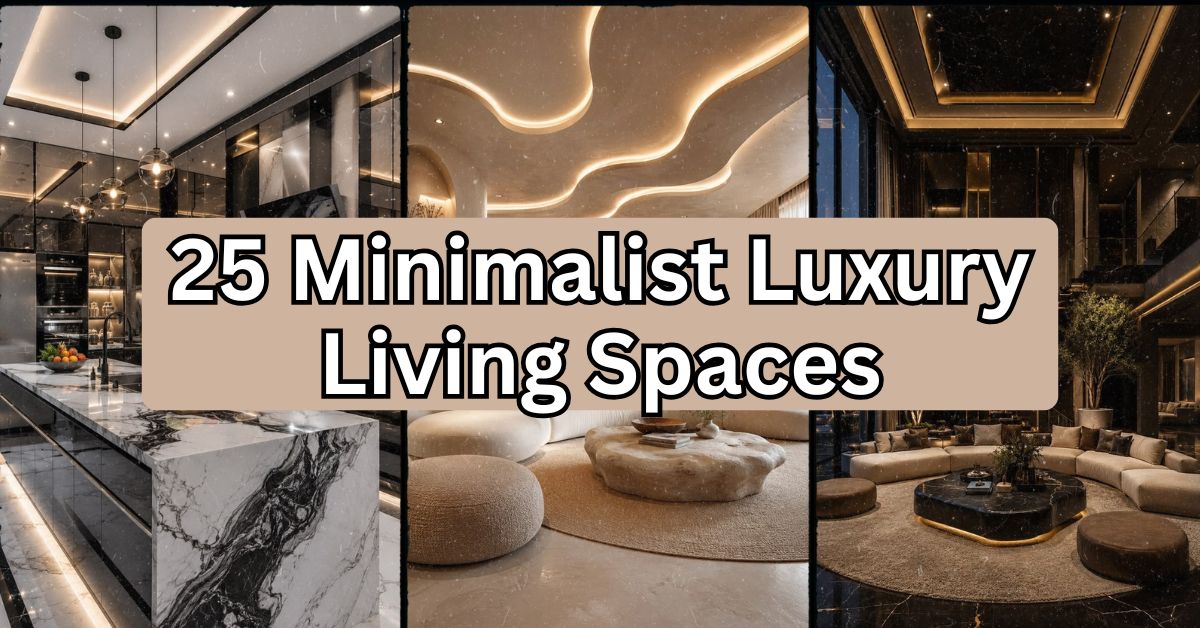
25 Minimalist Luxury Living Spaces That Actually Feel Like Home
Since years have gone by in researching trends in interior design, visiting model houses and trying out various furniture layouts in my own living room, I know how to distinguish a truly elegant minimalist luxury living space from an empty room. This article provides practical design concepts rather than stunning images and, after reading it, you will definitely know how to create the desired look for your home.
What does a minimalist luxury living space consist of then? Minimalist luxury living spaces include a combination of clear lines, neutral color schemes and quality materials along with several statement elements. Every element in such rooms serves its purpose and nothing is there by coincidence; every object in the room gets its place due to craft, comfort or visual effect.
Stay tuned because I will be sharing 25 unique minimalist luxury living space ideas including furniture options, color schemes, styling suggestions and the mistakes you’d better avoid.
What Makes a Living Space Feel Both Minimalist and Luxurious?
Here’s the thing most people get wrong: they think minimalist means cheap, and luxury means cluttered with gold trim. Neither is true. The real magic happens when you strip a room down to its essentials, then invest in a few pieces that feel expensive to the touch. Think soft wool rugs, solid wood coffee tables, and lighting that actually flatters the room instead of just lighting it up. Below, I’ve broken down 25 different ways to pull this off, no matter what your current living room looks like right now.
1. Monochrome Marble Elegance

A single-color palette built around marble textures instantly reads as high-end. Stick to whites, warm greys, or soft beige, and let the marble veining do the visual work. Choose a marble-topped coffee table, pair it with a low-profile sofa in bouclé fabric, and add one black metal floor lamp for contrast. Keep walls bare except for a single oversized mirror. This style suits modern and contemporary homes best, though it can work in transitional spaces too. Tip: use matte marble-look porcelain if real stone is out of budget—nobody will know the difference from across the room. Next, let’s talk about a warmer take on neutral tones.
2. Warm Neutral Sanctuary

Instead of stark whites, this idea leans into caramel, sand, and terracotta hues layered together. Furniture should feature rounded edges—think a curved sofa or an oval side table—paired with linen curtains and a jute rug underneath. Decorative elements stay sparse: one ceramic vase, one piece of framed art, done. This approach works beautifully in traditional homes wanting a softer update, or in Scandinavian-style spaces craving more warmth. Practical tip: layer at least three different textures (linen, wood, wool) even if the colors stay similar, so the room doesn’t feel flat. This warmth naturally leads into our next idea, which blends East and West design philosophies.
3. Japandi Fusion Lounge

Japandi mixes Japanese simplicity with Scandinavian coziness, and it’s a natural fit for minimalist luxury. Furniture stays low to the ground—floor cushions, a low wooden bench, a platform sofa. Colors stick to muted greens, charcoal, and natural wood tones. Add one bonsai tree or a simple ikebana arrangement as your decorative focal point. This works exceptionally well in open-plan modern homes but can also soften an overly industrial loft. Tip: choose furniture with visible joinery and natural grain, since imperfection is part of the appeal here. Now let’s flip to a bolder, moodier direction.
4. Black and Gold Statement Room

This one’s for people who want drama without clutter. Base your room in matte black walls or furniture, then add brushed gold accents through a floor lamp, picture frames, or drawer pulls. Keep the sofa in a deep charcoal or black leather, and let one gold-rimmed mirror anchor the space. This suits modern and art-deco leaning homes especially well. Practical tip: limit gold accents to three or four pieces max, otherwise it starts to feel gaudy instead of refined. From bold contrast, let’s move into something more sculptural and artistic.
5. Sculptural Furniture Showcase

Here, the furniture itself becomes the art. Pick one or two statement pieces—a curved chaise, an asymmetrical coffee table—and let everything else recede into the background. Stick to a single neutral color for walls and flooring so the shapes pop. This style fits modern and eclectic homes that already have strong architectural bones. Tip: photograph your room from different angles before finalizing furniture placement, since sculptural pieces read differently depending on viewing angle. Lighting plays a huge role in showcasing shapes like these, which brings us to natural light.
6. Floor-to-Ceiling Window Retreat

If you’re lucky enough to have big windows, don’t cover them up with heavy drapes. Use sheer linen panels or leave them bare, and let the outdoor view become your main decoration. Furniture should stay low and minimal so it doesn’t block sightlines—think a slim sofa and a glass-top table. This works great in modern and mid-century homes with clean architectural lines. Practical tip: add one large potted plant near the window to soften the transition between indoors and outdoors. Speaking of softness, let’s talk fabric next.
7. Textured Linen Haven

Linen has this effortless, expensive-looking wrinkle that plastic fabrics just can’t fake. Cover your sofa in a linen slipcover, add linen throw pillows in a slightly darker shade, and drape a linen throw over one armchair. Stick to a color story of oatmeal, dove grey, and soft white. This suits farmhouse and coastal-inspired homes as much as modern ones. Tip: wash linen before use so it gets that slightly rumpled, lived-in texture immediately instead of looking stiff. Now let’s contrast that softness with something more industrial.
8. Concrete and Cashmere Contrast

Pairing raw concrete surfaces with plush cashmere throws creates that high-low tension designers love. If a concrete floor or wall isn’t realistic, use concrete-look tile or polished plaster instead. Add a cashmere throw blanket and a wool rug to soften the hard surfaces. This works incredibly well in loft-style and industrial homes. Practical tip: keep the concrete elements limited to one wall or the floor—too much raw material makes the room feel cold instead of chic. Next, let’s step into a decade known for glamour.
9. Art-Deco Inspired Minimalism

Take the geometric shapes and glamour of art-deco, but strip away the excess ornamentation. Use a fan-shaped mirror, a velvet sofa in emerald or navy, and brass hardware, but keep patterns minimal. This style fits traditional and glam-leaning modern homes. Tip: choose one geometric rug instead of patterned wallpaper to keep the deco feel without overwhelming the space. From sharp angles, let’s move to something with more flow.
10. Curved Furniture Flow

Curves feel inherently luxurious because they’re harder to manufacture and softer on the eye. Swap your rectangular sofa for a curved sectional, add round side tables, and hang a circular mirror. Stick to a soft, warm neutral palette so the shapes stay the focus. This works in modern, contemporary, and even Hollywood Regency-inspired homes. Practical tip: balance curves with at least one straight-lined piece, like a rectangular rug, so the room doesn’t feel like it’s floating. Let’s ground things further with layered textiles next.
11. Neutral Layered Textiles

Layering multiple neutral-toned textiles—rugs, throws, cushions—creates depth without adding color or clutter. Start with a base rug in ivory, layer a smaller patterned rug on top, then add cushions in varying textures like velvet, bouclé, and linen. This suits nearly every home style, from traditional to modern. Tip: stick to three shades max within your neutral range so it reads intentional rather than mismatched. Now, let’s shine a light on lighting itself.
12. Statement Lighting Focal Point

Sometimes the entire room can stay simple except for one jaw-dropping light fixture. A sculptural pendant or an oversized arc floor lamp instantly elevates a plain room. Keep furniture and walls neutral so the light fixture gets full attention. This works particularly well in modern and contemporary spaces with higher ceilings. Practical tip: dim, warm-toned bulbs (2700K or lower) make even budget fixtures look more expensive. Storage matters just as much as style, so let’s cover that next.
13. Hidden Storage Luxury

Clutter kills the minimalist luxury vibe faster than anything else. Built-in cabinetry, storage ottomans, and furniture with hidden compartments keep surfaces clear while hiding daily mess. Stick to matching wood tones or matte finishes so storage blends into the wall rather than standing out. This works in every home style, especially smaller apartments. Tip: dedicate one drawer or basket specifically for remote controls and chargers, the biggest clutter culprits. Let’s shift now to an earthier, calmer palette.
14. Earth-Tone Zen Space

Think clay, olive, and warm brown tones paired with natural materials like rattan and unfinished wood. A low wooden coffee table, a woven jute rug, and a single ceramic sculpture complete the look. This style suits bohemian-minimalist and Japandi-inspired homes. Practical tip: bring in one live plant, like a fiddle leaf fig, to reinforce the earthy, grounded feeling. Next, let’s cool things down with glass and metal.
15. Glass and Chrome Refinement

Glass tabletops and chrome legs create a sleek, almost weightless look that photographs beautifully. Pair a glass coffee table with a chrome floor lamp and a white or grey sofa. This style is a natural fit for modern and Hollywood Regency homes. Tip: clean glass surfaces weekly, since fingerprints show up fast and ruin the sleek effect. Velvet brings a totally different texture, which we’ll explore next.
16. Velvet Accent Minimalism

A single velvet armchair in emerald, navy, or burgundy can carry an entire neutral room. Keep everything else simple—white walls, a plain sofa, minimal decor—so the velvet piece stands out as the luxury statement. This works in modern, traditional, and transitional homes alike. Practical tip: rotate the velvet piece seasonally if you want variety without redesigning the whole room. Now let’s open things up with airy, open-plan design.
17. Open-Plan Airy Luxury

Removing visual barriers between the living room and adjacent spaces makes everything feel bigger and more upscale. Use furniture that’s lower in height so sightlines stay open, and stick to one continuous color palette across connected rooms. This suits modern and open-concept homes especially well. Tip: use a large area rug to visually “anchor” the living room within the open floor plan. Stone brings texture back into focus next.
18. Natural Stone Feature Wall

A textured stone accent wall behind the sofa or TV instantly adds depth and a sense of permanence. Stick to warm-toned stone like travertine or limestone for a softer look. Keep furniture simple and neutral so the wall stays the focal point. This works in modern, Mediterranean, and rustic-modern homes. Practical tip: use stone veneer panels instead of full stone slabs to cut costs significantly. Let’s talk metallics next.
19. Metallic Accent Minimalism

Brushed brass, aged bronze, or matte black metal accents add a quiet richness without loud color. Choose metal-legged furniture, a metallic-framed mirror, and small metallic decor objects like bowls or candle holders. This suits modern, industrial, and art-deco homes. Tip: stick to one metal finish throughout the room for consistency—mixing gold and silver too much creates visual noise. Furniture height plays a big role too, so let’s cover that next.
20. Low-Profile Furniture Lounge

Furniture that sits closer to the ground creates a relaxed yet upscale feeling, popular in mid-century and Japandi design. A low sofa, floor cushions, and a low coffee table make ceilings feel higher and rooms feel more spacious. This works especially well in smaller living rooms. Practical tip: pair low furniture with tall, slim decor like a floor vase to balance the proportions. Next, let’s go full white-out.
21. Monochrome White Cocoon

An all-white room, done right, feels serene rather than sterile. Layer different whites—ivory, chalk, cream—across the sofa, walls, and rug to add depth without introducing color. Add one black or wood accent piece to ground the space. This suits modern, Scandinavian, and coastal homes. Tip: use washable slipcovers on white furniture, since practicality matters as much as looks. Wood and leather bring a different kind of warmth next.
22. Wood and Leather Warmth

Combining rich leather upholstery with warm wood furniture creates a masculine, upscale feel without trying too hard. A leather sofa in cognac or espresso paired with a solid oak coffee table anchors the room nicely. This style fits traditional, mid-century, and industrial homes. Practical tip: condition leather furniture every six months to keep it looking rich rather than worn. Rugs deserve their own spotlight next.
23. Statement Rug Anchor

A single, high-quality rug can define the entire room’s luxury level. Choose a hand-knotted wool or silk-blend rug in a subtle pattern, and keep furniture around it simple so the rug stays the star. This works in traditional, transitional, and modern homes alike. Tip: size your rug so all major furniture pieces sit at least partially on top of it—floating furniture off the rug looks unfinished. Now let’s talk about walls again, but differently this time.
24. Gallery Wall Minimalism

Even minimalist rooms can have personality through curated wall art. Choose three to five framed pieces in matching frame colors and hang them with generous spacing between each. Stick to a cohesive color theme across the artwork. This suits modern, contemporary, and traditional homes. Practical tip: use a paper template on the floor first to plan spacing before committing to nail holes. Let’s close out our list with a breath of fresh air—literally.
25. Indoor Plant Luxury Retreat

Large, architectural plants like fiddle leaf figs or olive trees add life and softness to an otherwise minimal room. Stick to two or three plants max, placed in matching ceramic or woven planters. This works in nearly every home style, especially Japandi and bohemian-minimalist spaces. Tip: choose low-maintenance varieties like snake plants if you don’t have a green thumb, since a dying plant ruins the luxury effect fast.
Style Comparison Table
| Design Idea | Best Budget Range | Difficulty Level | Ideal Room Size | Best Home Style |
|---|---|---|---|---|
| Monochrome Marble | $$$ | Moderate | Medium-Large | Modern |
| Warm Neutral Sanctuary | $$ | Easy | Any | Scandinavian, Traditional |
| Japandi Fusion Lounge | $$ | Moderate | Medium | Modern, Minimalist |
| Black and Gold | $$$ | Moderate | Medium-Large | Modern, Art-Deco |
| Sculptural Furniture | $$$$ | Hard | Large | Modern, Eclectic |
| Concrete and Cashmere | $$$ | Moderate | Medium-Large | Industrial |
| Curved Furniture Flow | $$$ | Moderate | Medium-Large | Modern, Regency |
| Statement Lighting | $$ | Easy | Any | Modern, Contemporary |
| Natural Stone Wall | $$$$ | Hard | Medium-Large | Mediterranean, Rustic |
| Indoor Plant Retreat | $ | Easy | Any | Bohemian, Japandi |
Tips for Success
- Start with a color palette of no more than three tones and stick to it across the whole room.
- Invest your budget in one or two “hero” pieces rather than spreading it thin across many small items.
- Prioritize texture over pattern when you want visual interest without clutter.
- Keep surfaces at least 70% clear at all times—this is the real secret to that expensive, uncluttered look.
- Choose lighting that’s warm and layered (ambient, task, accent) rather than one single overhead source.
Common Mistakes and How to Avoid Them
Minimalist luxury: too little furniture
: Fix it by adding one or two textured accessories like a throw or vase so the room doesn’t feel empty.
Over-decorating with trends
: Fix it by choosing timeless materials like wood, stone, and linen over trendy plastic decor.
Ignoring lighting temperature
: Fix it by sticking to warm bulbs (2700K-3000K) instead of cold white lighting.
Mixing too many metal finishes
: Fix it by choosing one dominant metal tone and using it consistently throughout the room.
Skipping rug sizing
: Fix it by measuring your furniture layout first, then buying a rug that fits underneath it properly.
Similar Variations You Can Try
- Swap warm neutrals for cool greys if you prefer a more clinical, modern look.
- Combine two ideas, like Japandi Fusion with Indoor Plant Luxury, for a nature-forward minimalist space.
- Scale down any of these ideas for smaller apartments by choosing multi-functional furniture with hidden storage.
- Try a seasonal rotation, swapping velvet cushions for linen ones in summer to keep the room feeling fresh year-round.
I hope this list gave you a real, practical starting point for building your own minimalist luxury living space, one that actually reflects how you live instead of just how a magazine photo looks. Whether you go bold with black and gold or keep it soft with warm neutrals, the goal stays the same: fewer things, better things, and a room that finally feels like it fits together. That’s really the whole secret behind every minimalist luxury living space that works.