22 Nancy Meyers Home Aesthetic Ideas
When you have stopped viewing one of Nancy Meyers movies to admire her kitchen, then you are not the only one. I have been analyzing all of Nancy’s movies during years, and now I am going to give you all the information to recreate the same home aesthetic in your own home.
Now let’s figure out what the Nancy Meyers home aesthetic really is. It is a warm and cozy interior design style based on neutral tones and natural materials and textures, as well as the usage of furniture that looks comfortable and stylish.
So, stay tuned since I am ready to give you 22 specific tips on how to create the same sunny and cozy home as the one in Nancy Meyers’ movies.
What Makes the Nancy Meyers Aesthetic So Irresistible?
Let’s talk about why this look works so well. Nancy Meyers designs her film homes to feel like real people live there — successful, comfortable, a little rumpled around the edges. There’s no cold minimalism and no clutter either. It’s the sweet spot between “expensive” and “cozy,” and that balance is exactly why fans keep chasing it for their own homes. Below, I’ve broken the aesthetic into 22 workable ideas. Each one comes with furniture advice, color guidance, and quick tips so you’re not left guessing how to actually pull it off.
1. The Signature Creamy White Kitchen

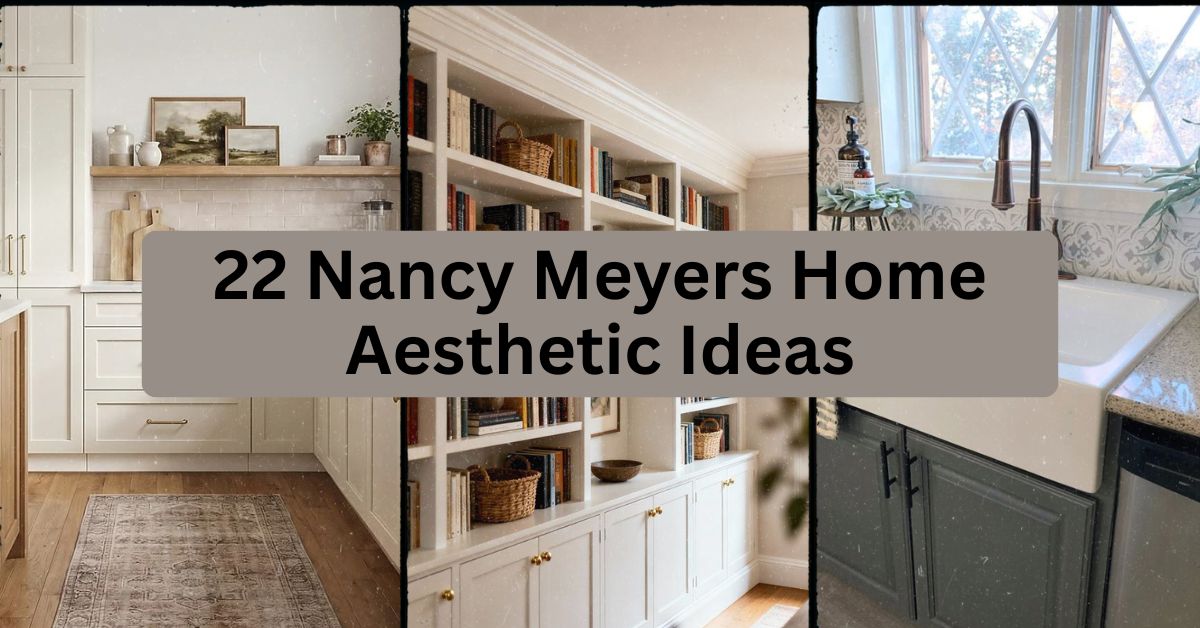
Nancy Meyers kitchens almost always start with creamy white cabinetry, not stark white. That warm undertone keeps the space from feeling clinical. Pair shaker-style cabinets with brass or nickel pulls, and let the walls stay soft and neutral too. Add a wood island for contrast, since an all-white kitchen can feel flat without a natural material breaking it up. Open shelves with stacked white dishware finish the look nicely.
This style suits farmhouse, coastal, and transitional homes best, though even modern kitchens can borrow the warm-white cabinet trick. A quick tip: test paint swatches at different times of day before committing, since creamy whites shift dramatically under natural versus artificial light. Once your kitchen feels warm and inviting, it’s time to look at one of its most charming details — the sink.
2. Farmhouse Sink as a Focal Point

A deep, apron-front farmhouse sink is basically a Nancy Meyers signature. It’s practical for real cooking and it looks gorgeous doing it. Choose a white fireclay or cast iron sink, and pair it with a gooseneck faucet in brass or unlacquered brass for that lived-in patina over time.
Place it under a window if you can, so whoever’s washing dishes gets a view instead of a wall. Surround it with a marble or butcher block counter for texture. This idea works beautifully in farmhouse and traditional kitchens, and honestly, it’s an easy upgrade during a renovation. Once your sink is set, your eye naturally drifts upward to the shelves nearby.
3. Built-In Bookshelves Styled Like a Library

Floor-to-ceiling built-ins packed with books, framed photos, and small sculptures give a room instant warmth and personality. Paint the bookshelves the same color as the trim for a seamless look, or go a shade darker to make them pop.
Mix hardcover books (spines in, spines out — vary it) with a few decorative objects like ceramic bowls or small plants. Leave some negative space; overcrowded shelves feel busy, not curated. This works in traditional and transitional living rooms especially well, though modern homes can pull it off with cleaner-lined shelving. Once you’ve filled your walls with character, it’s worth carving out a cozy spot to actually sit and read.
4. Cozy Window Seat Nooks

A built-in window seat with a thick cushion and a few throw pillows is peak Nancy Meyers comfort. It turns unused space into the coziest spot in the house. Use a durable linen or cotton fabric in a neutral tone, and add a small storage bench underneath for blankets.
Natural light is key here, so keep window treatments simple — maybe a soft roman shade instead of heavy drapes. This idea fits beautifully into farmhouse and cottage-style homes, but a sleek bench with the same styling works in modern spaces too. Speaking of natural light, let’s talk about the doors that let it flood in.
5. French Doors That Blur Indoor-Outdoor Lines

French doors leading to a patio or garden are everywhere in Meyers’ films, and for good reason. They make a room feel bigger and connect it to the outdoors. Choose white-painted wood or black-framed doors depending on your palette, and skip heavy curtains that block the view.
If a full door swap isn’t in the budget, adding sidelight windows or a glass-paned door to a single exit works too. This suits farmhouse, coastal, and Mediterranean-style homes especially well. A quick tip: keep the floor material consistent from indoors to the patio for a seamless flow. Now that we’ve opened up the space, let’s soften it with fabric.
6. Layered Linen and Cotton Textiles

Nothing says “this room feels lived-in” like layered textiles. Think linen slipcovers, cotton throws, and a mix of pillow textures — no shiny synthetic fabrics allowed. Stick to a neutral palette: ivory, oatmeal, soft gray, maybe a touch of blue.
Layer a chunky knit throw over a linen sofa, add two or three pillows in varying textures (velvet, linen, woven), and you’ve nailed the look. This works in almost every home style since texture is universally comforting. Just avoid matching every pillow perfectly — a little imperfection is the point. Once your fabrics are sorted, natural materials like wicker take the aesthetic even further.
7. Wicker and Rattan Accents

Wicker chairs, rattan light fixtures, or a woven basket for magazines all add texture without adding visual weight. These pieces bring in a relaxed, breezy feel that pairs perfectly with the creamy color palette.
Use wicker sparingly as an accent rather than filling a whole room with it — one statement chair or a pendant light is often enough. This idea shines in coastal, farmhouse, and Hamptons-style homes. A practical tip: keep wicker furniture out of direct sun exposure to prevent fading and cracking over time. With the textures handled, let’s look down — literally — at the floors.
8. Herringbone Wood Flooring

Herringbone hardwood floors add instant sophistication and warmth underfoot. The pattern itself creates visual interest even in an otherwise simple, neutral room. Go with a medium or light wood tone rather than dark stain, since Meyers’ interiors rarely lean dark and moody.
If real hardwood isn’t in the budget, herringbone-patterned luxury vinyl or even peel-and-stick options can mimic the look convincingly. This flooring style suits traditional, French country, and transitional homes beautifully. Pair it with a jute or wool rug to soften the space further. Speaking of walls, let’s talk millwork next.
9. Wainscoting and Board-and-Batten Walls

Wainscoting, board-and-batten, or picture-frame molding adds architectural charm that makes a room feel custom-built, even in a newer home. Paint it the same color as the wall for subtlety, or add contrast with white trim against a soft colored wall.
This detail works incredibly well in dining rooms, hallways, and bedrooms. It’s a bit of a project to install, but pre-primed MDF panels make DIY installation more manageable than you’d think. This idea fits traditional, coastal, and farmhouse homes especially well. Once your walls have some texture, it’s time to talk about what you sit on.
10. Oversized Comfortable Sofas

Meyers’ living rooms always have that one deep, oversized sofa you just want to sink into. Choose a slipcovered or linen-upholstered sofa in a neutral tone, and prioritize comfort over trendy shapes. Down-filled cushions add to that “sink right in” feeling.
Pair it with a low coffee table and a couple of accent chairs rather than a matching set — variety feels more collected and less showroom-y. This idea works across nearly every home style. A quick tip: measure your space carefully, since oversized furniture needs breathing room to avoid feeling cramped. Once seating is sorted, bring the room to life with something green.
11. Fresh Flowers and Greenery Displays

A vase of fresh flowers or a simple potted plant instantly makes a home feel cared for. Hydrangeas, peonies, and eucalyptus stems show up constantly in Meyers’ films, and they photograph beautifully because they feel effortless, not overly arranged.
Keep arrangements loose and slightly asymmetrical rather than perfectly symmetrical. Place them on kitchen islands, entry tables, and nightstands. This idea works in literally any home style since fresh greenery is a universal design booster. If budget’s a concern, faux stems in a quality vase can fake it convincingly. Now let’s talk hardware — the small details that tie a room together.
12. Vintage-Inspired Brass Hardware

Cabinet pulls, faucets, and light fixtures in warm brass or unlacquered brass tie the whole aesthetic together. Unlike shiny gold, aged brass develops a soft patina that feels collected over time rather than brand new.
Swap out builder-grade chrome hardware for brass knobs and pulls as an easy, budget-friendly update. This works especially well in kitchens and bathrooms styled after the Meyers look. It suits traditional and transitional homes best, though it can work in modern spaces with cleaner-lined fixtures. With hardware sorted, let’s head to one of the busiest spots in the house — the island.
13. Kitchen Islands with Marble Countertops

A large kitchen island topped with honed marble is a Meyers staple. Marble’s soft veining adds elegance without feeling flashy, and honed (matte) finishes hide etching better than polished marble. Pair it with wood or painted cabinetry below for contrast.
Add a few counter stools in leather or woven material for seating. This works beautifully in farmhouse, transitional, and traditional kitchens. If real marble feels risky with kids or heavy cooking, quartz with marble-look veining is a practical substitute. With the island styled, let’s shift the palette conversation toward color.
14. Soft Blue and White Coastal Palette

Some of Meyers’ most memorable homes (hello, “The Holiday” cottage) lean into soft blues paired with crisp white. This palette feels fresh, calm, and a little coastal without going full nautical theme.
Use blue in smaller doses — a striped pillow, a painted door, or patterned wallpaper — rather than painting entire walls a strong blue. Keep the base neutral and let blue act as an accent. This works wonderfully in coastal, cottage, and farmhouse homes. Once your palette feels right, layering rugs adds even more depth.
15. Layered Area Rugs on Wood Floors

Placing a smaller patterned or textured rug over a larger jute or sisal rug adds depth and warmth to a room. It’s an easy trick that makes a space feel intentional and collected rather than store-bought in one trip.
Stick to neutral tones with subtle pattern — think faded Persian-style rugs or simple stripes. This works in almost any home style and is a quick weekend refresh. A quick tip: use rug pads underneath to prevent slipping and bunching. With your floors layered, let’s talk about the room’s anchor — the fireplace.
16. Statement Fireplace Mantels

A substantial wood or painted mantel gives a living room a natural focal point. Style it with a large mirror or art above, flanked by candlesticks or small vases, and keep the arrangement slightly asymmetrical for a relaxed feel.
Stone or brick surrounds also work if painted white or left in a natural warm tone. This idea suits traditional, farmhouse, and transitional homes especially well. If you don’t have a working fireplace, a decorative mantel with candles still creates that cozy anchor point. Speaking of mirrors, let’s dig into that detail a bit more.
17. Antique Mirrors and Framed Art

Aged, slightly distressed mirrors and gallery-style framed art add instant character. Skip mass-produced canvas prints in favor of real frames, even if the art inside is affordable or vintage-inspired.
Group smaller frames in a cluster above a console table, or hang one oversized mirror to bounce light around a room. This works in nearly every home style, though it feels most “Meyers” in traditional and transitional spaces. A quick tip: shop estate sales or thrift stores for authentic vintage frames at a fraction of retail cost. Once your walls are dressed, let’s find a comfy spot to enjoy them from.
18. Cozy Reading Chairs by the Fire

A pair of upholstered armchairs near the fireplace or a sunny window creates an instant conversation nook. Choose a soft fabric like linen or a subtle plaid, and add a small side table for a lamp and a stack of books.
Angle the chairs slightly toward each other rather than facing straight ahead — it feels more inviting for actual conversation. This works beautifully in traditional, farmhouse, and cottage-style living rooms. Once seating feels sorted, let’s head back to the kitchen for one more detail.
19. Open Shelving for Everyday Dishware

Open shelves stacked with white or cream dishware, a few glass jars, and simple wood cutting boards give kitchens that “always ready for guests” feel. Keep items organized by color and type rather than jamming everything in.
This works particularly well in farmhouse and coastal kitchens, though it requires a bit of upkeep since everything’s on display. A quick tip: only put your prettiest, most-used items on open shelves and hide the rest in closed cabinets nearby. With shelving sorted, let’s soften the windows next.
20. Neutral Drapery with Natural Fibers

Simple linen or cotton drapery panels in white, cream, or soft gray let natural light flood in while still adding softness to a room. Avoid heavy patterned drapes, which can feel dated and clash with the airy Meyers look.
Hang curtain rods close to the ceiling to make windows feel taller. This detail fits nearly every home style but feels especially at home in coastal and farmhouse interiors. With windows dressed, let’s talk about one more room worth styling — the breakfast nook.
21. Charming Breakfast Nooks

A built-in banquette with a round table and mismatched chairs creates that cozy “Sunday morning” feeling Meyers’ homes are known for. Use a durable fabric on the banquette cushion and add a woven pendant light above the table.
This idea works wonderfully in farmhouse and cottage kitchens with a bit of extra space. If a full built-in isn’t possible, a round table with a bench on one side mimics the look affordably. Once your nook is set, let’s finish with lighting.
22. Layered Lighting with Table Lamps and Sconces

Skip harsh overhead lighting in favor of layered sources — table lamps, wall sconces, and the occasional pendant. This creates that warm, golden-hour glow Meyers’ films are famous for, even at night.
Use warm-toned bulbs (around 2700K) and vary lamp heights across a room for visual interest. This works in every home style since good lighting is universally flattering. With all 22 ideas covered, let’s break down some quick reference data to help you plan your own space.
Nancy Meyers Aesthetic: Color Palette Breakdown
| Color Family | Common Uses | Best Paired With |
|---|---|---|
| Creamy White | Cabinets, trim, walls | Brass hardware, wood floors |
| Soft Beige/Oatmeal | Sofas, drapery, rugs | Linen textures, natural wood |
| Soft Blue | Accent pillows, painted doors | White trim, wicker accents |
| Warm Wood Tones | Floors, islands, furniture | Marble, white cabinetry |
| Muted Gray | Stone accents, upholstery | Brass fixtures, cream walls |
Room-by-Room Nancy Meyers Element Guide
| Room | Key Element | Material Focus | Style Match |
|---|---|---|---|
| Kitchen | Farmhouse sink, island | Marble, wood | Farmhouse, transitional |
| Living Room | Built-in bookshelves | Wood, linen | Traditional, cottage |
| Bedroom | Window seat, soft drapery | Cotton, linen | Coastal, farmhouse |
| Dining Room | Wainscoting, banquette | Wood millwork | French country |
| Entryway | Antique mirror | Aged glass, wood frame | Transitional |
Tips for Success
Getting this look right comes down to restraint and quality over quantity. Here’s what actually matters:
- Start with a neutral base before adding any accent colors.
- Mix textures (linen, wood, wicker, marble) instead of relying on one material.
- Buy fewer, better pieces rather than filling every corner.
- Let natural light lead your window treatment choices.
- Add warmth with brass, wood, and fresh greenery in every room.
Common Mistakes and How to Avoid Them
Definition List:
Going too stark white — Choosing bright white over creamy white makes rooms feel cold instead of cozy. Fix it by testing warmer white swatches first.
Overdoing matching furniture sets — A living room that looks like a showroom lacks personality. Fix it by mixing vintage and new pieces.
Skipping texture — A room with only smooth, shiny materials feels flat. Fix it by adding linen, wicker, or wood accents.
Cluttering open shelves — Too many items on display looks messy, not curated. Fix it by editing down to your favorite pieces only.
Ignoring lighting temperature — Cool white bulbs kill the warm Meyers glow. Fix it by switching to warm-toned bulbs throughout the home.
Similar Variations Worth Exploring
If the full Nancy Meyers aesthetic feels like a lot, you can borrow pieces of it through related styles:
- Hamptons Style — leans more heavily into coastal blues and whites.
- French Country — adds more ornate millwork and darker wood tones.
- Modern Farmhouse — mixes in black metal accents for contrast.
- English Cottage — layers more pattern and floral textiles.
- Transitional Classic — blends clean modern lines with Meyers’ warm neutrals.
Wrapping It Up
At the end of the day, the Nancy Meyers home aesthetic isn’t about copying a movie set exactly — it’s about creating a home that feels warm, comfortable, and just a little bit special. Pick a few ideas from this list, start small, and let the look build naturally over time.
I hope these 22 ideas gave you a clear, practical roadmap for bringing that cozy, sun-filled Nancy Meyers home aesthetic into your own four walls.