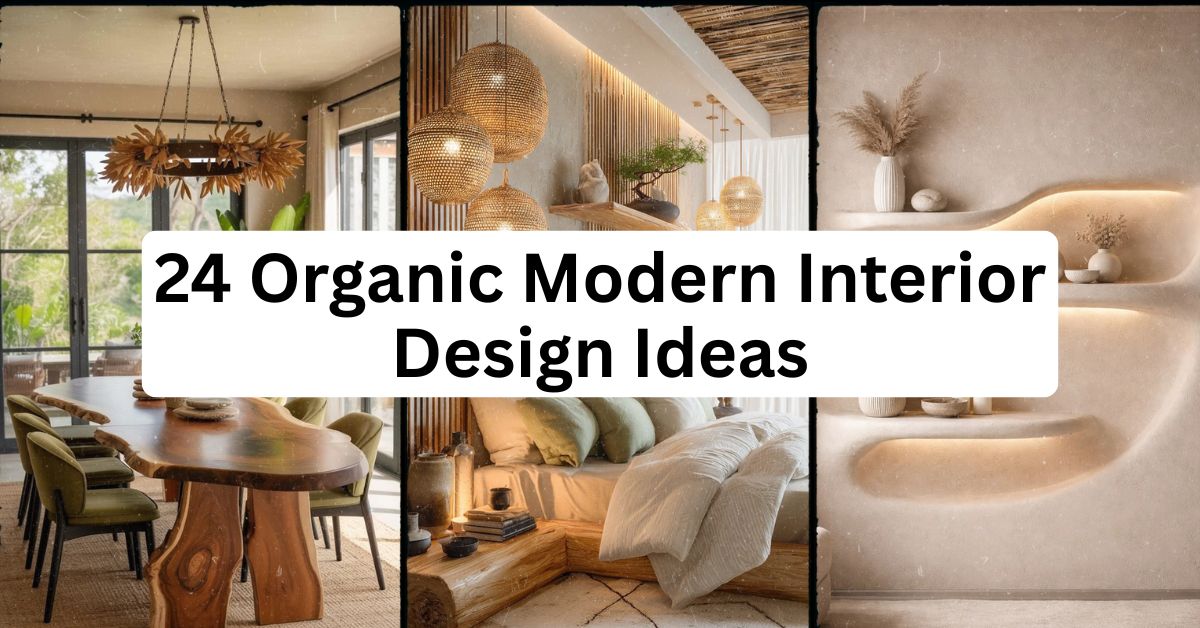
24 Organic Modern Interior Design Ideas That Actually Work
For many years now, I have been researching interior design blogs, magazine pages, and real-life examples from clients’ houses to understand the principles of organic modern interior design. That is why, having decided to create this guide, I ensured that all concepts here have a solid foundation based on actual design principles, and not just inspirational images from Pinterest.
So what is organic modern interior design? This is an interior design style that unites the elements of modern design and natural materials such as wood, stone, and linen. This is a soulful approach to minimalism.
Stay tuned as I am going to take you through 24 ideas that include color recommendations, furniture suggestions, budgeting tips, and typical mistakes of almost everyone.
What Makes Organic Modern Design Different?
Here’s the thing. A lot of people confuse organic modern with “boho” or “farmhouse.” They’re not the same. Organic modern keeps things simple and uncluttered, like modern design does, but swaps out cold, industrial materials for things that feel alive — raw wood, woven fibers, stone, clay. It’s calm. It’s grounded. It doesn’t shout for attention.
I like to think of it as nature’s version of minimalism. Every piece has a purpose, but nothing feels sterile. Now let’s get into the ideas.
1. Natural Wood Furniture as the Foundation

Wood is the backbone of organic modern interior design, and honestly, it’s the easiest place to start. Choose furniture with visible grain, like oak, walnut, or teak, instead of painted or laminate pieces. Stick to warm, honey or espresso tones rather than glossy finishes.
A quick tip: pick one dominant wood tone for your big furniture pieces (sofa frame, dining table) and let smaller accents vary slightly. This keeps the room from feeling matchy.
This works beautifully in modern, Scandinavian, and even mid-century homes. Next, let’s talk about the colors that pair best with all that wood.
2. Neutral Earthy Color Palette

Organic modern rooms lean on colors pulled straight from nature — sand, clay, moss, and stone. Skip stark white walls in favor of warm off-whites like alabaster or greige. Layer in browns, olive greens, and muted terracottas through textiles and accessories.
Here’s a practical move: paint your walls one shade lighter than your furniture’s undertone. It creates depth without contrast that feels jarring.
This palette adapts well to traditional and transitional homes too, since earthy colors have never really gone out of style. Once your palette’s set, texture becomes the next building block.
Color Palette Quick Reference
| Color | Mood It Creates | Best Used On |
|---|---|---|
| Alabaster White | Airy, calm | Walls, ceilings |
| Warm Greige | Grounded, soft | Walls, large furniture |
| Terracotta | Cozy, earthy | Pillows, pottery |
| Sage Green | Fresh, natural | Accent walls, plants |
| Charcoal Brown | Bold, grounding | Trim, cabinetry |
3. Organic Shapes Over Sharp Lines

Straight edges feel modern, but too many of them feel cold. Swap sharp-cornered coffee tables and boxy sofas for rounded, curved alternatives. Think kidney-shaped tables, arched mirrors, and soft-edged armchairs.
Try this: if your room already has a lot of straight lines (windows, shelving), balance it out with one curved statement piece, like a round rug or an oval dining table.
Curved furniture suits contemporary and even art deco-inspired homes surprisingly well. Speaking of texture, let’s layer some in.
4. Layered Natural Textures

Texture is what keeps an organic modern room from feeling flat. Mix rough linen with smooth ceramic, woven jute with soft wool. No single material should dominate the whole space.
A good rule: aim for at least three different textures in every room — one soft (throw blanket), one rough (jute rug), and one hard (wood or stone).
This layering trick works in nearly any home style, from farmhouse to industrial loft. Now, let’s talk statement furniture.
5. Statement Live-Edge Furniture

A live-edge wood table or bench instantly announces “organic modern.” These pieces keep the natural, uneven edge of the wood slab, showing off its raw beauty instead of hiding it.
Use a live-edge table as your dining centerpiece, then keep the chairs simple so the wood stays the star of the show.
This idea shines in modern farmhouse and rustic modern homes especially. Next, let’s bring in some woven texture.
6. Woven and Rattan Accents
Rattan chairs, woven pendant lights, and seagrass baskets add softness and warmth without cluttering a space. They’re lightweight, affordable, and instantly recognizable as organic modern staples.
My tip: start small. Add one rattan mirror or pendant light before committing to a full rattan furniture set.
Woven textures fit coastal, bohemian, and Scandinavian interiors just as easily. Let’s move from woven fiber to something a bit more solid.
7. Stone and Clay Elements

Stone countertops, clay vases, and concrete planters bring an earthy, tactile quality that wood and fabric can’t fully replicate. They ground a room, especially one with lots of soft textiles.
Try pairing a raw stone side table with a plush linen sofa. The contrast between hard and soft creates visual interest without clashing.
This works especially well in modern and minimalist homes. Now let’s soften things up with textiles.
8. Linen and Cotton Textiles

Skip synthetic fabrics. Linen and cotton have a slightly wrinkled, lived-in look that fits the organic modern vibe perfectly. Use them for curtains, throw pillows, and slipcovers.
Practical tip: choose linen in its natural, undyed color for curtains. It filters light beautifully and never looks too formal.
These fabrics suit relaxed, casual homes, from cottage-style to modern farmhouse. Speaking of natural elements, let’s add some life.
9. Indoor Plants and Greenery

No organic modern room is complete without actual greenery. Fiddle leaf figs, snake plants, and trailing pothos bring life and softness to sharp furniture lines.
Group plants in odd numbers (three or five) at varying heights for a more natural, less staged look.
This idea works in literally every home style — plants are universal. Let’s talk about the vessels holding them.
10. Sculptural Ceramic Vases

Handmade ceramic vases, with their slightly uneven shapes and matte finishes, add an artisanal touch that mass-produced decor just can’t match.
Group two or three vases of different heights on a shelf or mantel instead of scattering single pieces around the room.
These pieces suit modern, minimalist, and Japandi-style homes especially well. Now let’s warm things up with metal.
11. Warm Metallic Accents

Brass, bronze, and aged copper add a subtle shine without feeling flashy. Use them sparingly on light fixtures, cabinet hardware, or picture frames.
Keep metals warm-toned. Cold chrome or stainless steel clashes with the organic modern warmth we’re going for.
This detail transitions well into transitional and art deco-inspired spaces too. Let’s bring in some natural light next.
12. Natural Light Maximization

Organic modern design depends on sunlight to bring out the warmth in wood and earthy colors. Use sheer linen curtains instead of heavy drapes to let light flood in.
If your space lacks windows, mirror placement can bounce existing light around the room.
This principle applies to every home style since natural light benefits any room. Now, let’s talk about keeping things simple.
13. Minimalist Clutter-Free Surfaces

Organic modern isn’t about filling every shelf. Keep countertops and tabletops mostly clear, with just one or two meaningful objects displayed at a time.
Try the “rule of three” — no more than three decorative objects per surface.
This restraint fits modern, Scandinavian, and Japandi homes particularly well. Let’s add some handmade character next.
14. Handcrafted Artisan Decor

Handwoven baskets, hand-thrown pottery, and carved wooden bowls carry a story that mass-produced decor lacks. These pieces show slight imperfections that make a room feel authentic.
Shop local artisan markets or small online shops instead of big box stores for these accents.
This idea suits bohemian, rustic, and eclectic homes especially well. Now, floor coverings.
15. Jute and Sisal Rugs

Natural fiber rugs like jute and sisal add texture underfoot while keeping the color palette earthy and neutral. They’re durable too, which makes them great for high-traffic areas.
Layer a smaller patterned rug over a jute base for added depth without losing the natural look.
This flooring choice works in farmhouse, coastal, and modern homes alike. Let’s talk seating shapes again.
16. Curved Sofas and Seating

A curved sofa softens a room’s overall silhouette and encourages conversation by naturally angling seats toward each other.
If a full curved sofa feels like too big a commitment, start with a pair of rounded accent chairs instead.
This furniture style fits contemporary and mid-century modern spaces beautifully. Next, a philosophy worth knowing.
17. Wabi-Sabi Imperfection Philosophy

Wabi-sabi, the Japanese philosophy of finding beauty in imperfection, pairs naturally with organic modern design. Chipped pottery, uneven wood grain, and slightly worn textiles all fit right in.
Don’t stress over “perfect” symmetry. Let a slightly crooked shelf or an asymmetrical gallery wall stay as is.
This mindset suits Japandi and minimalist homes especially well. Now, let’s mix up your wood tones.
18. Mixed Wood Tones

Contrary to old design rules, you don’t need every wood piece to match. Mixing a light oak floor with a dark walnut table actually adds depth and interest.
Stick to warm undertones across all your wood pieces so they still feel cohesive, even if the shades differ.
This works in transitional, modern, and farmhouse interiors. Let’s move to the walls.
19. Botanical Wall Art

Framed botanical prints, pressed leaves, or abstract nature-inspired art tie the room’s greenery theme together, even where live plants can’t survive (like low-light bathrooms).
Choose frames in natural wood or matte black instead of glossy gold for a more grounded look.
This idea suits nearly every home style, from traditional to ultra-modern. Now, let’s talk pottery again, but bigger.
20. Terracotta and Earthenware

Large terracotta planters, earthenware bowls, and clay pendant lights bring warmth and an old-world charm into an otherwise modern space.
Use terracotta pieces as functional decor — planters, fruit bowls, or even light fixtures — instead of purely decorative objects.
This works especially well in Mediterranean, coastal, and rustic modern homes. Let’s brighten things up next.
21. Soft Ambient Lighting
Skip harsh overhead lighting. Rattan pendant lights, paper lanterns, and warm-toned bulbs create a cozy, golden-hour glow throughout the day.
Layer your lighting: one ambient source (ceiling), one task source (lamp), and one accent source (candles or string lights).
This lighting approach suits nearly every home style. Now, let’s open up your storage.
22. Open Shelving with Natural Materials

Wood or rattan open shelves let you display ceramics, books, and plants without boxing them into closed cabinets. It keeps the room feeling airy and lived-in.
Balance open shelves with a few closed storage pieces nearby to avoid a cluttered look.
This works great in kitchens and living rooms of modern farmhouse and Scandinavian homes. Let’s head into the kitchen for a second.
23. Stone Countertops and Backsplashes

Honed marble, soapstone, or textured limestone countertops bring an earthy elegance to kitchens and bathrooms, without the coldness of polished granite.
Choose honed (matte) finishes over polished ones — they fit the organic modern look much better.
This upgrade suits modern, transitional, and farmhouse kitchens equally well. Finally, let’s zoom out to the bigger picture.
24. Biophilic Design Integration

Biophilic design means designing spaces that actively connect people to nature, through views, materials, and airflow, not just decor. Big windows, indoor-outdoor flow, and natural ventilation all count.
If a full renovation isn’t in the cards, start small: rearrange furniture to face a window or add a small water feature for ambient sound.
This principle applies to every home style and honestly, every budget level too.
Material Comparison Table
| Material | Texture Feel | Durability | Best Rooms |
|---|---|---|---|
| Live-edge wood | Rough, natural | High | Dining, office |
| Rattan | Light, woven | Medium | Living, bedroom |
| Terracotta | Matte, earthy | Medium | Kitchen, patio |
| Jute/Sisal | Coarse | High | Living, entryway |
| Honed stone | Smooth, matte | Very High | Kitchen, bath |
| Linen | Soft, textured | Medium | Anywhere |
Tips for Success
- Start with one room before committing your whole house to the style.
- Always choose warm undertones over cool ones, in both wood and metal finishes.
- Buy fewer, better pieces instead of filling every corner with decor.
- Let natural light guide your furniture placement whenever possible.
- Mix textures generously, but keep your color palette tight.
Common Mistakes and How to Avoid Them
| Mistake | Why It Happens | How to Fix It |
|---|---|---|
| Overusing cool grays | Copying generic “modern” trends | Swap for warm greige or sand tones |
| Matching every wood tone exactly | Old-school design habits | Mix warm-toned woods intentionally |
| Too much rattan/wicker | Overcorrecting toward “boho” | Balance with stone, metal, or linen |
| Cluttered shelves | Fear of empty space | Follow the rule of three per surface |
| Cold, bright lighting | Default builder-grade fixtures | Switch to warm bulbs and layered lighting |
Similar Variations You Can Explore
Definition List:
- Japandi — A blend of Japanese minimalism and Scandinavian warmth, heavier on clean lines and lighter on decor.
- Modern Farmhouse — Organic modern with more rustic, cottage-style touches like shiplap and vintage accents.
- Coastal Organic — Adds breezy blues and weathered woods to the earthy organic modern base.
- Wabi-Sabi Minimalism — Strips things down even further, focusing almost entirely on imperfection and simplicity.
- Biophilic Modern — Leans harder into plants, natural airflow, and outdoor views than decor alone.
Wrapping It All Up
Organic modern interior design isn’t a strict rulebook. It’s more like a mindset — bring in natural materials, keep things simple, and let a little imperfection shine through. Whether you start with a single rattan pendant light or go all-in with live-edge furniture and stone countertops, every small change nudges your home closer to that calm, grounded feeling we’re all chasing these days.
If you take just one thing from this guide, let it be this: organic modern interior design works best when you slow down and choose pieces that feel real, not just trendy.