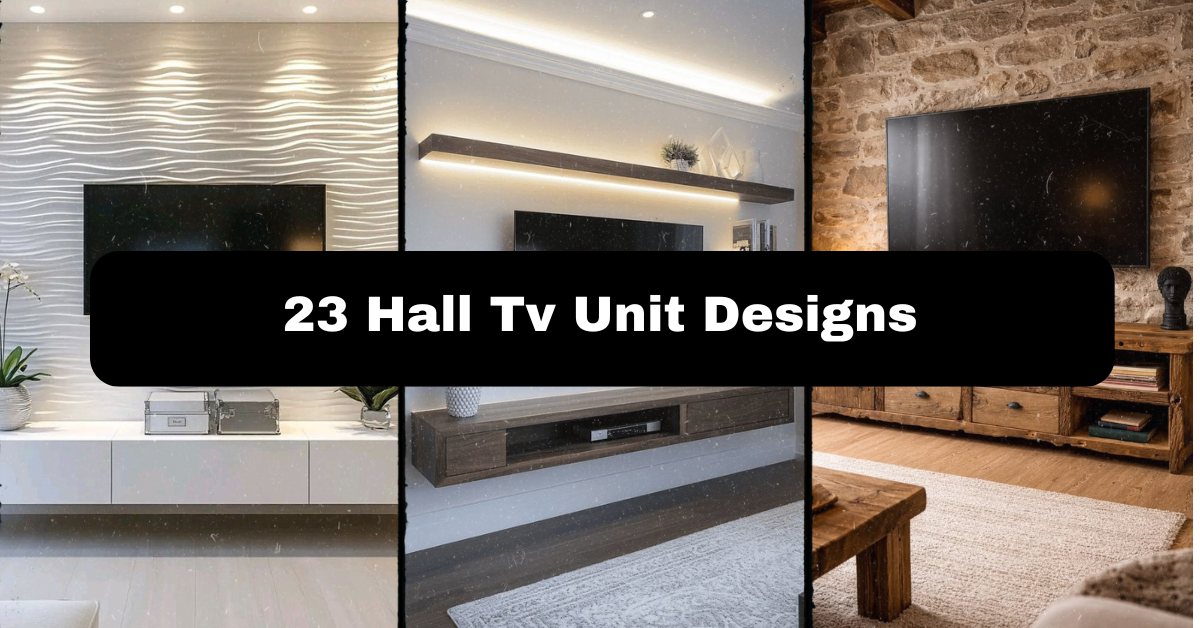
23 Hall TV Unit Designs That Will Transform Your Living Space
I’ve spent years digging through interior design trends, testing layouts, and talking to carpenters about what actually works in real homes. So when it comes to Hall TV unit designs, I’m not just throwing random pictures at you — I’m giving you ideas that hold up in actual living rooms.
So what are the best Hall TV unit designs? The best designs balance storage, style, and screen visibility. Popular options include floating units, wooden rustic consoles, backlit panels, and modular storage walls that fit modern, traditional, or minimalist homes alike.
Stick around, though. I’ll walk you through 23 distinct styles, share a handy comparison table, and point out mistakes that trip up even seasoned homeowners.
Why Your Hall TV Unit Deserves More Thought Than You Think
Here’s the thing — your TV unit isn’t just a shelf holding your television. It’s basically the anchor of your entire living room. Guests look at it. You stare at it every night while watching your shows. It sets the tone for everything else in the space, from your sofa color to your lighting choices.
A poorly planned TV unit makes a room feel cluttered or cold. A well-planned one? It pulls the whole room together. That’s why I’m breaking down 23 designs below, each with practical tips you can actually use, not just admire from a distance.
1. Floating Wall-Mounted TV Units

Floating units create an illusion of extra floor space, which works wonders in smaller halls. The design hinges on a wall-mounted cabinet with no visible legs, giving a “hovering” effect that feels modern and clean. Pick a matte finish in white, grey, or walnut to keep things understated. Add hidden LED strips underneath for a soft glow at night.
Practical tip: Make sure the wall can handle the weight — use proper wall anchors, not just screws into drywall. This style suits modern and minimalist homes perfectly, though it can also work in transitional spaces if paired with warmer wood tones.
Next up, let’s talk about a design that brings nature indoors.
2. Wooden Rustic TV Units

Rustic wood units bring warmth that floating panels sometimes lack. Think reclaimed wood, visible grain patterns, and slightly distressed finishes. Pair this with earthy tones like olive green or terracotta on your walls, and maybe a jute rug underneath.
The core idea here is imperfection as beauty — nothing feels too polished. Practical tip: seal the wood properly so it resists scratches from remote controls and cable boxes sliding around. This design fits farmhouse, cottage, and traditional homes especially well, adding character without feeling heavy.
If rustic isn’t your vibe, minimalism might be your next stop.
3. Minimalist White TV Units

Minimalist white units keep things breezy. The whole point is simplicity — clean lines, no ornate handles, and hidden storage compartments. Stick to a monochrome palette: white cabinet, light grey walls, maybe one black accent like a vase or picture frame.
Practical tip: Use push-to-open cabinet doors to avoid visible handles disrupting the smooth look. This style suits modern, Scandinavian, and even Japandi-inspired homes. It’s especially good for smaller halls where visual clutter makes rooms feel cramped.
Now, let’s swing toward something a bit edgier.
4. Industrial Style TV Units

Industrial units combine raw materials — think black metal frames, exposed bolts, and dark wood shelves. The design draws inspiration from warehouses and lofts, so keep the color scheme dark: charcoal, black, and deep brown.
Practical tip: Add a metal-framed clock or vintage sign nearby to reinforce the theme. This style shines in urban apartments or homes going for that edgy, unfinished-but-intentional look. It’s not for everyone, but it makes a bold statement when done right.
Let’s shift gears to something more functional and storage-heavy.
5. Media Console With Storage

This design prioritizes function over flash. Multiple drawers and cabinets hide remotes, gaming consoles, and cable boxes. Choose a console with cable management holes at the back — trust me, this saves you from a tangled mess.
Color-wise, neutral tones like beige or soft grey keep it versatile. Practical tip: measure your existing electronics before buying so everything fits without cramming. This works in literally any home style since it’s more about practicality than aesthetics.
Speaking of combining function with style, let’s look at bookshelves next.
6. TV Unit With Bookshelf Combo

Combining your TV unit with a bookshelf makes the wall feel purposeful, not just decorative. Open shelves on either side of the TV hold books, plants, or framed photos, creating visual balance.
Practical tip: Stagger book heights and add a few decorative objects between stacks to avoid a too-neat, showroom look. This design suits traditional and eclectic homes especially well, giving off a lived-in, personal vibe rather than a sterile one.
Now, let’s brighten things up with some lighting tricks.
7. Backlit LED TV Units

Backlit units use LED strips behind the TV panel to create a soft glow, reducing eye strain and adding ambiance. The trick is choosing warm white or RGB lights depending on your mood — warm for cozy vibes, RGB for a fun, modern touch.
Practical tip: Install a dimmer switch so you can control brightness based on time of day. This design works beautifully in modern and contemporary homes, especially for movie nights when you want mood lighting without overhead glare.
Let’s tackle awkward spaces with a corner-focused idea.
8. Corner TV Units

Corner units solve the age-old problem of awkward, unused corners. The design uses angled cabinetry that fits snugly into the room’s corner, freeing up wall space elsewhere.
Practical tip: Measure the viewing angle from your seating area before installing — corner placements can sometimes create odd sightlines. This works well in smaller hall spaces or oddly shaped rooms, and suits both modern and traditional interiors depending on the material used.
Next, let’s add some texture to the wall itself.
9. Textured Backdrop Wall Panels

This design isn’t just about the unit — it’s about the wall behind it. Textured panels made from wood slats, stone cladding, or 3D wallpaper create depth and draw the eye.
Practical tip: Keep the TV unit itself simple so the textured wall becomes the star, not a competing element. This style fits luxury, modern, and even rustic homes, depending on the texture material you choose.
Now let’s explore a sleeker, more reflective option.
10. Glass and Metal TV Units

Glass and metal units feel light and contemporary. Tempered glass shelves paired with slim metal frames create an airy look that doesn’t overwhelm the room.
Practical tip: Use tempered, scratch-resistant glass since regular glass can crack under weight or heat from electronics. This design suits modern and minimalist homes, particularly in smaller spaces where heavier wood units might feel bulky.
Let’s move to a design that doubles as a cozy focal point.
11. TV Unit With Fireplace

Combining a fireplace with your TV unit creates an instant focal point. Electric fireplaces are popular here since they don’t require ventilation. Position the TV slightly above the fireplace, but not too high — neck strain is real.
Practical tip: Keep a gap of at least 12 inches between the fireplace and TV for heat dissipation. This design works wonderfully in traditional, transitional, and even farmhouse-style homes, adding warmth both literally and visually.
Now let’s stack things up — literally.
12. Multi-Tier TV Units

Multi-tier units use varying heights to display different items — books on one level, decor on another, and the TV on the main tier. This creates visual interest without feeling cluttered.
Practical tip: Keep heavier items on lower tiers for stability and easier access. This design fits eclectic and contemporary homes especially well, giving you flexibility to rearrange decor seasonally without redoing the whole setup.
Let’s head toward something distinctly Nordic next.
13. Scandinavian Style TV Units

Scandinavian units focus on light wood, clean lines, and functional simplicity. Think pale oak or birch finishes paired with white or soft pastel walls.
Practical tip: Add a single potted plant nearby — greenery is a Scandinavian design staple that softens the minimalism. This style suits modern and minimalist homes, and honestly, it ages really well since it never feels overly trendy.
Now, for those who like a bit of mystery in their storage.
14. TV Unit With Hidden Storage

Hidden storage units disguise compartments behind sleek panels, so your remote controls, cables, and gaming gear stay out of sight. Push-latch mechanisms or sliding panels work great here.
Practical tip: Label your hidden compartments (even just mentally) so you’re not fumbling around during movie night. This works in modern and minimalist homes where visual clutter is the enemy of good design.
Let’s open things up a bit with a shelving-focused approach.
15. Open Shelving TV Units

Open shelving skips cabinet doors entirely, showing off your decor, books, and electronics openly. This design demands a bit more discipline in tidiness since everything’s visible.
Practical tip: Use decorative baskets on open shelves to hide smaller clutter while keeping the open aesthetic. This suits Scandinavian, bohemian, and industrial homes, giving a relaxed, curated feel.
Now, here’s an idea for those who work from home.
16. TV Unit With Study Table Combo

Combining a study table with your TV unit makes sense in smaller homes where space is tight. A fold-out or built-in desk section attaches seamlessly to the main unit.
Practical tip: Add a task lamp near the desk area to avoid straining your eyes during work hours. This design fits compact apartments and modern homes needing multi-functional furniture.
Let’s add a splash of global flair next.
17. Boho Style TV Units

Boho units mix textures, patterns, and warm tones — think rattan cabinets, macramé wall hangings, and layered rugs. The color palette leans toward mustard, rust, and deep green.
Practical tip: Balance the busy patterns with a solid-colored wall behind the unit so it doesn’t feel overwhelming. This style suits eclectic and bohemian homes, adding personality and warmth in equal measure.
Now let’s reflect on something a bit more glamorous.
18. TV Unit With Mirror Panels
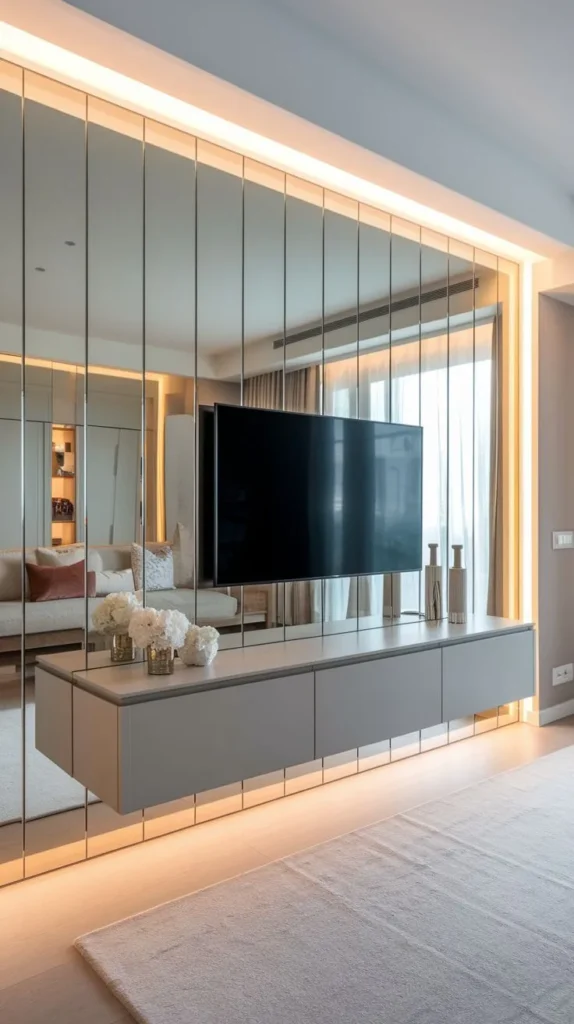
Mirror panels on or around the TV unit amplify light and make rooms feel larger. This works especially well in smaller halls lacking natural light.
Practical tip: Position mirrors so they don’t directly reflect the TV screen’s glare during viewing. This design suits glam, contemporary, and Art Deco-inspired homes, adding a touch of luxury without much extra cost.
Next, let’s talk stone — or at least, the look of it.
19. Marble Finish TV Units

Marble finish units — whether real stone or marble-effect laminate — bring elegance without screaming “trying too hard.” Pair with gold or brass accents for a luxe feel.
Practical tip: If using real marble, seal it properly since it can stain easily from spills or heat. This design fits luxury, modern, and contemporary homes wanting a polished, upscale look.
Let’s bring some life into the room with greenery.
20. TV Unit With Planters and Greenery

Integrating small planters into your TV unit design softens the hard edges of wood and metal. Built-in planter boxes or simple potted plants on shelves both work.
Practical tip: Choose low-maintenance plants like pothos or snake plants since they tolerate indoor light conditions well. This style suits Scandinavian, boho, and modern homes looking to add a natural touch.
Now, let’s talk flexibility with modular designs.
21. Modular TV Units
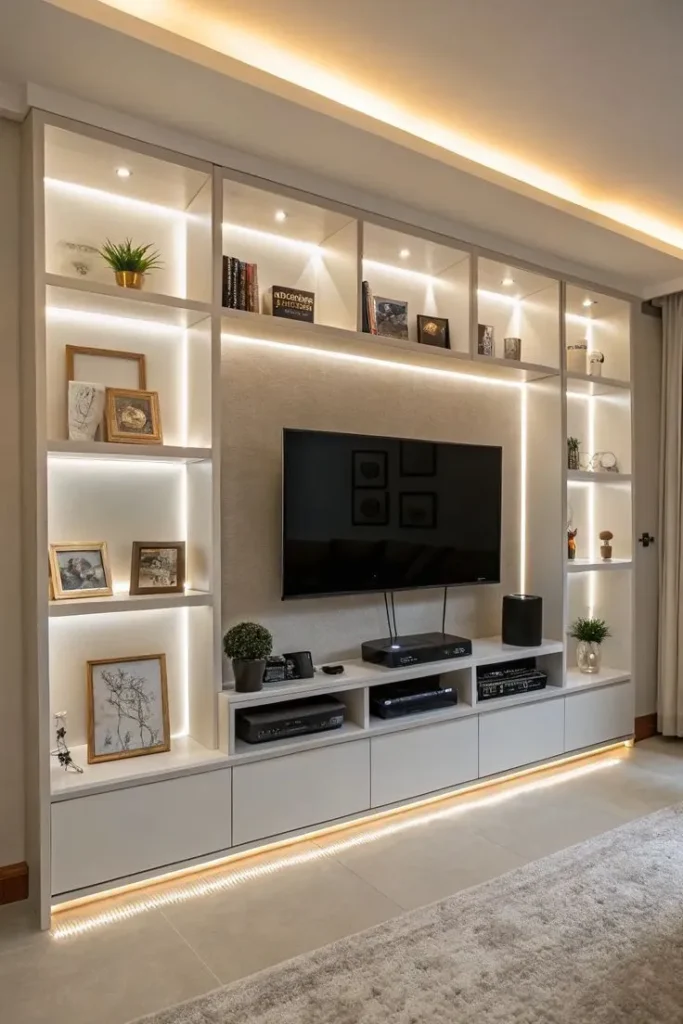
Modular units let you rearrange sections based on your changing needs — add a cabinet here, remove a shelf there. This is great for renters or people who redecorate often.
Practical tip: Buy modular pieces from the same brand or collection to ensure they fit together seamlessly later. This design suits modern and minimalist homes valuing adaptability over fixed layouts.
Let’s brighten the mood with ambient lighting strips.
22. TV Unit With Ambient Lighting Strips
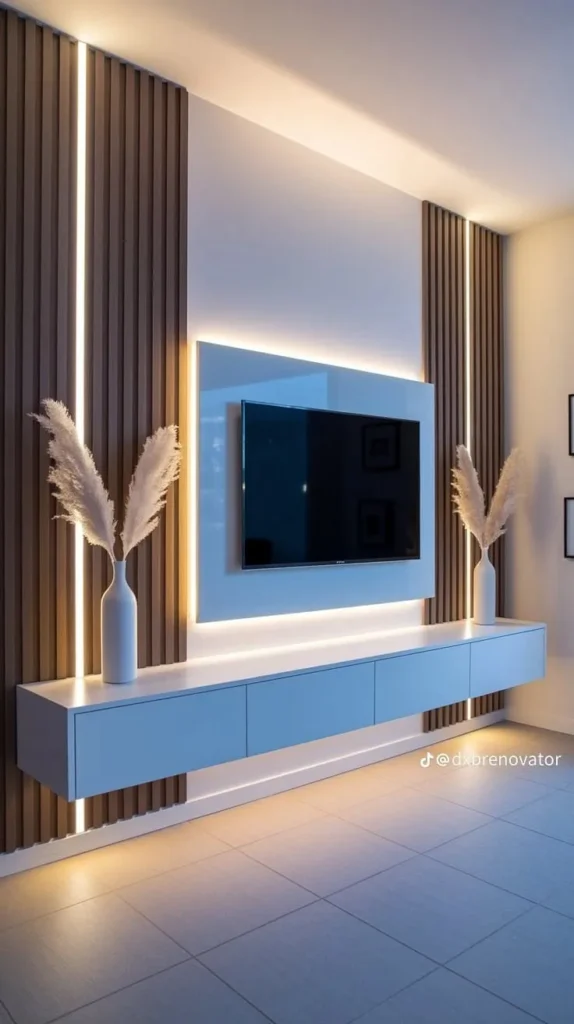
Ambient lighting strips placed along the edges or shelves of your TV unit create a subtle glow that enhances the room’s atmosphere without harsh overhead lighting.
Practical tip: Use smart LED strips that sync with your TV’s on-screen colors for an immersive viewing experience. This design fits modern, contemporary, and tech-savvy homes wanting that extra “wow” factor.
Finally, let’s end with a design that turns your wall into art.
23. Statement Wall TV Units With Art

This design treats the TV as part of a larger art installation. Surround the screen with framed art, sculptural shelves, or a gallery wall so the TV blends rather than dominates.
Practical tip: Choose frame colors that complement, not clash with, your TV unit’s finish. This suits eclectic, traditional, and luxury homes wanting their living room to feel like a curated gallery space.
Comparison Table: Hall TV Unit Designs at a Glance
| Design Style | Best For | Material | Price Range | Maintenance |
|---|---|---|---|---|
| Floating Wall-Mounted | Small halls | Engineered wood | Medium | Low |
| Wooden Rustic | Farmhouse homes | Reclaimed wood | Medium-High | Medium |
| Minimalist White | Modern homes | MDF/Laminate | Low-Medium | Low |
| Industrial | Loft apartments | Metal + Wood | Medium | Medium |
| Backlit LED | Contemporary homes | Wood + LED strips | Medium-High | Medium |
| Corner Unit | Odd-shaped rooms | Wood/Laminate | Low-Medium | Low |
| Glass and Metal | Small modern spaces | Tempered glass, metal | Medium | High |
| Marble Finish | Luxury interiors | Marble/Laminate | High | Medium-High |
| Modular | Rented apartments | Mixed materials | Medium | Low |
Budget Breakdown by Design Complexity
| Complexity Level | Examples | Estimated Cost Range | Installation Time |
|---|---|---|---|
| Simple | Open shelving, minimalist white | $150–$400 | 1-2 hours |
| Moderate | Floating units, corner units, modular | $400–$900 | 2-4 hours |
| Complex | Fireplace combo, marble finish, textured wall panels | $900–$3000+ | 1-3 days |
Tips For Success
Getting your Hall TV unit design right isn’t just about picking a pretty picture from Pinterest. Here’s what actually matters:
- Measure your wall and seating distance before choosing a unit size
- Consider cable management early — nobody wants visible wire spaghetti
- Match your unit’s finish to your existing furniture, not just the wall color
- Leave breathing room around the TV; don’t cram decor items too close
- Think about ventilation if you’re placing the TV inside an enclosed cabinet
Common Mistakes and How to Avoid Them
Mistake: Choosing a unit that’s too big for the room.
Fix: Always measure your available wall space and leave at least a few inches on each side.
Mistake: Ignoring cable management.
Fix: Pick units with built-in cable routing holes or hide cords using cable sleeves.
Mistake: Mounting the TV too high.
Fix: The center of the screen should roughly align with eye level when seated.
Mistake: Overcrowding shelves with decor.
Fix: Follow the “less is more” rule — leave some negative space for visual breathing room.
Mistake: Not checking wall strength for floating units.
Fix: Use a stud finder and proper anchors before mounting anything heavy.
Similar Variations You Can Try
If none of these 23 hit the mark exactly, here are a few tweaks worth considering:
- Combine two styles, like industrial metal frames with Scandinavian light wood tones
- Swap LED backlighting for warm Edison bulb string lights for a cozier feel
- Add a fabric or leather-wrapped panel behind the TV for a softer industrial look
- Use removable wallpaper behind the unit if you’re renting and can’t paint
- Mix open shelving with hidden storage for a balance of display and tidiness
Wrapping It Up
So there you have it — 23 Hall TV unit designs covering everything from rustic wood consoles to sleek glass-and-metal setups. I tried to give you options for every home style, budget, and skill level, because honestly, there’s no one-size-fits-all answer here.
Pick what fits your space, your lifestyle, and your personal taste. Whether you go minimalist white or bold industrial, the right Hall TV unit design can genuinely transform how your living room feels every single day.