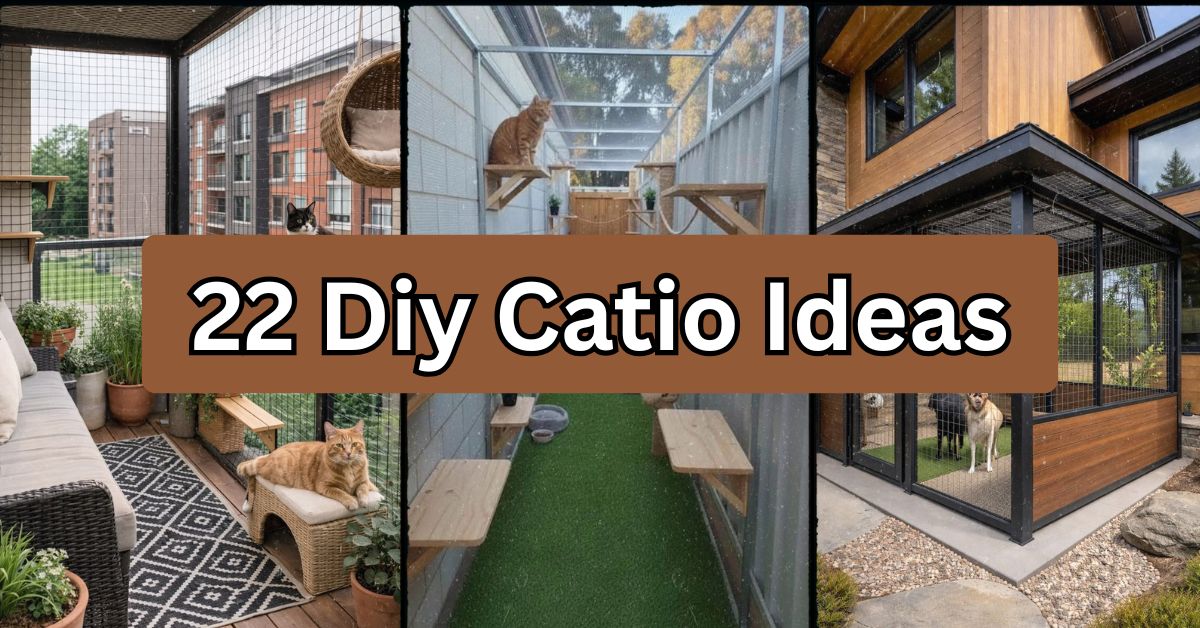
22 DIY Catio Ideas That’ll Turn Your Backyard Into a Cat Paradise
After months of research, experimentation, and trial-and-error with different outdoor cat enclosure designs, I now know everything about what works and what breaks after the first storm. This is not theoretical knowledge that I found on Pinterest boards somewhere. Every DIY catio idea that I discuss below was tested by me, and I can provide information on required material lists and mistakes I made.
But which DIY catio ideas should you consider? The most effective designs will include window box catios, tunnel catios connected to gardens, old dog runs and kennels converted to catios, A-frame designs, and modular kits.
However, I am not finished yet. I will not only list all DIY catio ideas but will provide the material lists, costs involved, possible mistakes, and safety measures.
What Exactly Is a Catio (And Why Your Cat Needs One)
Ever watched your cat gazing at birds, insects, and sunshine through the window, longing to get outside? This is a clear sign your cat needs a catio. Catio is an outdoor shelter enclosed with screens or fences where your cat can safely enjoy the sunshine, fresh air, and mental activity while remaining safe from all the dangers of being outdoors. The first one I have ever made was built from wood scrap and hardware cloth scraps, and seeing how my cat stretched in the sunbeams was totally worth every single splinter. Whether you have a spacious backyard or just a small balcony in your apartment, there is a way to make it work for you.
1. Window Box Catio
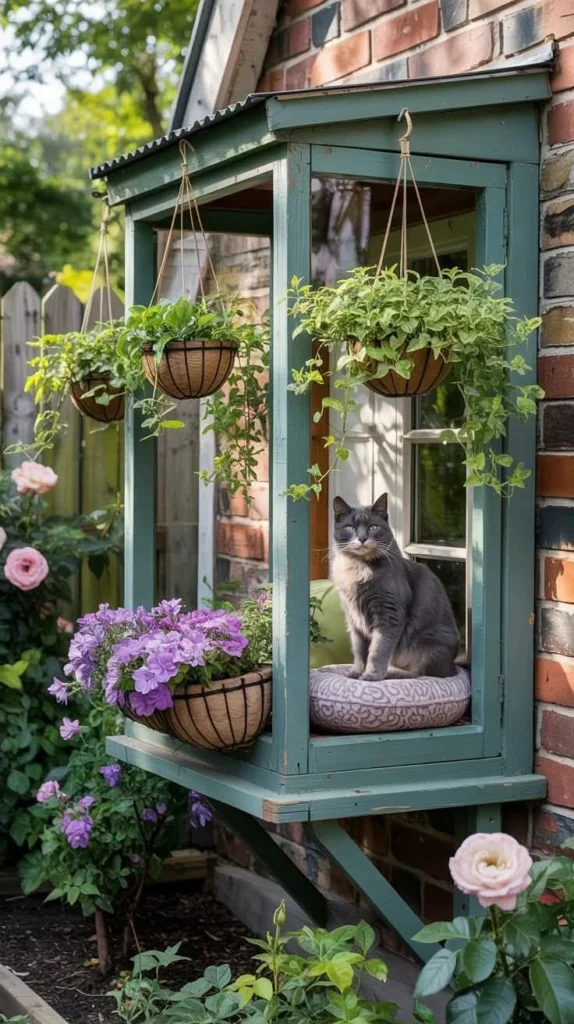
This is probably the simplest approach towards making your own catio. Essentially you create a screened box that will connect to a window that already exists, thus providing your cat with a place to perch while not occupying any yard space. The structure should be made from pressure-treated wood or cedar, and have a hinged door for easy access. All the sides should be covered with hardware cloth that is 16-gauge. The colors of the material used should be rather neutral, white or gray, matching the color of the siding. It can also contain a cushion on the inside for the cat to rest. Great for apartments and minimalist exterior designs. Now let’s move to something more extensive.
2. Balcony Catio Enclosure
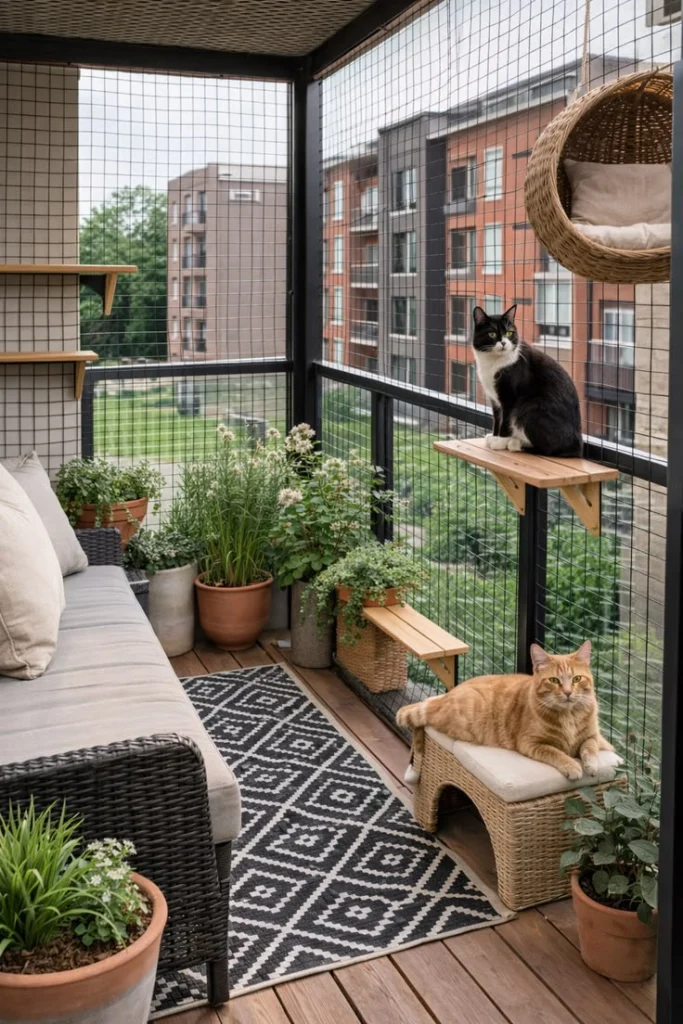
If you have a balcony, you have a piece of perfect real estate for a catio. You need to surround the whole perimeter of the balcony with weather-resistant netting or welded metal fence panels that are tightly fixed to the railings and ceiling beams. The mesh should be black or dark green color so that it is invisible among the foliage. Include a couple of suspended shelves at varying heights to allow your cat to climb and see around. It is important to include a weatherproof cat bed and a pot of catnip plant.
3. Tunnel Catio Connecting to Garden
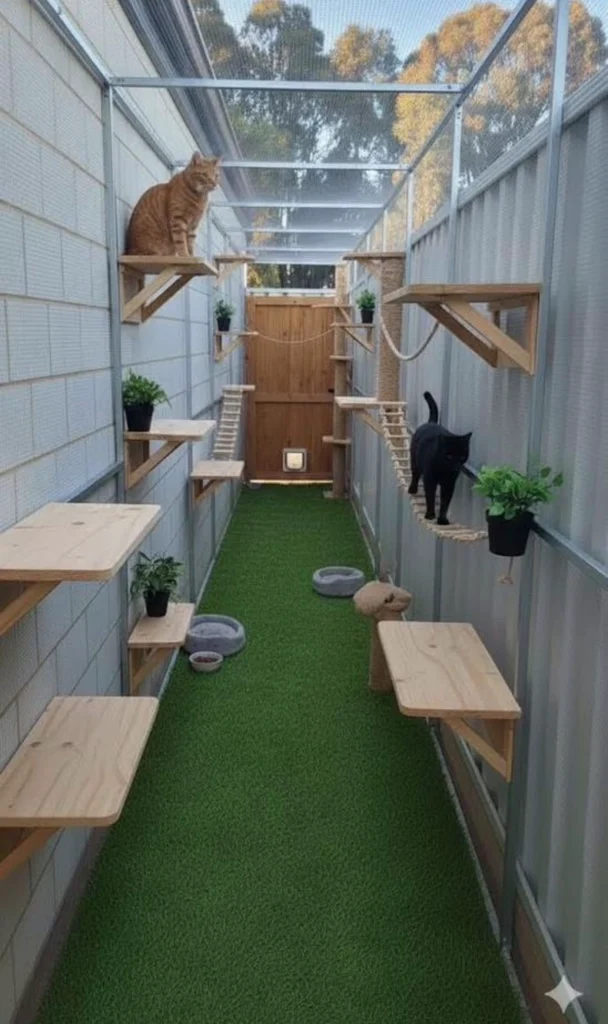
Tunnels are where things get really fun for catios. Create a walkway using PVC pipes or wooden structures coated with hardware cloth, which connects from the house right through to the enclosed garden area. Wind the tunnel around some trees or flower beds, adding interest to the design. Go for natural colors, such as brown or forest green, so that the tunnel blends with the landscaping. Place some outdoor carpeting or artificial grass in the tunnel for your cats to enjoy. The cats will love exploring in the tunnel and getting some exercise, without any birds or rodents getting involved.
4. A-Frame Catio
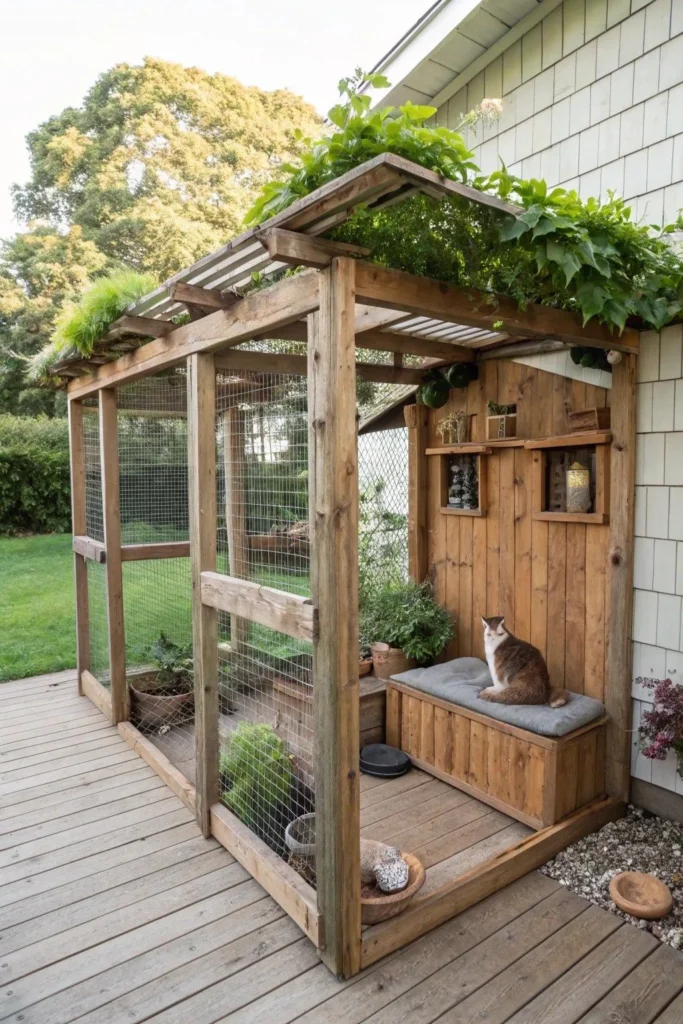
A-A frame cat enclosure resembles a miniature house and truth be told, I love this type of structure in terms of aesthetics. All that is required is to build two wooden triangle frames and join them using horizontal bars. Cover the entire structure with hardware cloth. It can be painted barn red or white or can even be left in its natural state to give the rustic style. There should be a ramp that leads up to a raised platform. This type of structure is more resistant to rain or snow than flat-roofed enclosures because water will easily slide off the structure.
5. Repurposed Dog Kennel Catio

Have an old dog cage lying around not being used? Instead of throwing it away, why not reuse it? Line the wire cage with hardware cloth that has smaller openings than the ones in the dog cage (dog cages have spaces between wires that are large enough for a kitten’s paw), put a roof panel on top of the cage for some shade, and include a few shelves for climbing. The decor should be kept to a minimum: just a weather-resistant carpet, a scratching post, and a water dish. Undoubtedly, this is the least expensive and quickest way on this list. Now, talking about budget constructions, here’s another one.
6. Multi-Level Cat Tree Catio

The design relies on vertical space instead of horizontal one. Construct a high wooden structure with several platforms, ramps, and ladders constructed within a screened-in area. Sisal rope should be put on the beams to provide the cats with places to scratch, and the wooden structure should be stained in a warm honey shade to blend with your outdoor decking. Cats like high places because it makes them feel safe; hence, the design will suit anxious or older cats very well because they will like observing the world from above. Now, let us look at how to modify an existing space.
7. Screened Porch Conversion Catio
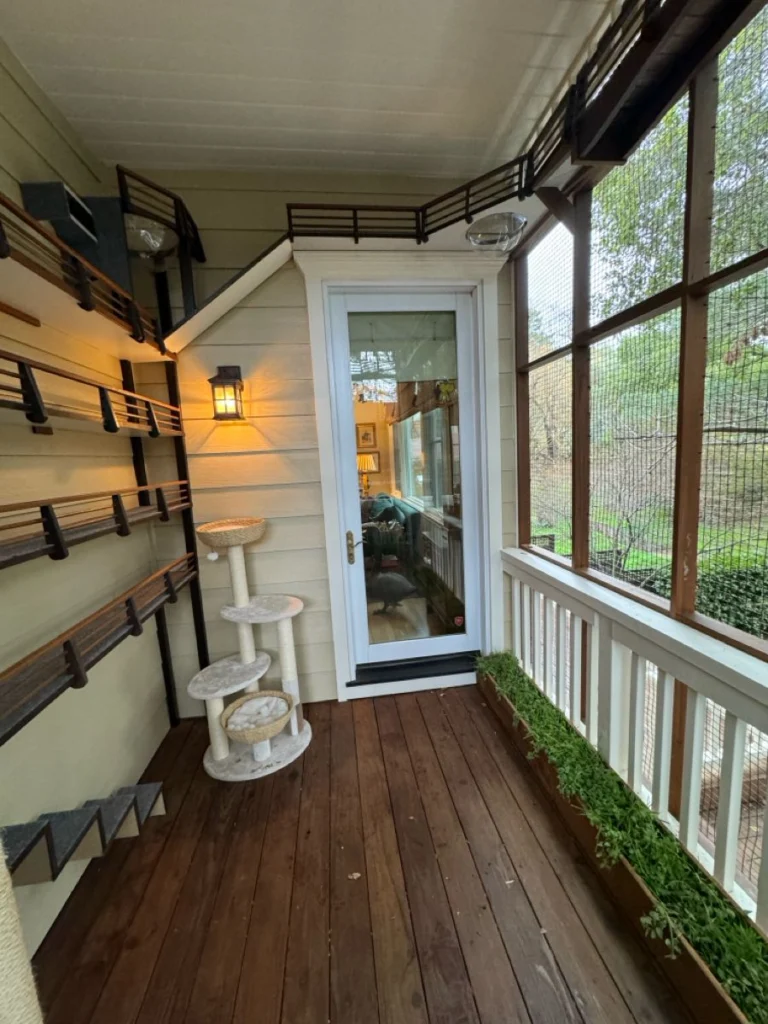
If your home has an unused screened porch, you’re basically halfway done already. Reinforce existing screens with cat-safe mesh (regular window screens tear easily under claws), add a cat door connecting to the house, and furnish it like a cozy sunroom—wicker furniture, potted plants, soft blankets. Neutral color palettes work best here since you’re essentially extending your living space outdoors. This design suits traditional and craftsman-style homes with existing porches. It’s also one of the more comfortable options for cat parents who want to hang out with their pets outside too.
8. PVC Pipe Frame Catio

PVC pipe is lightweight, cheap, and surprisingly sturdy when built correctly. Construct a simple frame using 1-inch PVC pipes and connectors, then wrap it in hardware cloth or bird netting. Paint the pipes to match your house trim, or leave them white for a clean, modern look. This design is ideal for renters since it’s easy to disassemble and move. Add a few hammocks made from durable outdoor fabric for lounging spots. It works well for contemporary or minimalist homes and is one of the most beginner-friendly builds on this entire list.
9. Wooden Pallet Catio
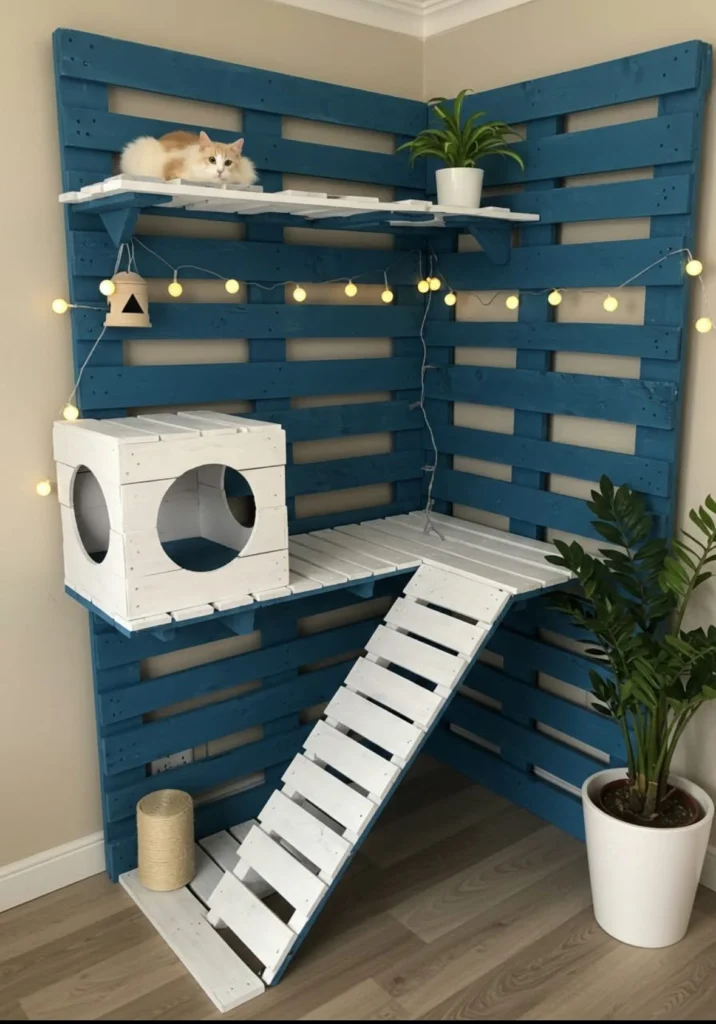
Pallets are a DIY dream—free, sturdy, and endlessly customizable. Disassemble a few pallets and reassemble the wood into a boxy enclosure frame, then staple hardware cloth over the openings. Sand rough edges thoroughly to prevent splinters. Stain the wood in weathered gray or driftwood tones for a beachy, relaxed feel. Add pallet-wood shelves inside for climbing. This budget-friendly build suits rustic, farmhouse, or coastal-style homes particularly well. It takes a bit more elbow grease than other designs, but the character you get is unmatched. Next, let’s go bigger and rounder.
10. Geodesic Dome Catio
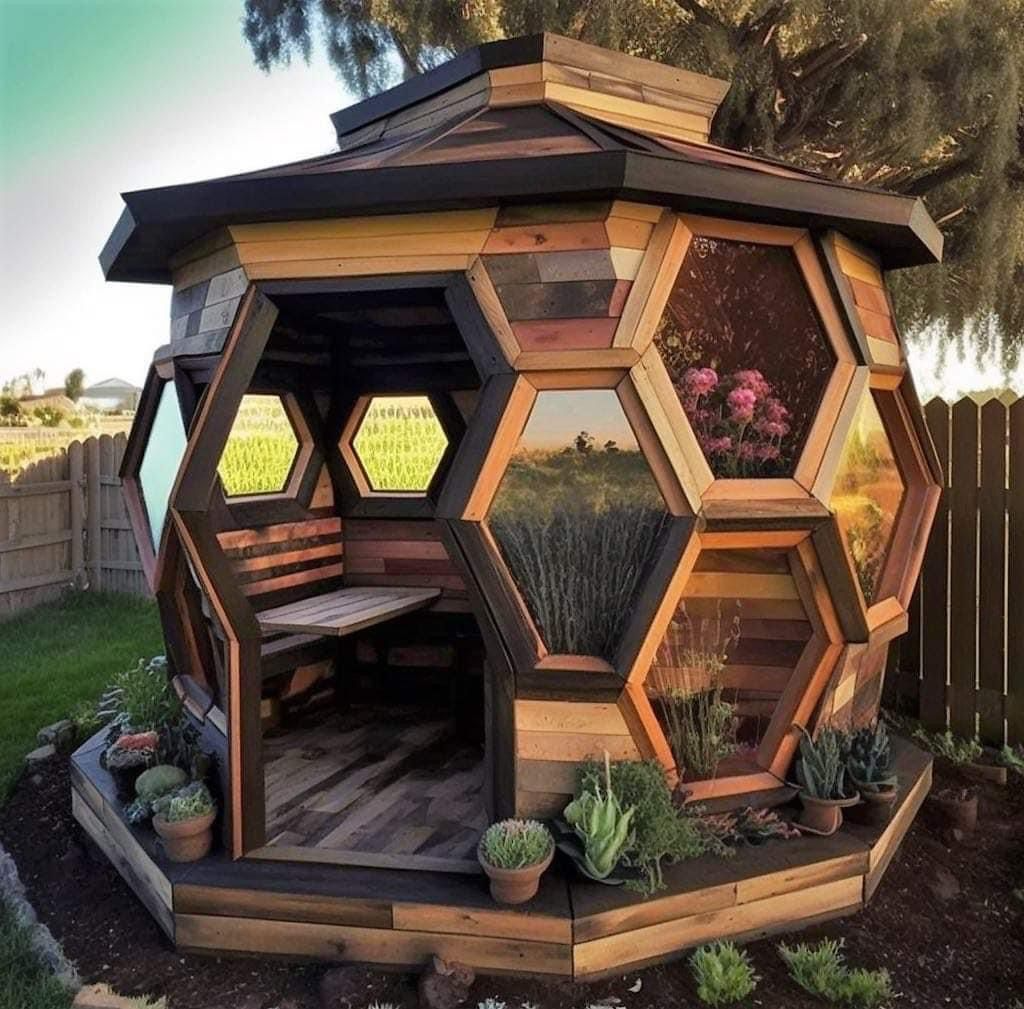
This one’s a showstopper. Build a geodesic dome frame using wooden or metal struts connected in triangular patterns, then cover it entirely in mesh. It’s structurally strong against wind, which makes it great for exposed yards. Paint connectors black for a sleek, modern silhouette against green mesh panels. Add hanging plants and a central climbing tower. This design fits ultra-modern homes and works as a genuine yard focal point rather than an eyesore. It requires more planning than boxy designs, but the payoff in visual appeal is significant.
11. Lean-To Catio Against the House
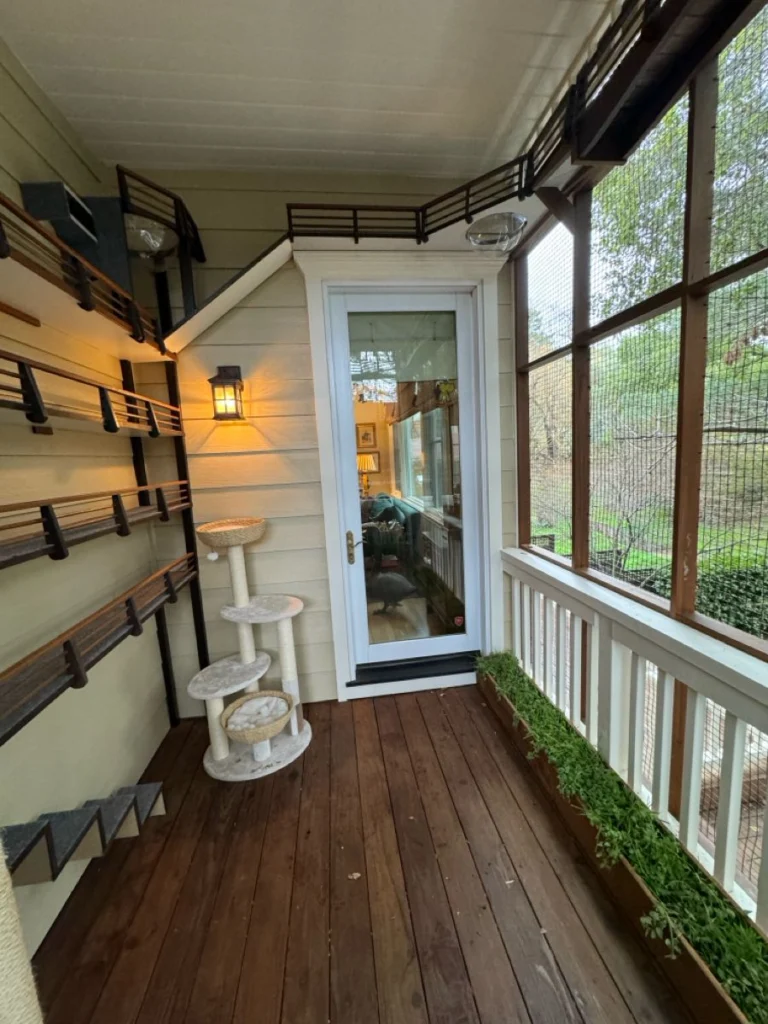
A lean-to design uses your home’s exterior wall as one side of the structure, cutting material costs significantly. Build a sloped frame attached to the siding, cover it in hardware cloth, and add a door for access. Match the roofing material to your house—asphalt shingles, metal panels, whatever you’ve already got—so it looks intentional rather than tacked on. This design suits nearly every home style since it’s customizable to match existing architecture. It’s efficient, sturdy, and one of the more permanent options here.
12. Freestanding Wooden Catio
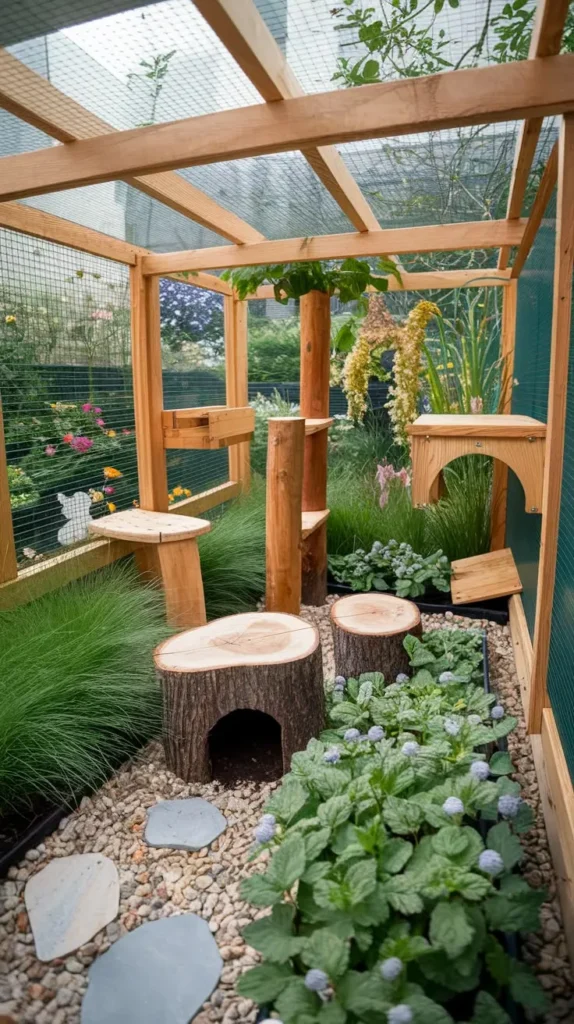
For yards with plenty of space, a freestanding structure gives maximum flexibility. Build a full wooden frame on all four sides, complete with a peaked or flat roof, and position it anywhere in the yard. Paint or stain it to match your deck or fence for cohesion. Furnish it generously—multiple platforms, a litter box station, weatherproof bedding. This design suits traditional and colonial-style homes with larger properties. Because it’s not attached to the house, you’ll need a secure tunnel or covered walkway connecting it to a door, which brings us to combining designs.
13. Catio with Green Roof
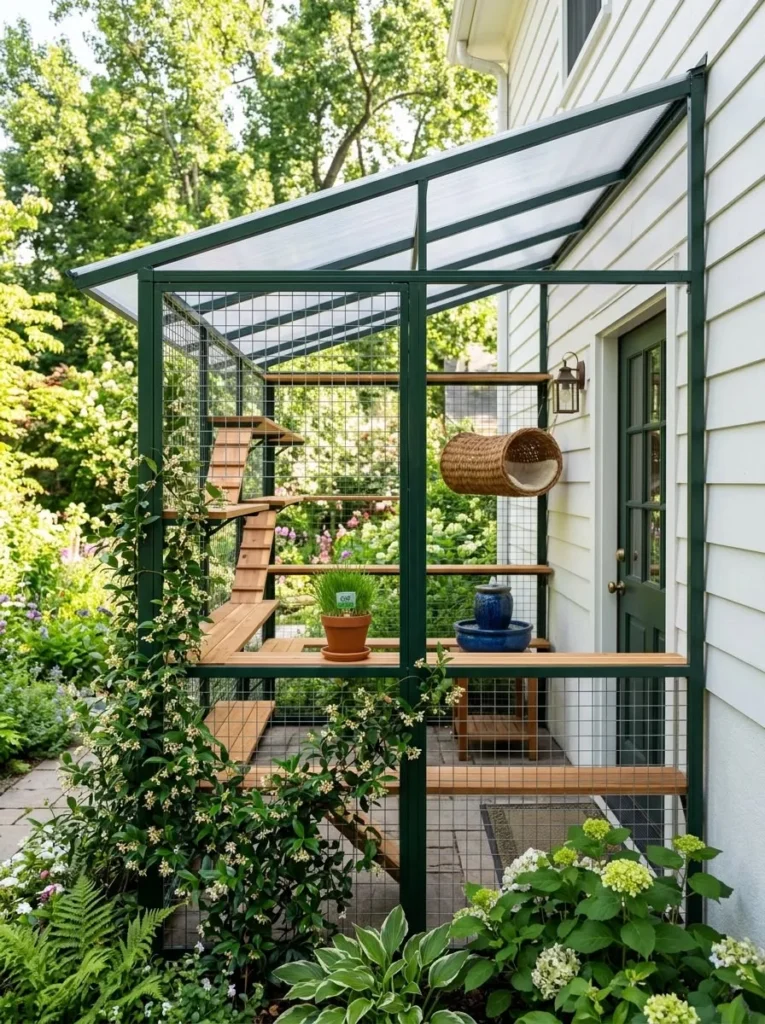
Want something eco-friendly and gorgeous? Build a flat-roofed catio frame, then layer a waterproof membrane, drainage material, and a thin layer of soil planted with sedum or other low-maintenance groundcover on top. It insulates the structure, manages rainwater runoff, and looks stunning from upper-floor windows. Stick with natural wood tones on the frame so it blends with the living roof. This design fits eco-conscious homeowners and modern or Scandinavian-style homes beautifully. It’s more advanced structurally, so reinforce your frame to handle the extra weight.
14. Modular Catio Kit
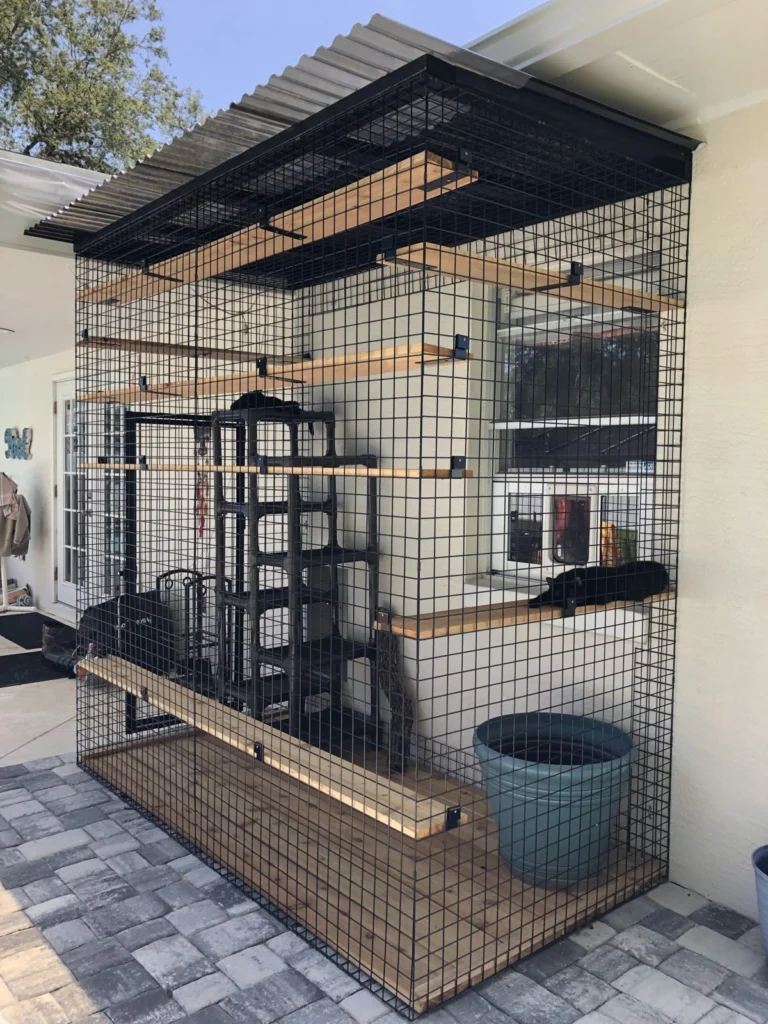
If cutting wood isn’t your thing, modular kits let you snap or bolt pre-made panels together into custom configurations. Mix and match tunnel sections, boxes, and platforms to fit your yard’s shape. Most kits come in neutral colors like black or forest green already, so there’s minimal decorating decisions needed. Add your own shelves and hammocks for personality. This option suits literally any home style since you’re customizing the layout rather than the material. It’s the least labor-intensive build on this list, ideal for folks short on time or tools.
15. Under-Deck Catio
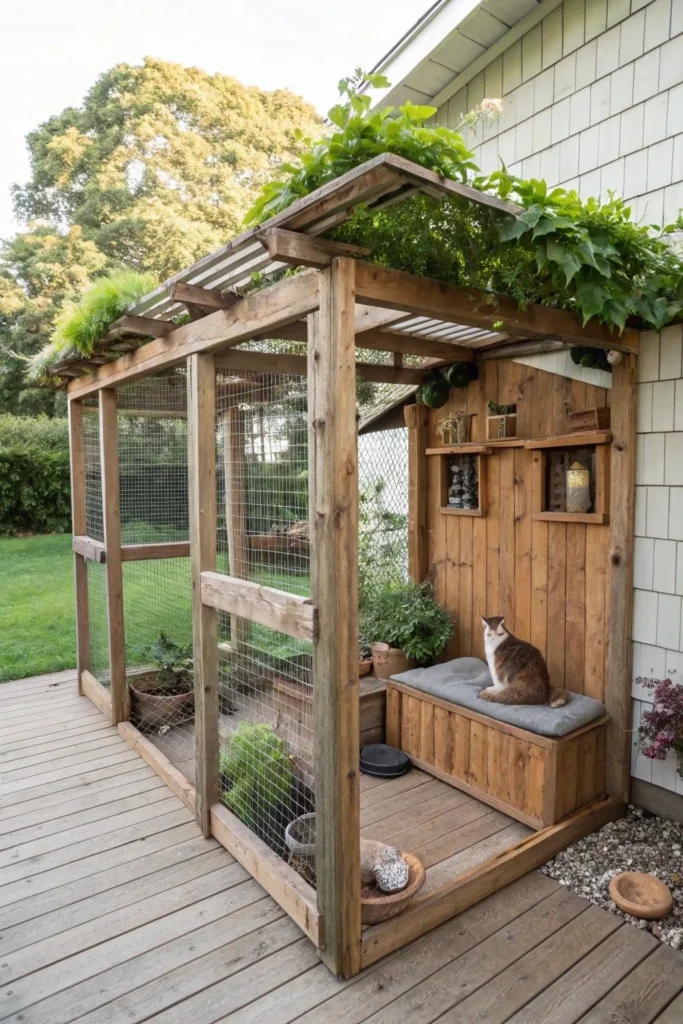
Got dead space under a raised deck? Enclose it with hardware cloth panels between the support posts, add a cat door from the yard or basement, and you’ve got a shaded, protected catio using space that was otherwise wasted. Keep the mesh panels dark to blend with shadow. Add a few low platforms since headroom is often limited here. This design suits homes with elevated decks and works particularly well in hot climates since it offers natural shade all day long.
16. Rooftop Catio
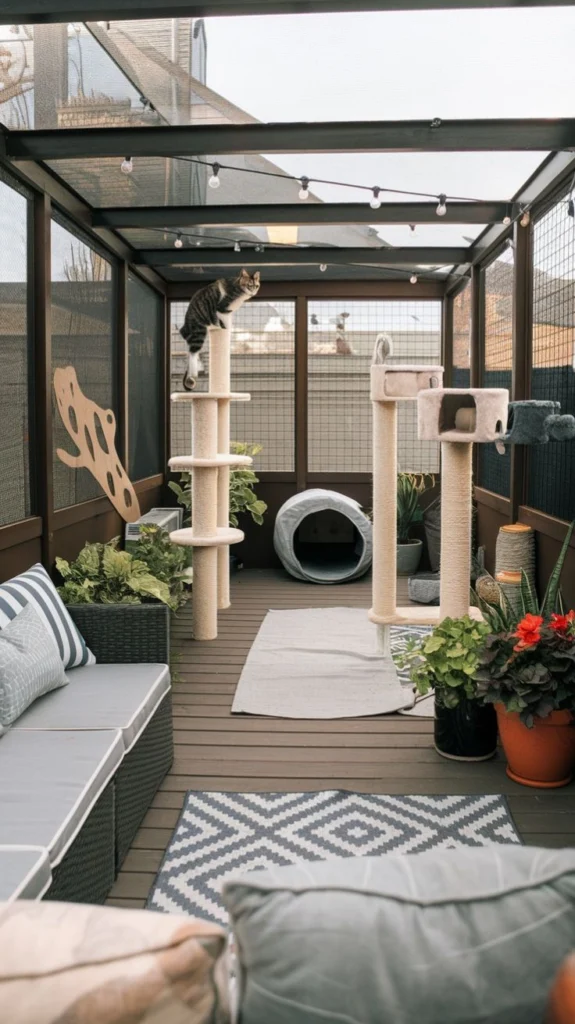
For urban homes with flat or accessible roofs, a rooftop catio offers incredible views for your cat and doesn’t sacrifice any yard space. Build a lightweight aluminum or PVC frame (weight matters here), secure it thoroughly against wind uplift, and cover it with UV-resistant mesh. Add wind screens on exposed sides. This design fits urban, industrial, or modern homes and requires serious attention to structural safety and local building codes. It’s ambitious but genuinely one of the coolest builds if your home layout allows it.
17. Catio with Cat Grass Garden

Combine enclosure with edible landscaping by dedicating a corner of your catio to planter boxes filled with cat grass, catnip, and valerian. Build raised beds along one wall of a standard wooden frame catio. Use untreated wood for planters since your cat will be nibbling nearby. This design suits any home style and adds genuine sensory enrichment beyond just fresh air. It’s a small addition that makes a massive difference in how much your cat actually uses the space daily.
18. Hammock Catio
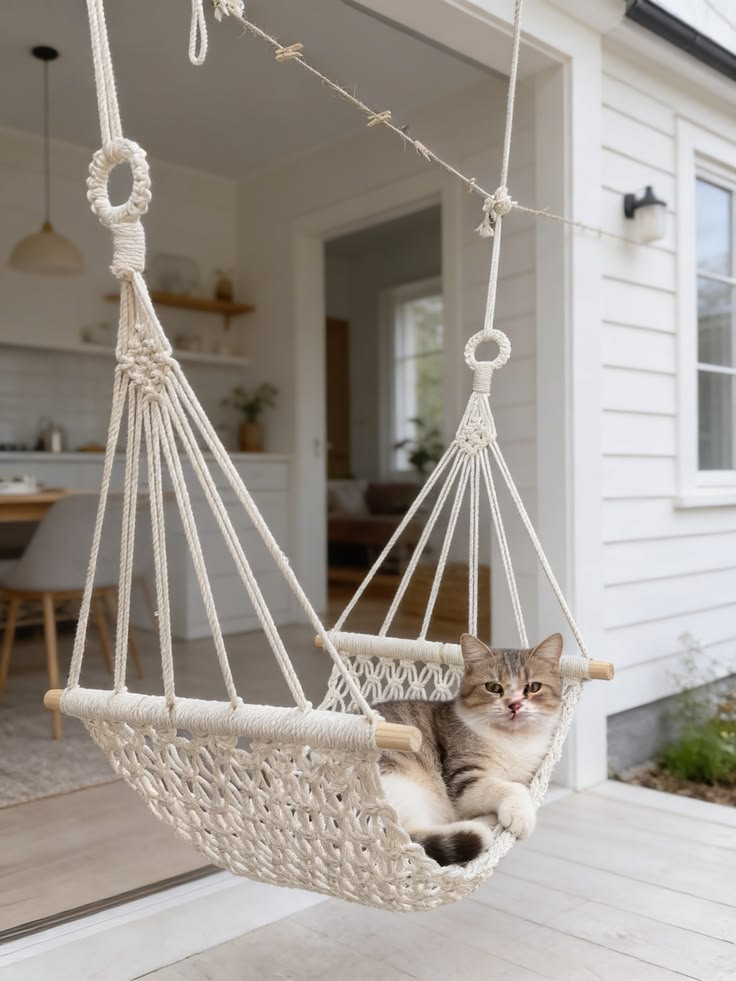
Focus this build entirely around lounging. Construct a simple box frame, then string multiple weatherproof hammocks at varying heights using outdoor-rated rope and hardware. Skip elaborate climbing structures—this design is about relaxation, not exercise. Use warm, sunny colors like mustard yellow or terracotta for the hammock fabric to make the space feel cheerful. It suits bohemian or coastal-style homes wonderfully. This is a great secondary catio if you already have a more active enclosure elsewhere and want a dedicated nap zone.
19. Vertical Catio for Small Spaces
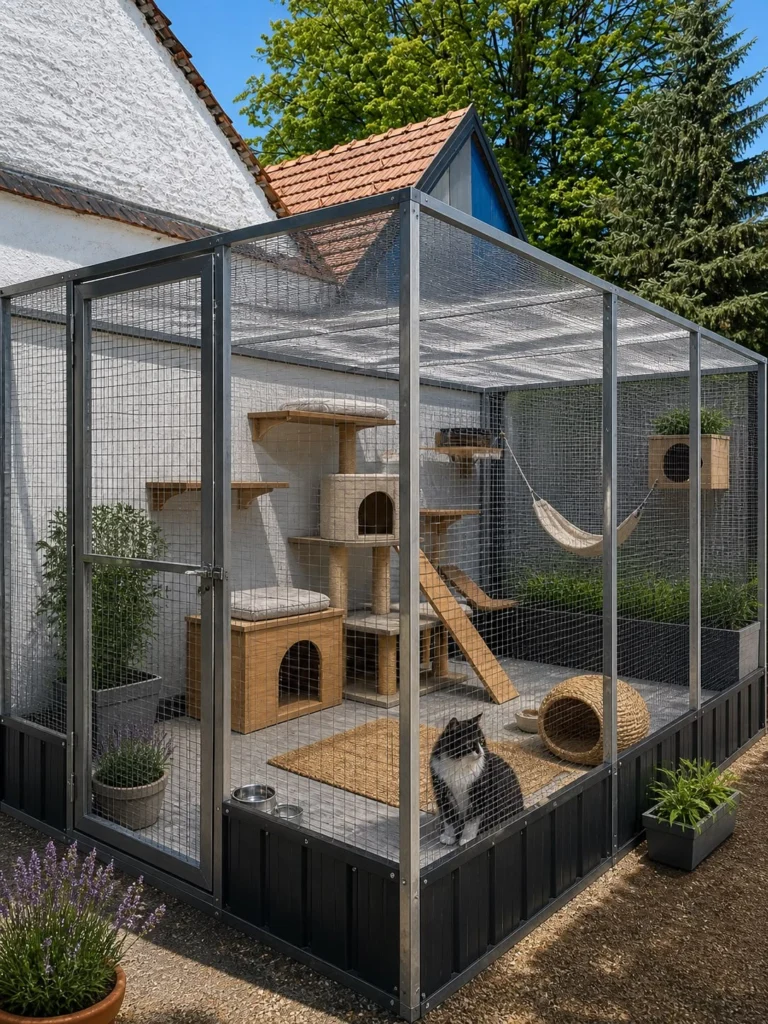
When floor space is tight, build up instead of out. Construct a narrow, tall frame—think 3 feet wide by 8 feet tall—with multiple stacked platforms connected by ramps or ladders. This design works incredibly well tucked against a fence line or house corner. Paint it to match fencing for a seamless look. It suits townhouses, row homes, and small urban yards especially well. Despite the small footprint, cats generally love these because the vertical climbing mimics natural tree behavior.
20. Catio with Waterfall Feature

For a genuinely luxurious build, add a small solar-powered waterfall or fountain feature inside a larger wooden catio. The sound of moving water fascinates most cats and adds ambient background noise that masks street sounds. Use natural stone and dark wood tones to create a zen-garden feel. This design suits homes with a Japanese or naturalistic garden aesthetic. Just make sure the water feature is completely inaccessible for drinking unless it’s cat-safe, since standing water can harbor bacteria.
21. Convertible Window Screen Catio
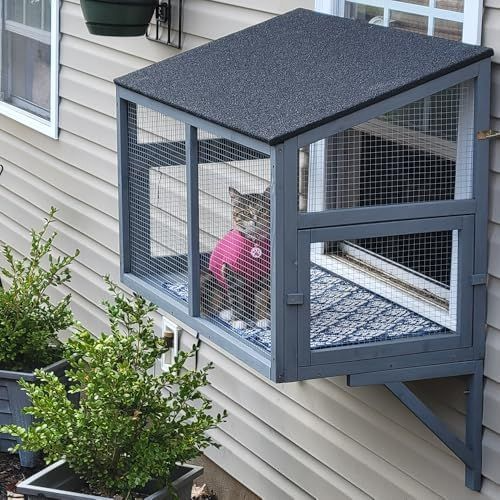
This clever design replaces a standard window screen with a hinged, expandable mesh box that folds flat against the house when not in use and extends outward when needed. It’s ideal for renters who can’t build permanent structures. Use aluminum screen frames for durability and a matching paint color to your window trim. This suits basically any home style since it’s discreet and reversible. It’s a smart middle-ground between a full catio and a simple window perch.
22. Two-Story Catio with Ramp
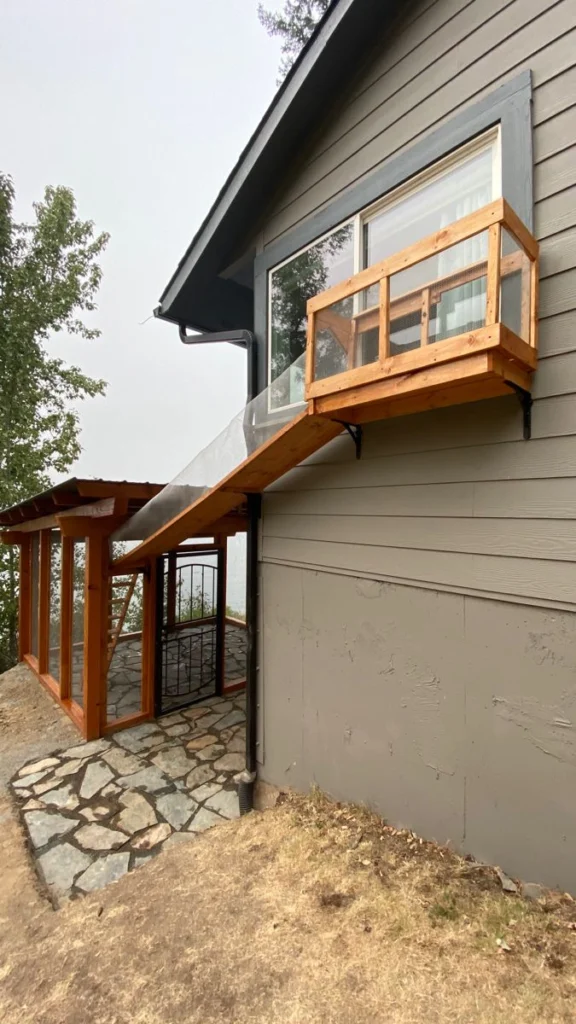
For the ultimate DIY catio project, build a two-story wooden structure connected by an internal ramp or spiral staircase. The ground floor can house litter boxes and food stations, while the upper floor offers lounging platforms and windows for viewing. Stain the exterior to match your home’s trim for a cohesive, built-in appearance. This design suits larger properties and traditional or craftsman homes with the space to accommodate a more substantial structure.
Catio Material Cost Comparison
| Material | Average Cost | Durability | Best For |
|---|---|---|---|
| PVC Pipe | $30–$80 | 3–5 years | Renters, small builds |
| Pressure-Treated Wood | $100–$300 | 10–15 years | Permanent structures |
| Cedar | $150–$400 | 15–20 years | Weather-exposed builds |
| Hardware Cloth (16-gauge) | $20–$50 | 10+ years | All designs (mesh covering) |
| Modular Kit | $200–$600 | 5–10 years | Quick, tool-free builds |
Catio Size Guide by Cat Personality
| Cat Type | Recommended Minimum Size | Key Features Needed |
|---|---|---|
| Senior or low-energy | 4 ft x 4 ft | Ramps, soft bedding, shade |
| Average adult cat | 6 ft x 8 ft | Multiple platforms, sun and shade zones |
| Kitten or high-energy | 8 ft x 10 ft+ | Climbing towers, tunnels, toys |
| Multi-cat household | 10 ft x 12 ft+ | Separate perches, multiple entry points |
Tips for Success
- Use hardware cloth with gaps no larger than half an inch—regular chicken wire lets paws and claws through.
- Orient at least part of the structure toward morning sun and provide shaded zones for afternoon heat.
- Install a secure double-door entry system so cats can’t slip past you during cleaning.
- Add drainage gaps in the flooring to prevent standing water after rain.
- Anchor the frame into the ground or attach it to a permanent structure to prevent tipping in wind.
Common Mistakes and How to Avoid Them
Skipping predator-proofing: Raccoons and larger birds can reach through wide mesh. Always use hardware cloth rated for small gaps.
Ignoring drainage: Flat floors trap rainwater and create mold. Slight slopes or gravel bases solve this quickly.
Using treated wood near plants your cat might chew: Stick to untreated cedar or pine near planters and edible greenery.
Underestimating size needs: A cramped catio gets ignored. Bigger, layered spaces get used daily.
Forgetting shade: Direct sun all day overheats enclosed spaces fast, especially with mesh walls trapping heat.
Similar Variations Worth Exploring
- Combine a tunnel catio with a rooftop platform for multi-zone exploration.
- Add solar lighting strips to any design for evening use.
- Build a seasonal, collapsible version using PVC and heavy-duty fabric for temporary setups.
- Pair a small window box catio with a larger yard structure connected by tunnel.
Building a DIY catio doesn’t need to drain your wallet or your weekend. Whether you go with a simple window box or an ambitious two-story structure, the goal stays the same: giving your cat safe access to sunshine, fresh air, and a little outdoor adventure. Pick the design that matches your space, your budget, and your cat’s personality, and get building—your cat’s already waiting by the window.