21 Small Living Room Decor Tips That Actually Work
This has taken me years of trial and error when placing furniture arrangements, choosing paint colors, and arranging boxes-like spaces until finally they worked for me. All of this experience, together with my knowledge about the psychology of space and design, is exactly the background for the tips below.
What are the top decor ideas for small living rooms? In a nutshell: use multipurpose furniture, light colors, mirrors, and vertical storage to create more visual space, and also pay attention to lighting and free-from-clutter zones to make a small space feel spacious and comfortable.
But stay tuned, as I am going to give you 21 proven tips, tables with data, common errors, and variations that you will not find anywhere else.
Why Small Living Rooms Need a Different Approach
A smaller living room is a whole new ballgame. What suits a larger loft won’t suit a small 200 square feet room. Larger pieces of furniture will overwhelm the living room. Using dark colors will suffocate it. Clutter is bound to accumulate quickly because there isn’t any place to keep it. I have found out that designing a small space is not about reducing things but making sure that you do the right things in the most efficient way possible. Below are 21 practical ways to make your small living room more livable.
1. Choose Multi-Functional Furniture

Double-duty furniture will become your best friend in a tiny living room. Look out for ottomans that have hidden storage, coffee tables that convert to dining tables, and sofa beds to accommodate your guests. It helps you save on the floor space available while maximizing functionality. In selecting your furniture, look out for designs that are streamlined and that have legs (as opposed to those that have skirted bases). They appear smaller, and hence they give you more space. A light oak storage bench will fit in perfectly in either modern or farmhouse designs.
Tip: Measure the space required for walking; you require at least 30 inches.
2. Use Light, Neutral Color Palettes

Light colors bounce light around a room, making walls feel like they’re stepping back instead of closing in. Soft whites, warm beiges, and pale grays are classic choices, but don’t be afraid of muted sage or dusty blue for a little personality. Pair light walls with furniture in similar or slightly deeper tones to avoid harsh contrast, which can make a small space feel chopped up. This palette suits modern, coastal, and Scandinavian interiors especially well.
Practical tip: test paint samples at different times of day since natural light changes how color reads. Once your base palette is set, you can start layering in texture without losing that open, airy feeling.
3. Hang Mirrors Strategically

Mirrors are the oldest trick in the small-space playbook, and for good reason—they trick the eye into seeing more square footage than actually exists. Place a large mirror across from a window to reflect natural light deeper into the room. Round or arched mirrors soften a space, while rectangular ones feel more traditional. Avoid clustering too many small mirrors, which can look busy instead of expansive. This works in nearly every style, from farmhouse to mid-century modern. Practical tip: hang mirrors at eye level, roughly 57-60 inches from the floor, so reflections feel natural. Once light is bouncing around your room, it’s time to think about how your furniture sits within that light.
4. Float Furniture Away from Walls

Pushing every piece against the wall seems logical, but it often makes a small room feel more cramped, not less. Floating a sofa or chair a few inches from the wall creates breathing room and a sense of layered depth. This technique works particularly well in open-concept apartments where you need to define a living area without walls. Choose furniture with slim profiles so the extra space doesn’t eat into your walkways. This tip suits modern and eclectic homes especially well. Practical tip: leave at least 3-4 inches between furniture and the wall for a subtle “floating” effect. Once your furniture has room to breathe, your lighting choices can do even more heavy lifting.
5. Use Vertical Storage Solutions

When floor space is tight, the walls become your best storage ally. Tall bookshelves, wall-mounted cabinets, and floating shelves draw the eye upward, which makes ceilings feel higher and rooms feel bigger. Choose slim, open shelving over bulky closed cabinets to keep the space feeling light. Mix in baskets or bins for hidden storage of remotes, blankets, and mail. This works beautifully in industrial, Scandinavian, and modern farmhouse spaces. Practical tip: install shelving at staggered heights to create visual interest without overwhelming one wall. With storage sorted out vertically, your floor stays clearer for actual living.
6. Layer Lighting for Depth

A single overhead light flattens a small room and makes it feel one-dimensional. Layering ambient, task, and accent lighting adds warmth and dimension instead. Combine a ceiling fixture with a floor lamp and a few small table lamps to create pools of light throughout the space. Warm bulbs (around 2700K-3000K) feel cozier than cool white ones in living areas. This layered approach suits traditional, transitional, and boho styles particularly well. Practical tip: use dimmer switches so you can adjust brightness based on time of day or mood. Once the lighting feels right, your focal point will naturally stand out even more.
7. Pick a Focal Point

Every room needs a place for the eye to land first. In small living rooms, this might be a fireplace, a statement piece of art, or even a well-styled bookshelf. Arrange your furniture to face or frame this focal point, which naturally organizes the rest of the room. Avoid competing focal points, like a big TV and a bold accent wall fighting for attention. This tip works across nearly every design style, though minimalist and mid-century homes benefit most from a single, strong anchor. Practical tip: if you don’t have an architectural focal point, create one with a gallery wall or an oversized mirror. With your focal point set, area rugs can help ground the rest of the space.
8. Use Area Rugs to Define Space

A rug does more than add texture underfoot—it visually separates your living area from the rest of an open floor plan. Choose a rug large enough that at least the front legs of your furniture rest on it; anything smaller can make the room look disjointed. Light, low-pile rugs work best in small spaces since they don’t add visual bulk. Geometric patterns in soft tones add interest without overwhelming the eye. This tip suits bohemian, Scandinavian, and transitional living rooms. Practical tip: stick to rugs no smaller than 5×7 feet for a standard small living room seating area. Once the floor is defined, window treatments can extend that sense of openness even further.
9. Choose Sheer or Light Curtains

Heavy, dark drapes can swallow a small room’s natural light. Sheer or lightweight curtains in soft neutrals let sunlight filter through while still offering privacy. Hanging panels close to the ceiling, rather than right above the window frame, draws the eye upward and makes ceilings feel taller. This works especially well in coastal, modern, and traditional homes. Practical tip: hang curtain rods a few inches wider than the window frame so panels can fully open without blocking light. Light curtains pair perfectly with furniture chosen for a smaller footprint, which brings us to scale.
10. Scale Down Furniture Size
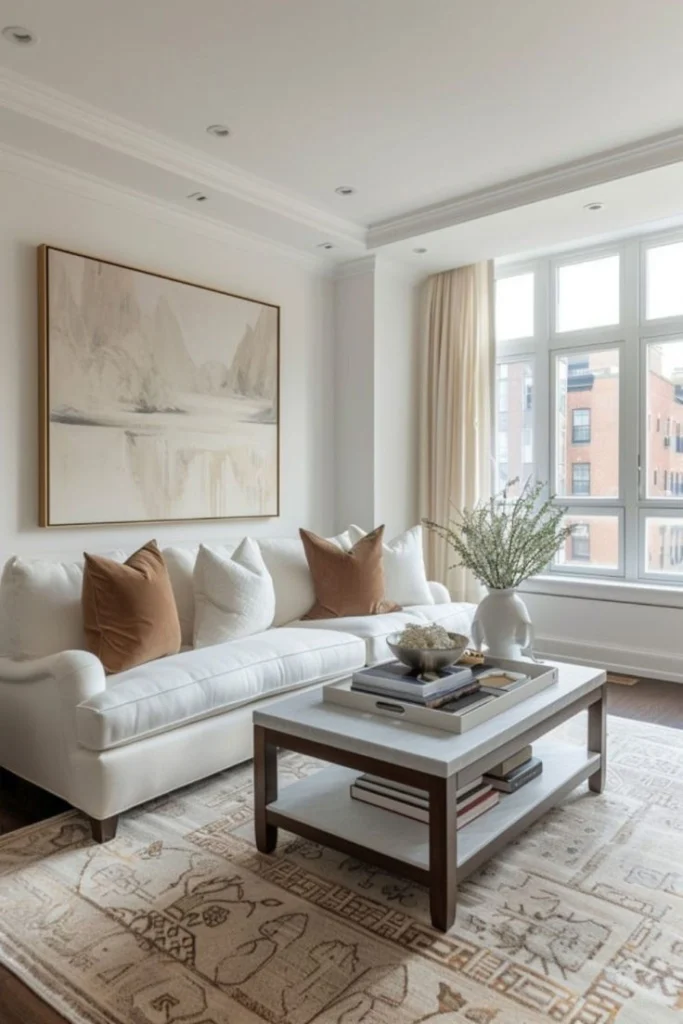
Oversized furniture is one of the fastest ways to make a small living room feel like a maze. Choose sofas and chairs with slimmer arms and lower backs to keep the room feeling open. A loveseat or apartment-sized sofa (around 60-72 inches) often works better than a standard 84-inch model. Pair with a smaller coffee table or nesting tables that can expand when needed. This scaled-down approach suits nearly every style, from modern to traditional. Practical tip: measure your room and leave at least 18 inches between the coffee table and seating for comfortable movement. With right-sized furniture in place, opting for glass or acrylic pieces can lighten things up even more.
Furniture Size Guide for Small Living Rooms
| Furniture Item | Recommended Width | Recommended Depth | Small Room Tip |
|---|---|---|---|
| Sofa | 60-72 inches | 30-36 inches | Choose slim arms to save 4-6 inches of visual bulk |
| Coffee Table | 36-42 inches | 18-24 inches | Round tables improve walkway flow |
| Accent Chair | 28-32 inches | 30-34 inches | Pick exposed-leg designs for an airy look |
| TV Stand | 40-48 inches | 14-16 inches | Wall-mount the TV to skip a stand entirely |
| Bookshelf | 24-30 inches | 10-12 inches | Go vertical instead of wide |
11. Opt for Glass and Acrylic Furniture

See-through materials like glass and acrylic practically disappear in a room, which makes them ideal for small spaces. A glass coffee table or acrylic side chair adds function without visually crowding the floor. These materials pair beautifully with both modern and glam interiors, adding a touch of sparkle without heaviness. Balance them with soft textiles like a wool throw or velvet pillow so the room doesn’t feel too cold or sterile. Practical tip: use glass tabletops sparingly—one or two pieces are enough to keep the effect from feeling gimmicky. Once your furniture feels lighter, consistent flooring can help tie everything together.
12. Create Visual Flow with Consistent Flooring

Switching flooring materials between rooms can make a small space feel chopped into segments. Keeping the same flooring—whether hardwood, laminate, or light-toned tile—throughout connected areas creates a sense of continuous, larger space. If you rent and can’t change flooring, an area rug in a similar tone can mimic this effect. This tip is especially useful in open-concept apartments and studios. Practical tip: choose flooring or rugs in mid-tone finishes, since very dark or very light extremes can either shrink or wash out a room. With a unified floor, wall-mounted shelving can add function without breaking that visual flow.
13. Use Wall-Mounted Shelving

Floor-standing furniture takes up precious square footage, but wall-mounted shelves free up that space entirely. Use them to display books, plants, or framed photos without cluttering side tables. Choose floating shelves in a finish that matches your trim for a seamless, built-in look. This works well in modern, minimalist, and Scandinavian living rooms. Practical tip: stick to shelves no deeper than 8-10 inches so they don’t jut into walking paths. Once your walls are working harder, patterns and textures can add personality without taking up any floor space at all.
14. Add Vertical Stripes or Patterns

Vertical elements, whether in wallpaper, curtains, or even furniture upholstery, trick the eye into seeing height. Striped wallpaper or a tall, narrow piece of art draws attention upward, making low ceilings feel less oppressive. Keep patterns subtle in small rooms; bold, high-contrast stripes can feel overwhelming in tight quarters. This tip suits traditional and transitional homes particularly well. Practical tip: use vertical patterns on just one accent wall rather than the whole room to avoid visual overload. With height addressed, built-in seating can tackle the floor space problem directly.
15. Incorporate Built-In Seating

Built-in benches or window seats save the floor space that traditional chairs would otherwise use. They also often include hidden storage underneath, which is a huge bonus for small living rooms. Pair with slim floor cushions for extra flexible seating when guests come over. This approach works especially well in cottage, farmhouse, and craftsman-style homes. Practical tip: add a fitted cushion in a durable fabric like cotton canvas for comfort that also holds up to daily use. Once seating is sorted, a monochromatic palette can make the whole room feel cohesive and calm.
16. Use a Monochromatic Color Scheme

Sticking to one color family, but varying the shades and textures, creates a soothing, cohesive look that doesn’t visually break up a small room. For example, pair a soft gray sofa with charcoal throw pillows and a pale gray rug. This approach removes harsh contrast, which can make walls and furniture blend into one continuous space. It’s a favorite in modern and minimalist interiors. Practical tip: add texture through knits, wood, and woven baskets so a monochrome room doesn’t feel flat or boring. Once your palette feels settled, curtain height becomes the next detail worth focusing on.
17. Hang Curtains High and Wide

I mentioned sheer curtains earlier, but how you hang them matters just as much as the fabric. Mounting rods close to the ceiling and extending them beyond the window frame creates the illusion of larger, taller windows. This trick works in almost any style but shines in traditional and transitional spaces where curtains are a bigger design feature. Practical tip: aim to hang rods about 4-6 inches above the window frame and extend them 3-4 inches on either side. Taller-seeming windows pair nicely with a decluttered room, which brings us to hidden storage.
18. Declutter with Hidden Storage

Visible clutter is one of the fastest ways to make a small living room feel chaotic. Ottomans with lift tops, baskets tucked under console tables, and drawer units disguised as side tables all help keep everyday items out of sight. This tip applies to every design style since clutter control is universal. Practical tip: adopt a “one basket per category” rule—one for blankets, one for remotes and chargers, one for mail—to keep hidden storage from becoming a dumping ground. With clutter under control, statement lighting can finally take center stage.
19. Use Statement Lighting Fixtures

A bold pendant light or an eye-catching floor lamp can act as both function and art in a small living room. Since floor space is limited, drawing attention upward with a striking fixture adds personality without taking up room. This works particularly well in eclectic, industrial, and glam interiors. Practical tip: choose a fixture that’s proportional to your ceiling height—oversized fixtures can overwhelm a small room, while tiny ones get lost. Once the lighting makes a statement, greenery can add the final layer of life and texture.
20. Add Greenery for Freshness

Plants bring color, texture, and a sense of freshness that no decor object can quite replicate. In small living rooms, choose plants that grow upward, like a snake plant or fiddle leaf fig, rather than wide, bushy varieties. Hanging planters or wall-mounted plant shelves save floor space while still adding greenery. This tip fits practically every design style, from boho to modern. Practical tip: stick to 2-3 well-placed plants rather than scattering many small ones, which can look cluttered fast. With greenery in place, the final step is thinking about how you zone the whole room.
21. Zone Your Space with Furniture Arrangement

In open-concept or studio-style homes, furniture arrangement can create the illusion of separate rooms without any walls. Use a sofa’s back to define the edge of a living area, or angle a bookshelf to separate the space from a dining zone. This tip is essential for studio apartments and open-plan modern homes. Practical tip: keep sightlines clear across zones so the eye can travel freely, which keeps the whole area feeling connected rather than boxed in. With all 21 tips in place, your small living room can finally feel just as functional and stylish as a much bigger space.
Color Palette Suggestions for Small Living Rooms
| Style | Wall Color | Accent Color | Approx. Hex Code |
|---|---|---|---|
| Modern Minimalist | Warm White | Charcoal Gray | #F5F1EA / #3A3A3A |
| Scandinavian | Soft Gray | Muted Blue | #D8D8D6 / #7C9AB0 |
| Coastal | Pale Blue | Sandy Beige | #DCE8EA / #E3D5B8 |
| Farmhouse | Cream | Sage Green | #F2EDE4 / #A3B18A |
| Boho | Terracotta Blush | Mustard Yellow | #E8C5B5 / #D4A017 |
Tips for Success
- Measure your room before buying anything—guessing leads to furniture that’s too big or too small.
- Stick to a consistent color palette across walls, furniture, and textiles.
- Prioritize multi-functional pieces over single-purpose furniture.
- Keep walkways at least 30 inches wide for comfortable movement.
- Layer lighting instead of relying on one overhead fixture.
- Edit decor often—less really is more in small spaces.
Common Mistakes and How to Avoid Them
Oversized Furniture
: Big sofas and chunky coffee tables overwhelm small rooms. Choose apartment-sized furniture with slim profiles instead.
Dark, Heavy Colors
: Deep colors can make walls feel closer. Stick to light, warm neutrals for a more open feel.
Ignoring Vertical Space
: Many people only think about floor space. Use walls for storage and shelving to free up the room below.
Too Many Small Rugs
: Scattering multiple tiny rugs chops up the floor visually. Use one larger rug to unify the space.
Cluttered Surfaces
: Coffee tables and shelves piled with items make rooms feel chaotic. Use hidden storage and edit decor regularly.
Similar Variations You Can Try
- Swap a monochromatic scheme for a two-tone palette using complementary colors for more personality.
- Try a Japandi-inspired look by combining Scandinavian simplicity with Japanese minimalism and natural wood tones.
- Experiment with a jewel-tone accent wall instead of neutrals for a bolder, more dramatic small living room.
- Mix vintage furniture pieces with modern lighting for an eclectic, collected-over-time feel.
- Use a single bold pattern (like a geometric rug) as the room’s only statement piece, keeping everything else neutral.
Wrapping It Up
Small living rooms come with real challenges, but they also come with real solutions. From choosing the right furniture size to layering light and color the smart way, these small living room decor tips give you a practical, tested roadmap for making the most of every square foot. Start with a few changes, see how the room feels, and build from there.
At the end of the day, small living room decor tips aren’t about cramming in less—they’re about choosing better, smarter, and with intention.