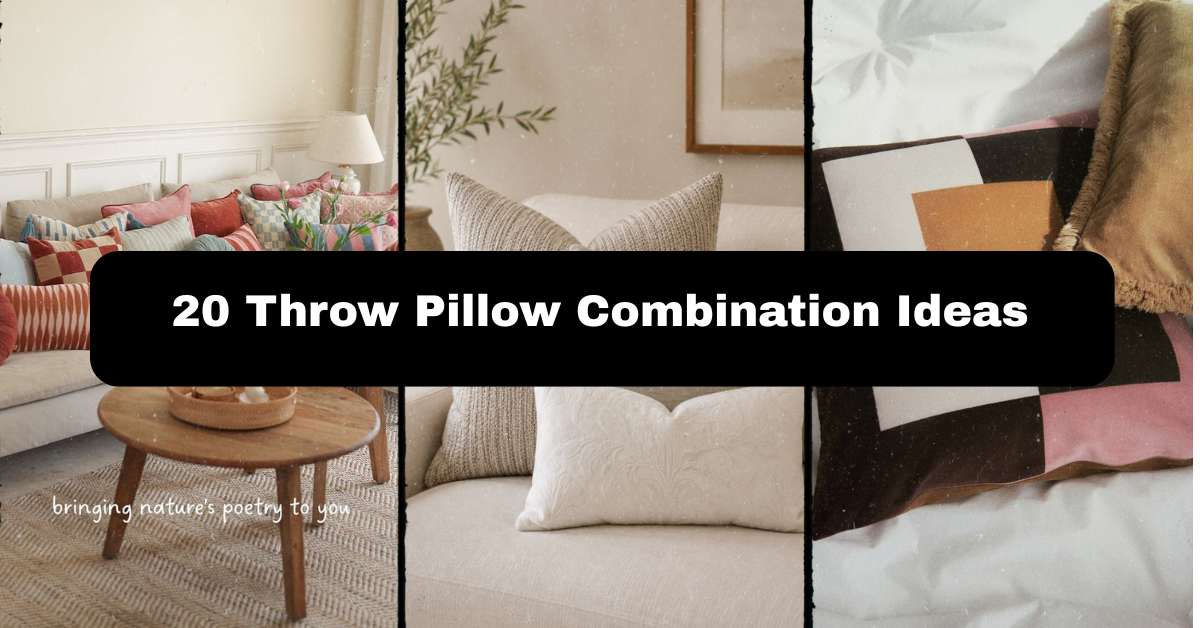
20 Throw Pillow Combination Ideas That’ll Transform Your Couch Instantly
As someone who has been experimenting with various combinations of throw pillows on anything from thrift-store couches to brand new sofas, I can share exactly which combinations work. All of these combinations have been derived through styling sessions, so rest assured that you will get tested combinations.
But, what are some of the best throw pillow combinations? Some of the best combinations should feature an odd number of pillows (such as 3, 5, or 7), different sizes (ranging from 18 to 24 inches) and should combine at least two different textures with a patterned one. All of these combinations will follow a color anchor system.
Now stick around as I break down all 20 of these combinations for you!
Why Throw Pillow Combinations Matter More Than You Think
Here’s the thing about throw pillows—they’re the easiest, cheapest way to change your entire room’s personality. Swap a few pillows and suddenly your beige couch feels like a Moroccan lounge or a coastal retreat. I’ve seen $40 in pillow covers do more for a living room than a $2,000 furniture purchase.
But there’s a science to it. Random pillows thrown together look, well, random. The right throw pillow combination follows rules around scale, color balance, and texture layering. Let’s get into the actual ideas now.
1. The Classic Neutral Layer

Such a combination always wins because neutrals help accentuate the shape of your furniture pieces while adding warmth. Begin with a big solid linen cushion in oatmeal or cream, and follow up with a small-textured cushion, like a chunky knit or a boucle in the same shade. End with a taupe lumbar cushion to add some variation. Always stick with natural fabrics like cotton, linen, and wool for an exciting texture experience without any color difference.
This is a fantastic choice for Scandinavian, minimalist, and modern farmhouse interiors. You just need to play with textures heavily because color plays no role in this situation at all. Think about combining a velvet with a jute-blend cushion to create a very curated look.
Now let’s move on to color but in a subtle way.
2. Monochromatic Color Blocking

Choose just one color, such as sage green, and use three different tones of it. Forest green square pillow, medium sage lumbar, and light mint accent pillow work perfectly together, creating depth without any conflict. In other words, it helps to fool the eye that the room looks much more decorated than it is really.
Use matte cotton and just slightly shiny linen-blend fabric to make the different tones look rich and sophisticated instead of flat. It works perfect for the traditional and transitional home decor styles.
One useful tip: Make sure the darkest tone is placed outside and lightest tone is placed close to the center.
And now let’s see how the patterns may fit in the game.
3. Pattern Mixing with a Unifying Color

This is the step where newbies get jittery, but it’s not as hard as it seems. Choose two or three patterns like a stripe, a floral, and a geometric, all of which have a common color thread. If your stripe pillow has navy blue, then ensure that the floral and geometric pillows have navy blue too.
Incorporate different scales of pattern in your design – one large scale pattern, one medium scale, and one small scale pattern. This is to avoid any form of competition in the design. Eclectic and bohemian decor style does well using this trick because they thrive on chaos.
Use an odd number of pillows – either three or five so that your eye is not trying to match them up in pairs.
4. Texture-Forward Combination

There are cases when colors take the second place, and texture becomes the main theme of the design. Try a combination of a chunky knit pillow, a smooth velvet one and a fur accent pillow in shades of ivory, gray and camel colors. The play will be made by the sense of touch rather than color perception.
It looks fantastic in a modern or industrial setting, where such cold textures as leather or metal require some softening effect. The fur should be put in the far corner because it spreads farther than the others.
Tip for implementation: Feel each pillow with your own hands before purchasing because the texture is the key here, not the opinion of the reviewers.
Now let us turn to the dramatic look.
5. High-Contrast Color Pop

Take your neutral sofa and add one seriously saturated color, like mustard yellow or emerald green, paired with black-and-white patterned pillows. The dark and light pillows act as a buffer so the bold color doesn’t overwhelm the space.
This combination suits contemporary and eclectic homes that want a statement without full commitment. I recommend a 24-inch square in the bold color as your anchor, flanked by two smaller 18-inch patterned pillows.
This dramatic approach pairs surprisingly well with our next idea: seasonal swapping.
6. Seasonal Rotation Combo

Buy two pillow cover sets: warm tones (rust, burnt orange, deep red) for fall/winter and cool tones (aqua, seafoam, soft yellow) for spring/summer. Keep your pillow inserts year-round and just swap covers.
This works for literally any home style since you’re adjusting color temperature, not the whole aesthetic. Store off-season covers flat in a bin to avoid creases.
Money-saving tip: This is far cheaper than buying entirely new pillows every season and keeps your space feeling fresh without waste.
Speaking of budget-friendly ideas, here’s another one.
7. The Two-Pillow Minimalist Approach

Not every sofa needs five pillows. Two large 24-inch pillows in complementary colors—like dusty blue and warm white—can look incredibly polished on smaller sofas or loveseats. This avoids the cluttered look that overwhelms compact seating.
Minimalist and Japandi-style homes benefit most here. Choose pillows with subtle texture differences (linen vs. cotton) so two pillows still feel intentional rather than sparse.
This leads naturally into thinking about lumbar pillows specifically.
8. Lumbar Pillow Layering

Lumbar pillows (rectangular, usually 12×20 inches) add sophistication that square pillows can’t achieve alone. Pair one lumbar pillow in a bold print with two smaller square pillows in solid coordinating colors, placed behind the lumbar for a layered look.
This technique elevates traditional and transitional living rooms especially. Place the lumbar pillow dead center for a formal look, or offset it slightly for a more relaxed vibe.
Now, let’s explore combining different pillow shapes entirely.
9. Mixed Shape Combination

Combine squares, lumbars, and even a round bolster pillow for visual variety. Keep colors within the same family (like blues and grays) so shape becomes the interesting variable instead of color chaos.
Eclectic and bohemian spaces handle mixed shapes beautifully. Start with your largest square pillow in the back corners, add the lumbar in front, and place the round pillow slightly to one side for asymmetry.
Asymmetry, actually, brings us to our next combination idea.
10. Asymmetrical Balance Combo

Instead of mirroring pillows on both sides of a sofa, create intentional asymmetry: three pillows on one side, two on the other, in varying sizes. This feels more collected and less “showroom” than perfectly matched arrangements.
Modern and eclectic homes love this look. Balance the visual weight by making the smaller side’s colors slightly bolder to draw equal attention.
Let’s now discuss a combination built entirely around one fabric type.
11. All-Velvet Jewel Tone Combo

Choose three velvet pillows in jewel tones—sapphire, emerald, and amethyst. The shared fabric keeps things cohesive while the colors add richness and drama. Velvet also reflects light differently depending on angle, adding subtle depth.
This suits glam, traditional, and Art Deco-inspired homes exceptionally well. Avoid mixing velvet with cheaper polyester blends since the sheen difference will look mismatched under lighting.
Next, let’s cool things down with a beachy variation.
12. Coastal Blue and White Combo

Stick to navy, white, and one accent like coral or seafoan. Stripes, subtle nautical patterns, and solid whites work together effortlessly. This is a foolproof combination for coastal, cottage, and farmhouse homes.
Use natural linen or cotton for an breezy, relaxed feel rather than anything glossy. Three pillows—one striped, one solid navy, one solid white—create instant coastal charm without looking themed or kitschy.
Now let’s warm things up again with an earthy palette.
13. Earthy Terracotta and Cream Combo

Combine terracotta, cream, and a touch of olive green for a warm, grounded look. This palette draws from nature and works in Southwestern, boho, and modern farmhouse interiors alike.
Choose one textured pillow (like a woven cotton) and one smooth pillow to balance the earthy tones. This combination photographs beautifully in natural light, making it popular for Instagram-worthy living rooms.
Speaking of drama, let’s try a moodier direction next.
14. Moody Dark Academia Combo

Deep burgundy, forest green, and charcoal gray pillows create a scholarly, cozy atmosphere. Add a small plaid or houndstooth pattern pillow for texture interest. This suits traditional, library-style, or dark academia-themed rooms.
Keep at least one pillow in a matte fabric to prevent the dark colors from looking too heavy or shiny. This combination pairs wonderfully with leather furniture and wooden bookshelves.
Let’s lighten the mood with a pastel-forward idea.
15. Soft Pastel Spring Combo

Blush pink, lavender, and soft yellow pillows bring a gentle, cheerful energy. This works particularly well in nurseries-adjacent living rooms, cottagecore spaces, or any home wanting a soft refresh.
Keep patterns minimal here—solids or very subtle florals work best since pastels can look busy quickly with bold prints. This is an easy combo for renters wanting a quick seasonal update.
16. Black and Gold Glam Combo

Pair matte black pillows with metallic gold accents (embroidered or sequined) for instant glam. This suits Art Deco, modern glam, or contemporary homes wanting drama without full color commitment.
Limit gold accents to one or two pillows max—too much metallic can look overwhelming rather than elegant. Add a soft gray pillow to break up the high contrast between black and gold.
17. Global Boho Mix

Combine Moroccan-inspired patterns, Ikat prints, and solid mustard or rust pillows. This eclectic mix thrives in boho, global, and eclectic interiors that celebrate cultural patterns and rich textures.
Look for pillows with tassels or fringe detailing to add authentic boho flair. Don’t worry about perfect color matching here—slight clashing is part of the aesthetic’s charm.
18. Grandmillennial Chintz Combo

Floral chintz patterns paired with solid piped-edge pillows create a nostalgic, feminine look popular in grandmillennial style. This suits traditional and vintage-inspired homes wanting warmth and personality.
Look for pillows with contrasting piping (a thin trim along the edge) since this detail elevates the entire look significantly. Pair with brass or wood furniture for maximum effect.
19. Monochrome Black and White Graphic Combo

Bold black and white geometric patterns paired with one solid black or white pillow create striking contrast. This works exceptionally well in modern, contemporary, and even industrial spaces.
Keep pillow sizes consistent (all 20-inch squares, for example) since uniformity emphasizes the graphic boldness rather than competing with size variation.
20. Metallic and Neutral Blend

Combine a champagne or silver metallic pillow with two neutral linen pillows in warm gray and ivory. This subtle sparkle works in modern, glam, and transitional homes wanting understated shine.
Save metallics for evening-lit rooms since they photograph best under warmer, dimmer lighting rather than harsh daylight.
Pillow Size and Quantity Guide
| Sofa Size | Recommended Pillow Count | Ideal Sizes (inches) |
|---|---|---|
| Loveseat (2-seat) | 2-3 pillows | 18-20 |
| Standard sofa (3-seat) | 3-5 pillows | 18-24 |
| Sectional | 5-7 pillows | 18-24, plus 1-2 lumbar |
| Oversized sofa | 5-7 pillows | 20-24, plus lumbar |
Fabric Pairing Compatibility Chart
| Fabric | Pairs Well With | Avoid Pairing With |
|---|---|---|
| Velvet | Linen, cotton, silk | Cheap polyester blends |
| Linen | Cotton, wool, jute | High-shine satin |
| Boucle/Knit | Velvet, leather accents | Other heavy knits (too busy) |
| Cotton | Almost everything | Nothing major, very versatile |
| Faux fur | Smooth velvet, leather | Other textured fabrics |
Tips for Success
- Always fluff and “karate chop” the center of pillows for a professional, styled dent
- Buy inserts one size larger than your cover for a fuller, plumper look
- Wash covers separately from inserts to extend their lifespan
- Rotate pillows every few months to prevent uneven wear on one side
- Photograph your arrangement and step back—problems are easier to spot in photos
Common Mistakes and How to Avoid Them
Mistake: Using an even number of pillows, which looks stiff and overly symmetrical.
Fix: Stick to odd numbers like 3 or 5 for a natural, collected look.
Mistake: Choosing pillows that are all the same size.
Fix: Vary sizes between 18 and 24 inches to create visual layering.
Mistake: Matching pillows too perfectly to your curtains or rug.
Fix: Pull just one color from your existing decor rather than matching everything exactly.
Mistake: Overcrowding a small sofa with too many pillows.
Fix: Follow the size chart above based on your specific sofa length.
Mistake: Forgetting texture entirely and relying only on color.
Fix: Include at least one textured pillow (knit, velvet, or boucle) in every combination.
Similar Variations You Can Try
- Swap square pillows for round bolster pillows in any combination above for a softer silhouette
- Try the same color combos but reverse light and dark placement for a completely different mood
- Use outdoor-rated fabric versions of these combos for patio furniture and sunrooms
- Mix in a single patterned ottoman pillow that echoes your throw pillow palette for cohesion
Wrapping It Up
Finding the right throw pillow combination really comes down to picking a formula and sticking with it—whether that’s color-based, texture-based, or pattern-based. I’ve given you 20 solid starting points above, plus the sizing charts and fabric pairings to back them up.
Don’t overthink it too much. Grab two or three combinations from this list that caught your eye, test them on your actual sofa, and adjust from there. That’s honestly the fastest way to nail your perfect throw pillow combination.